A Third of Your Life on One Rectangle
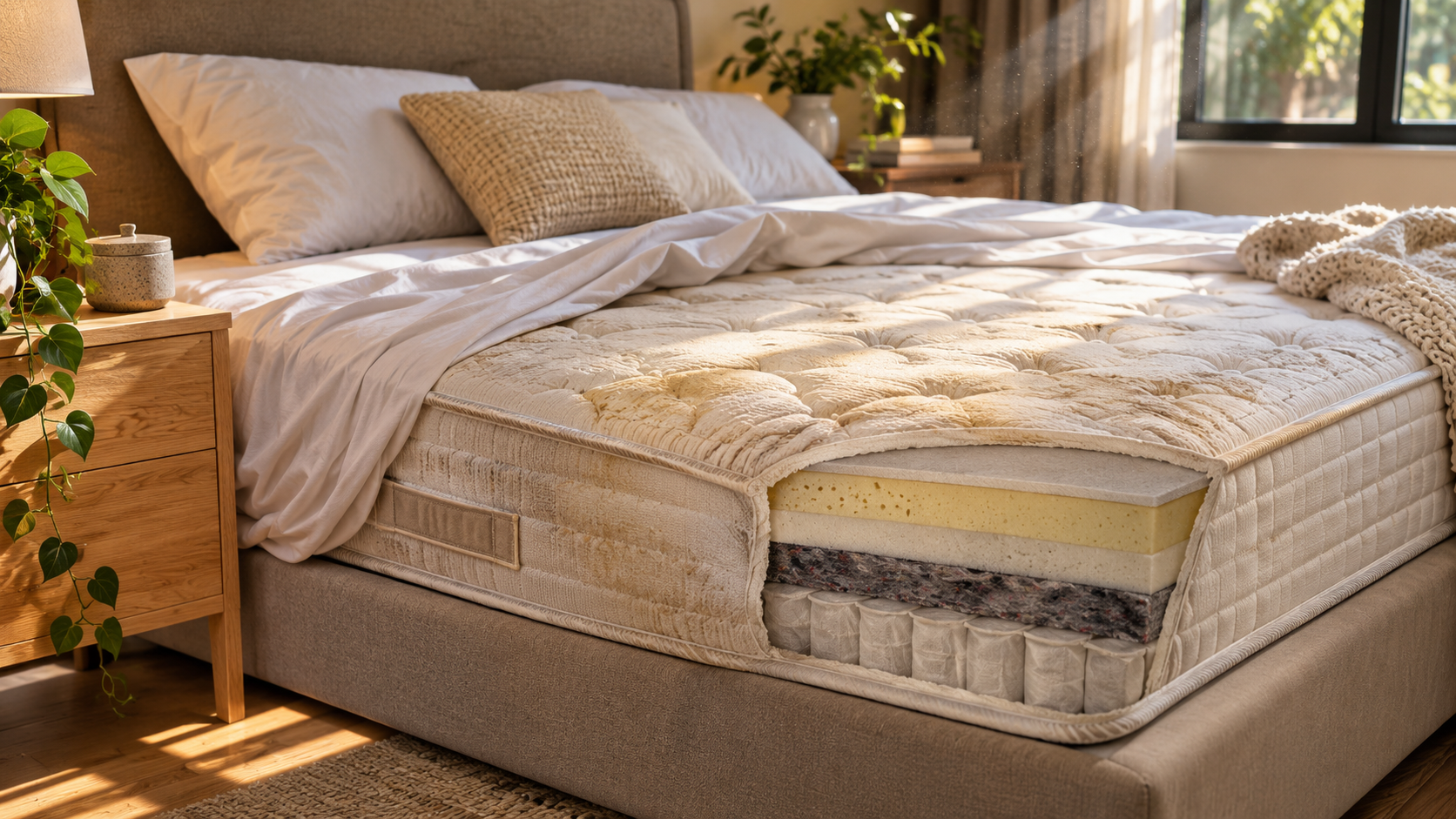
Do the math and it’s a little sobering. Sleep around eight hours a night and roughly a third of your life is spent lying on one rectangle of foam, springs and fabric.
Sheets get washed. Pillows occasionally get replaced. The mattress itself mostly gets flipped once, forgotten, and slept on for years.
That’s a long time to collect things, and plenty of people only start reading about mattress cleaning charlotte nc options after pulling off a fitted sheet and spotting yellow patches they don’t remember making. So what’s actually in there? Time for an inventory, one tenant at a time.
Tenant One: Dust Mites
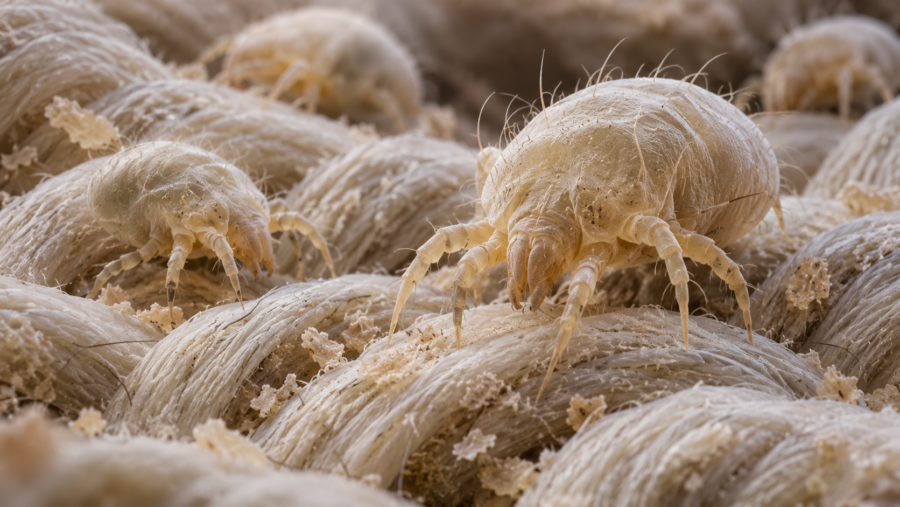
Dust mites are tiny relatives of spiders, too small to see without magnification. They don’t bite. They don’t drink blood. They eat dead skin flakes and love warmth and humidity – which describes a mattress at 3 AM almost perfectly.
How many? Estimates floating around online vary wildly, from about a hundred thousand to several million in a single well-used mattress. Nobody has counted yours. Maybe that’s for the best.
For most people the mites aren’t the issue. Their droppings are. Those contain proteins that the Asthma and Allergy Foundation of America names as a common trigger for allergy and asthma symptoms.
Signs They Might Be Bothering You
- Sneezing or a stuffy nose that’s worst right after waking up
- Symptoms that ease when you sleep somewhere else, like a hotel
- Itchy, watery eyes in the bedroom but not in other rooms
- Coughing or wheezing at night, especially with known asthma
None of these prove anything on their own. They’re just worth mentioning to a doctor if they sound familiar.
Tenant Two: Sweat
Everyone sweats at night, even in a cool room. The body keeps adjusting its temperature during sleep, and part of that moisture goes straight down through the sheet.
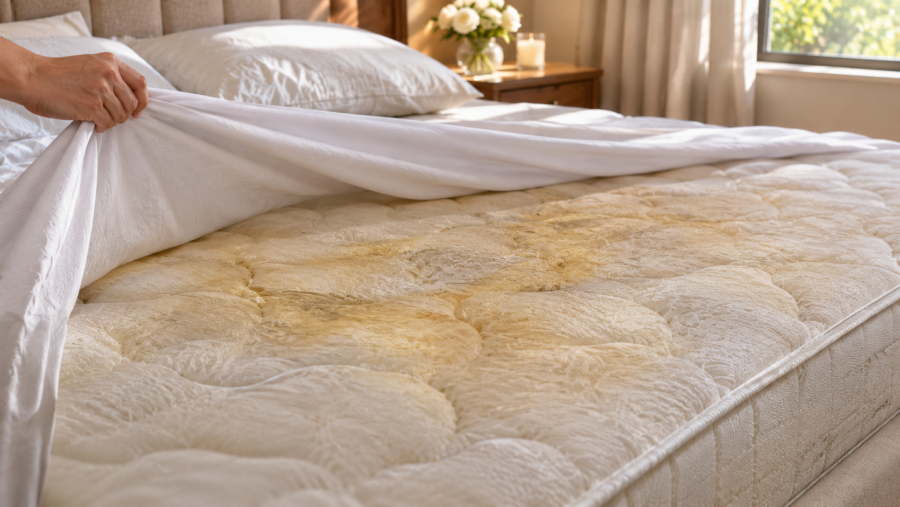
Online you’ll find all sorts of figures for how much fluid a person loses overnight. Whatever the real number, the result is easy to see: the yellowish stains on an older mattress are mostly dried sweat and body oils. That moisture also raises humidity inside the mattress. Which, as mentioned, dust mites enjoy.
Thomas Dekker wrote in the early 1600s that “sleep is that golden chain that ties health and our bodies together.” He didn’t say anything about what the chain is lying on. Fair enough – he had bigger worries, like the plague.
Tenant Three: Skin, Hair and Whatever Was on Them
Skin renews itself constantly, and a good share of the old flakes ends up in bed. Add hair, eyelash fragments and anything that was on your skin when you went to sleep – lotion, makeup, sunscreen, that new night cream. The mix is mite food, and it’s also why mattresses slowly develop a stale, slightly sweet smell.
Tenant Four: The Occasional Guest
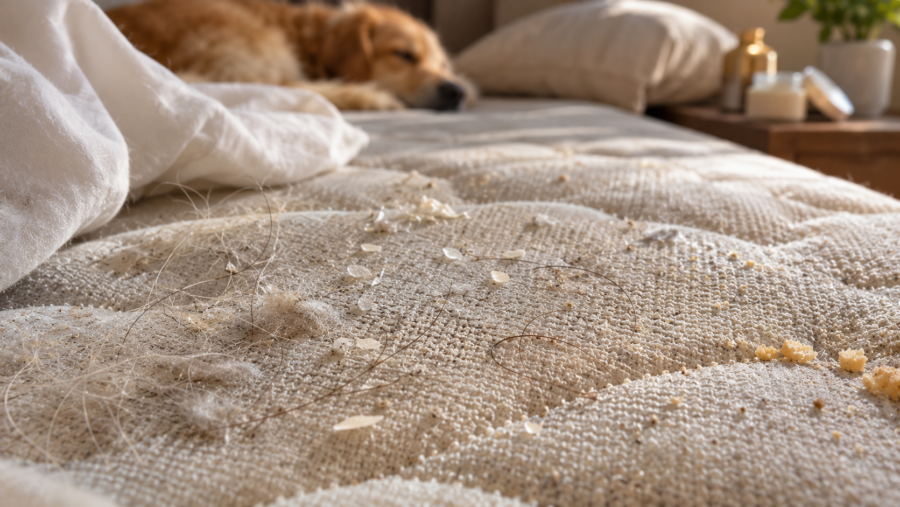
Pets that sleep on the bed add dander and hair. Kids add juice, nighttime accidents and the cookie from a midnight snack nobody admits to. And then there’s the classic: breakfast in bed. Romantic once. Crumbs for months.
Can They Actually Be Evicted?
Fully? No. A mattress will never be sterile, and that’s fine – your skin isn’t either. The aim is to keep the population and the allergen load down. A realistic routine:
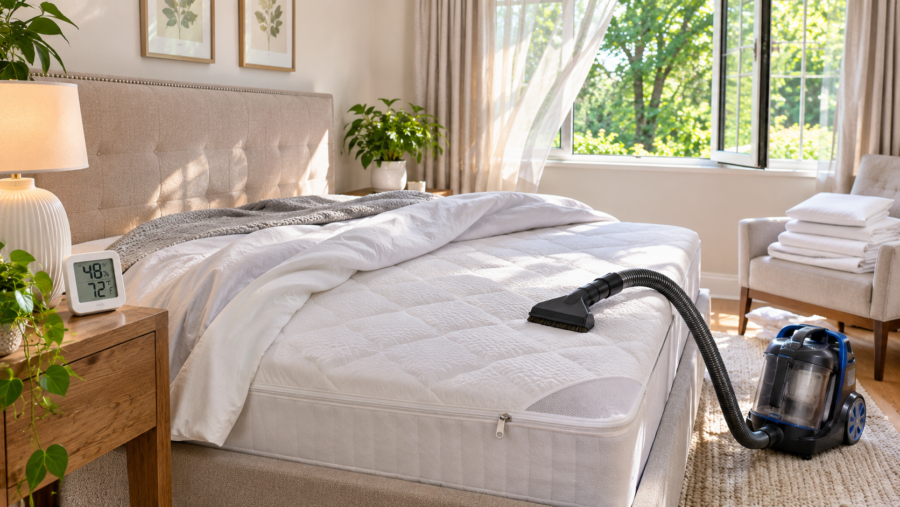
- Wash sheets and pillowcases weekly. For dust mite allergy, the AAFA recommends hot water of at least 130°F for bedding.
- Use a zippered, allergen-proof encasement instead of a basic mattress pad.
- Vacuum the mattress surface every month or two with an upholstery tool, seams included.
- Let the bed breathe: pull back the covers in the morning instead of making the bed right away.
- Keep bedroom humidity moderate, since dust mites thrive in damp air.
- Rotate the mattress every few months to even out wear.
- Plan a deep clean once or twice a year, and after illness, pet accidents or big spills.
Point four sounds lazy. Partly it is. But airing the bed lets trapped moisture escape before everything gets tucked back in.
What a Deep Clean Can and Can’t Do
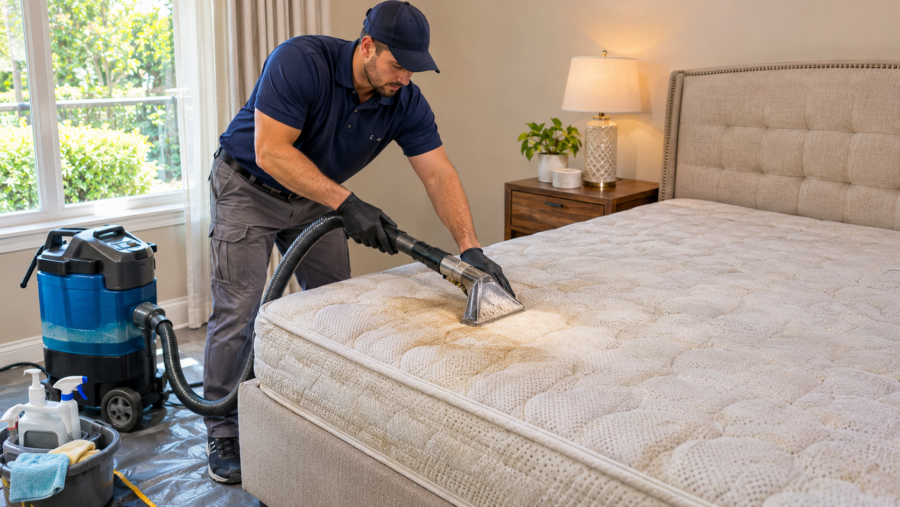
A thorough professional clean can pull out a lot of what home vacuuming misses – surface soil, stains, odors and a good share of the allergen residue near the top layers. It’s especially useful for sweat stains and after accidents.
What it can’t do is fix sagging springs or tired foam. Waking up with a sore back and a dip in the middle of the bed is a replacement conversation, not a cleaning one.
Sleep Well Anyway
Shakespeare described sleep as the thing that “knits up the ravell’d sleave of care.” Gorgeous image. Hard to appreciate while sneezing.
The good news: none of this calls for panic, gadgets or throwing out a perfectly good mattress. Clean bedding, a decent cover, a bit of airflow and an occasional deep clean keep the tenants in check.
They’ll never fully move out. But they can at least stop throwing parties.