
This guide offers actionable strategies to break free from overthinking, achieve emotional calmness, and regain control over your thoughts.
By understanding the roots of overthinking and applying practical techniques, you can manage overthinking and reduce anxiety, paving the way for improved mental well-being and a more fulfilling life.
Why Overthinking Happens and How It Affects Mental Well-Being

What Overthinking Really Is (Beyond Just Thinking Too Much)
Overthinking involves more than just thinking; it’s a cycle of repetitive, negative thinking that can be detrimental to your mental health. It’s rumination on past mistakes or worrying about the future, often leading to overthinking and anxiety. Learning how to stop overthinking starts with understanding that it’s an unproductive loop, not problem-solving.
The Emotional and Cognitive Costs of Overthinking
Overthinking has several negative consequences that go beyond just making you feel tired. Specifically, it can:
- Fuel anxious thoughts.
- Exacerbate stress and anxiety.
Furthermore, it diminishes your ability to focus on the present moment. Constant rumination drains cognitive resources, making it difficult to clear your mind and engage in productive activities, hindering overall well-being.
Why Feeling Calm and in Control Is Essential for Mental Health
Feeling calm and in control is fundamental to mental health, enabling you to navigate challenges with resilience and clarity. When you manage overthinking, you reduce anxiety and create space for mindfulness and emotional regulation. These, in turn, foster a sense of stability and empower you to address life’s uncertainties effectively.
Understanding Overthinking (The Psychology Behind Mental Loops)

How the Brain Creates Repetitive Thought Patterns
The brain creates repetitive thought patterns through neural pathways that strengthen with repeated use. Overthinking often stems from these established patterns, where negative thinking becomes a default response to stress. Learning how to stop intrusive thoughts involves breaking these patterns and training the brain to adopt healthier responses.
The Role of Anxiety and Uncertainty in Overthinking
Anxiety and uncertainty are major triggers for overthinking, as they often create a sense of threat that the mind tries to resolve through excessive analysis. Worrying about the future and dwelling on past mistakes become ways to cope with these feelings, yet they paradoxically amplify stress and perpetuate the cycle of overthinking.
Why Overthinking Feels Productive (But Often Isn’t)
Overthinking often feels productive because it gives the illusion of control and problem-solving, but it usually involves excessive analysis without concrete action. This mental rumination leads to overthinking everything and can trap you in a cycle of anxiety, hindering your ability to focus on the present moment and take effective steps forward.
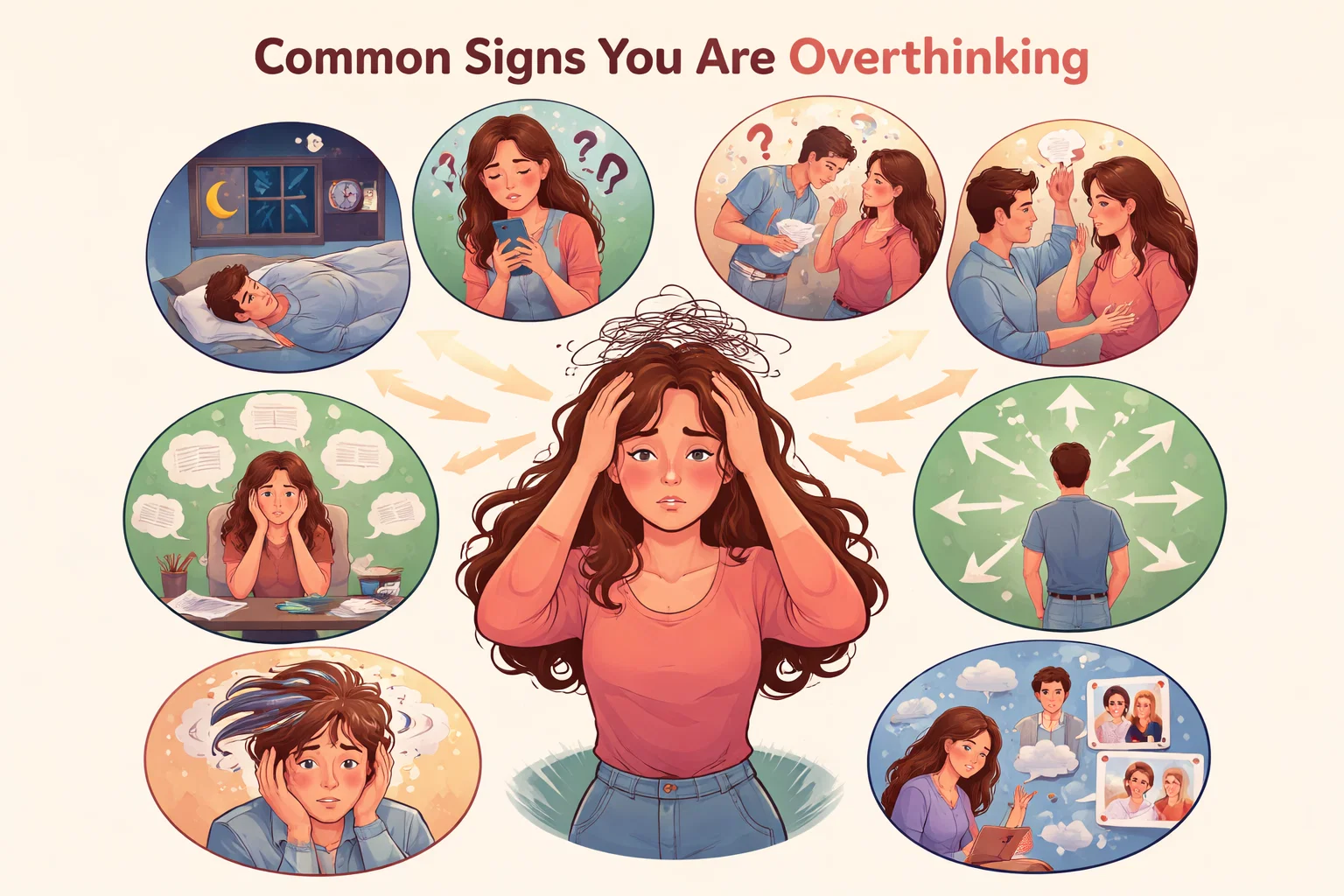
Common Signs You Are Overthinking
Replaying Past Events Repeatedly
One of the telltale signs you are overthinking is replaying past events repeatedly in your mind. This rumination often involves scrutinizing past mistakes and reliving embarrassing moments, leading to feelings of regret and self-criticism. This cycle prevents you from moving forward and finding peace in the present moment.
Constant Worry About the Future
Constant worry about the future is another clear indicator of overthinking. This involves imagining worst-case scenario situations, anticipating potential problems, and feeling overwhelmed by uncertainty. This constant state of anxiety can lead to significant stress and impair your ability to enjoy the present moment.
Difficulty Making Decisions
Difficulty making decisions is a common symptom of overthinking and anxiety. When you overthink, even simple choices can become paralyzing because you get caught up in analyzing every possible outcome. This indecisiveness stems from a fear of making the wrong choice, leading to more stress and mental exhaustion.
Mental Fatigue and Emotional Exhaustion
Mental fatigue and emotional exhaustion are frequent consequences of persistent overthinking. The constant mental activity drains your cognitive resources, leaving you feeling tired and depleted. This exhaustion can manifest as irritability, difficulty concentrating, and a reduced capacity to cope with daily stressors, impacting overall mental health.
Why Overthinking Reduces Emotional Calm and Control

The Link Between Overthinking and Anxiety
The link between overthinking and anxiety is profound; overthinking often fuels and exacerbates anxious thoughts, creating a vicious cycle. When you engage in constant mental rumination, you increase stress and anxiety, making it harder to calm your mind and focus on the present moment. Learning to manage overthinking is crucial for reducing anxiety.
How Mental Rumination Impacts Daily Life
Mental rumination significantly impacts daily life by impairing focus, disrupting sleep, and diminishing overall productivity. Constant dwelling on past mistakes or worrying about the future consumes mental energy, making it difficult to clear your mind and engage in daily tasks effectively. Overthinking everything affects relationships and decision-making.
Emotional Consequences of Persistent Overthinking
The emotional consequences of persistent overthinking are far-reaching, leading to increased stress and anxiety, feelings of helplessness, and even symptoms of mental health conditions. Chronic overthinking often stems from negative thinking and can lead to emotional exhaustion, making it essential to learn ways to stop overthinking and regain emotional control.
Practical Ways to Stop Overthinking (Actionable Strategies)

Acknowledge Thoughts Without Judgment
One of the most effective ways to stop overthinking is to acknowledge thoughts without judgment. Observe your thoughts as they arise, recognize them without attaching emotions, and then gently redirect your focus. This technique helps break free from overthinking and reduces the power of negative thinking to trigger anxiety and stress.
Use Grounding Techniques to Return to the Present
Use grounding techniques to return to the present moment when you find yourself caught in a cycle of overthinking and anxiety. Grounding exercises help anchor you in the present, providing a sense of calm and stability. These techniques are simple yet powerful ways to calm your mind and manage overthinking effectively.
Set Time Limits for Thinking
Setting time limits for thinking is a practical way to manage overthinking and regain control over your thoughts. Allocate a specific period each day to address worries or concerns, and once that time is up, consciously shift your focus to other activities. This helps prevent mental rumination from dominating your day.
Focus on Action Instead of Analysis
To stop overthinking, shift your focus from endless analysis to taking action. Instead of dwelling on potential problems, identify concrete steps you can take to address them. This proactive approach helps break the cycle of mental rumination and transforms anxious thoughts into productive behaviors. Focus on the present moment to reduce stress.
Grounding Techniques to Feel Calm Immediately

The 5-4-3-2-1 Sensory Exercise
The 5-4-3-2-1 sensory exercise is a simple yet effective grounding technique to calm your mind and reduce anxiety. By engaging your senses, you anchor yourself in the present moment, breaking the cycle of overthinking and anxious thoughts. This exercise is a powerful tool to manage overthinking and regain control.
Deep Breathing for Nervous System Regulation
Deep breathing is a powerful tool for nervous system regulation, offering a quick and effective way to calm your mind and reduce anxiety. By slowing your breath and focusing on the physical sensation of breathing, you activate the body’s relaxation response and break free from overthinking and its associated stress.
Physical Movement as a Mental Reset
Engaging in physical movement can serve as a mental reset, helping to stop overthinking and reduce anxiety. Activities like walking, stretching, or dancing shift your focus from racing thoughts to the present moment, promoting a sense of calm and mental clarity. This simple practice is effective in managing overthinking.
Cognitive Strategies to Reduce Overthinking

Challenge Negative Assumptions
One of the cognitive strategies to reduce overthinking involves challenging negative assumptions. Often, overthinking stems from negative thinking and unfounded beliefs that fuel anxiety. By questioning these assumptions and seeking evidence to the contrary, you can begin to break free from the cycle of mental rumination and reduce stress and anxiety.
Reframe Thoughts with Balanced Perspectives
Reframing thoughts with balanced perspectives is crucial in stopping overthinking. This involves examining your thoughts from different angles and considering alternative interpretations. By avoiding worst-case scenario thinking and cultivating a more balanced outlook, you can reduce the intensity of anxious thoughts and promote a calmer, more rational mindset.
Avoid Catastrophizing and Worst-Case Scenarios
Avoiding catastrophizing and worst-case scenarios is essential for managing overthinking and reducing anxiety. Overthinking often involves imagining the worst possible outcomes, which amplifies stress. By consciously challenging these catastrophic thoughts and focusing on more realistic possibilities, you can calm your mind and regain a sense of control.
Emotional Regulation: How to Feel Calm in Stressful Moments

Identifying Emotional Triggers
Identifying emotional triggers is the first step in regulating emotional responses and reducing stress. Recognizing the specific situations, people, or thoughts that lead to overthinking and anxiety can help you prepare and respond more effectively. This awareness empowers you to stop intrusive thoughts and take proactive steps to manage overthinking.
Techniques to Regulate Emotional Responses
Here are several techniques that can help regulate emotional responses and calm your mind in stressful moments. These include:
- Deep breathing exercises
- Mindfulness practices
- Grounding techniques
These are effective ways to manage overthinking and reduce anxiety. Learning to control your emotional reactions helps break free from overthinking and regain a sense of emotional balance.
Building Emotional Awareness Over Time
Building emotional awareness over time is a continuous process that enhances your ability to manage overthinking. By paying attention to your feelings and understanding how they influence your thoughts and behaviors, you can develop greater emotional resilience. This awareness enables you to stop overthinking and reduce anxiety in the present moment.
Practical Habits That Prevent Overthinking

Mindfulness and Present-Moment Awareness
Mindfulness and present-moment awareness are powerful tools for preventing overthinking. By focusing on the present moment without judgment, you can interrupt the cycle of mental rumination and reduce stress and anxiety. Mindfulness practices train your brain to stay grounded and avoid getting caught up in anxious thoughts.
Journaling for Mental Clarity
Journaling for mental clarity is an effective way to prevent overthinking and gain insights into your thoughts and feelings. Writing down your thoughts can help you process emotions, identify triggers, and develop strategies to manage overthinking. Regular journaling promotes self-awareness and reduces the tendency to dwell on past mistakes.
Limiting Information Overload
Limiting information overload is crucial for preventing overthinking and maintaining mental well-being. Excessive exposure to news, social media, and other sources of information can overwhelm your mind and contribute to anxiety. By setting healthy boundaries around information consumption, you can reduce stress and calm your mind.
Establishing Healthy Mental Boundaries
Establishing healthy mental boundaries is essential for preventing overthinking and protecting your mental health. This involves setting limits on how much you think about certain issues and avoiding the temptation to overanalyze every situation. Healthy mental boundaries help create space for calm and reduce the likelihood of mental rumination.
Decision-Making Strategies to Reduce Mental Paralysis

The 80/20 Rule of Decision-Making
The 80/20 rule, or Pareto principle, can be applied to decision-making to reduce mental paralysis caused by overthinking. This involves recognizing that 80% of the value comes from 20% of the effort and focusing on the most impactful aspects of a decision. This approach helps streamline the process and reduce anxiety.
Accepting Imperfection and Uncertainty
Accepting imperfection and uncertainty is crucial for reducing mental paralysis and stopping overthinking. Realizing that it’s impossible to make perfect decisions or predict the future with certainty allows you to move forward with confidence. Embracing uncertainty reduces stress and anxiety, enabling you to make choices more easily.
Making Small Decisions to Build Confidence
Making small decisions to build confidence is a practical strategy to combat mental paralysis and overthinking. Starting with minor choices and gradually increasing the complexity can help you overcome the fear of making mistakes. Each successful decision reinforces your ability to manage overthinking and make choices effectively.
How to Cultivate a Sense of Control Without Overthinking

Focus on What You Can Control
To cultivate a sense of control without succumbing to overthinking, focus on what you can control in the present moment. Instead of dwelling on uncertainties, channel your energy into actionable steps and manageable tasks. This approach can help you manage overthinking, reduce anxiety, and learn how to stop intrusive thoughts that disrupt your focus.
Break Problems into Actionable Steps
Breaking problems into actionable steps is an effective way to combat overthinking. When faced with a daunting challenge, divide it into smaller, manageable tasks. This strategy prevents feeling overwhelmed and allows you to focus on the present moment. By taking tangible actions, you can reduce anxiety and stop intrusive thoughts effectively.
Develop a Growth Mindset
Developing a growth mindset is crucial for cultivating a sense of control and learning how to stop overthinking. Embrace challenges as opportunities for learning and growth rather than viewing them as threats. This perspective helps you manage overthinking, reduce anxiety, and stop worrying about failures. Train your brain to see setbacks as learning experiences.
Common Mistakes That Worsen Overthinking
Suppressing Thoughts Instead of Acknowledging Them
Suppressing thoughts instead of acknowledging them is a common mistake that worsens overthinking. Trying to ignore or push away intrusive thoughts often backfires, leading to increased anxiety and mental rumination. A more effective approach involves acknowledging thoughts without judgment, allowing them to pass without getting caught up in them, to calm your mind.
Seeking Perfection in Decisions
Seeking perfection in decisions is a common pitfall that exacerbates overthinking and anxiety. Striving for flawless choices can lead to endless analysis and mental paralysis. Accepting that perfection is unattainable and focusing on making good enough decisions can reduce stress and help you manage overthinking effectively, allowing you to calm your mind.
Relying on External Validation
Relying on external validation as a way to feel secure can significantly worsen overthinking. When your self-worth depends on the opinions of others, you become prone to overanalyzing their reactions and worrying about their judgments. Cultivating internal validation is essential for learning ways to stop overthinking and building emotional resilience.
When Overthinking Requires Professional Support
Signs of Chronic Anxiety or Mental Health Challenges
Recognizing the signs of chronic anxiety or other mental health challenges is crucial in determining when overthinking requires professional support. Persistent anxiety, panic attacks, or overwhelming feelings of hopelessness are indicators. Seeking help from a mental health professional can provide effective strategies to manage overthinking and improve overall well-being and train your brain.
How Therapy and Support Can Help
Therapy and support can offer invaluable assistance in managing overthinking and anxiety disorders. Therapists can provide evidence-based techniques such as cognitive-behavioral therapy (CBT) to challenge negative thinking patterns and develop healthier coping mechanisms. Support groups offer a sense of community and shared understanding, helping you learn how to stop overthinking.
Seeking Help Is a Strength, Not a Weakness
Recognizing that seeking help from a mental health professional is a sign of strength, not weakness, is essential for overcoming overthinking. It takes courage to acknowledge when you’re struggling and to take proactive steps toward improving your mental health. Seeking support can provide tools and strategies to manage overthinking effectively.
Conclusion: Calmness and Control Are Achievable
In conclusion, calmness and control are achievable through consistent effort and the application of practical strategies. By understanding the causes of overthinking, implementing grounding techniques, and developing emotional awareness, you can break free from the cycle of mental rumination. This process enables you to reduce stress and anxiety, enhancing your overall well-being.