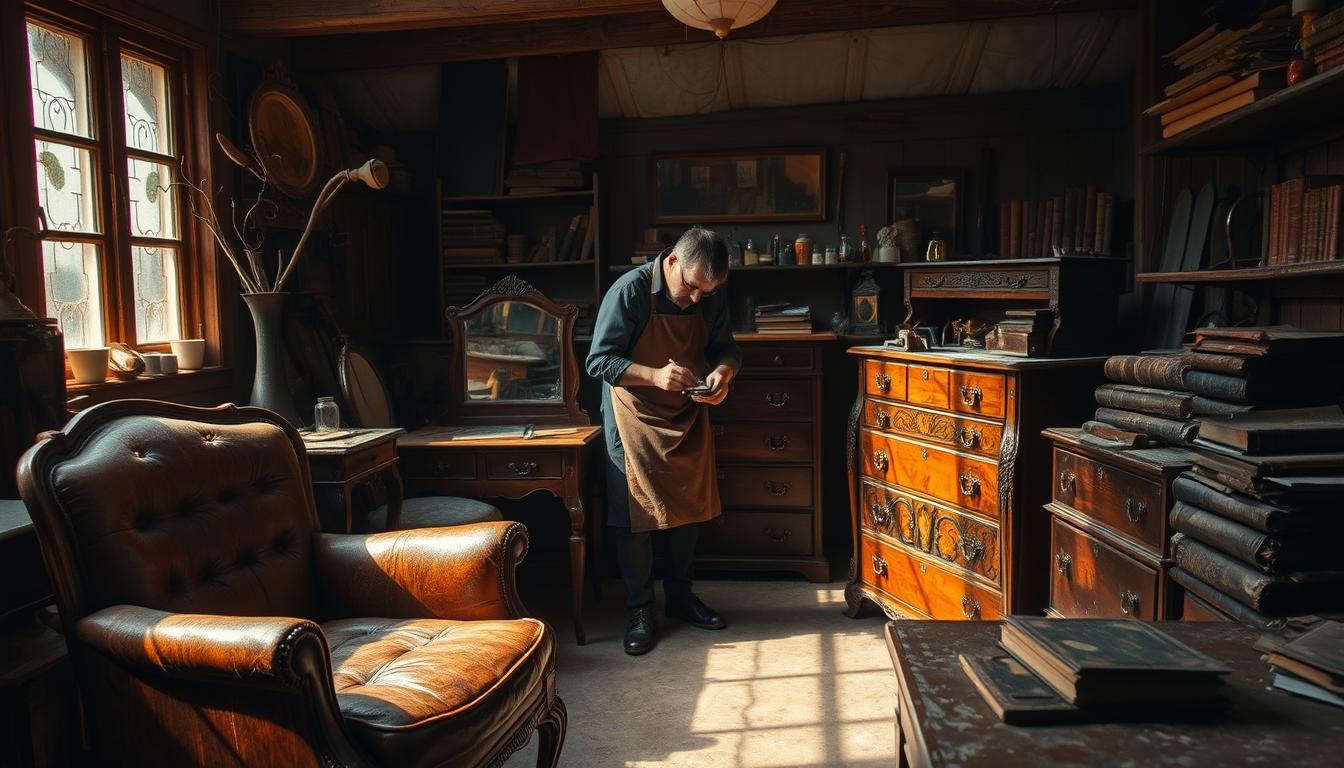
I remember my grandmother’s weathered oak dresser in our attic. Many would have thrown it away, but she saw its value. To her, it was more than wood and nails—it was a story waiting to be told.
Reusing old furniture is more than a trend. It’s a way to keep history alive and cut down on waste. The Environmental Protection Agency says nearly 9 million tons of furniture end up in landfills each year. We can make a difference by giving old furniture a new life.
Our goal is to give vintage pieces a new lease on life. Whether you’re looking to repurpose or restore, we’ve got you covered. This guide will help you turn forgotten treasures into beautiful, functional pieces.
We’ll show you how to give your vintage finds a makeover. From simple refinishing to full makeovers, we’ll explore creative ways to breathe new life into old furniture. Get ready to see the magic of furniture restoration, where creativity meets sustainability.
Why Reusing Vintage Furniture Is a Smart Move
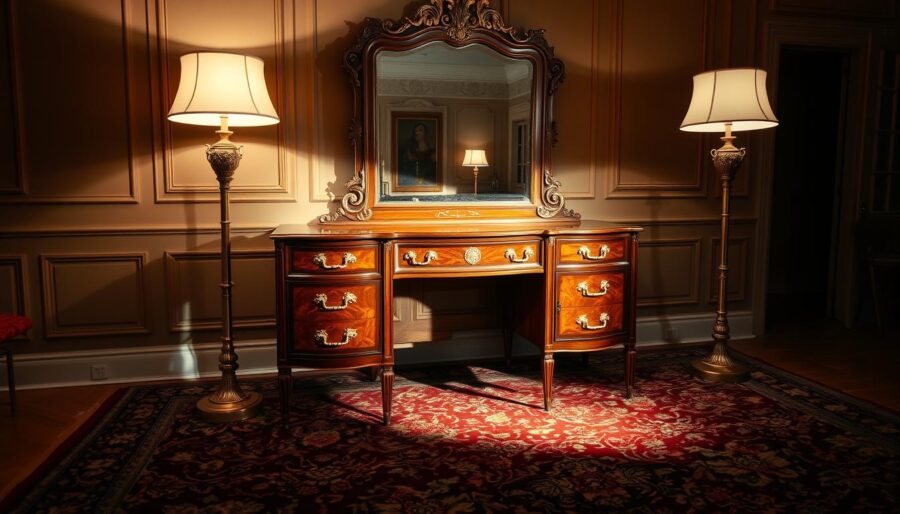
Vintage furniture adds a nostalgic charm to your home. It’s more than just a style choice. It’s a statement about being sustainable, creative, and making smart design decisions.
Choosing vintage furniture is not just a trend. It’s a responsible choice that helps your home and the planet. By revamping antique furniture, you join a movement of conscious consumption.
Environmental and Sustainable Benefits
Using vintage furniture cuts down on waste and reduces the need for new items. Each piece you restore saves more furniture from landfills.
- Reduces carbon footprint
- Minimizes manufacturing waste
- Conserves natural resources
- Decreases energy consumption in production
Cost-Effective Alternative to Buying New
Vintage furniture makeovers are budget-friendly. They let you create unique, quality pieces without spending a lot. Quality craftsmanship from the past often beats modern mass-produced furniture.
Buying vintage can save you a lot of money. It adds unique charm to your home. Many vintage items need little fixing, making them a smart choice.
Adds Unique Character and Charm to Your Space
Every vintage piece has a story, adding depth and personality to your space. By picking and restoring vintage furniture, you make a space that shows your style and love for timeless design.
As design expert Whitney Frances Falk says, it’s about fighting the climate crisis in a practical, beautiful, and feel-good way.
Step One: Clean and Inspect the Furniture
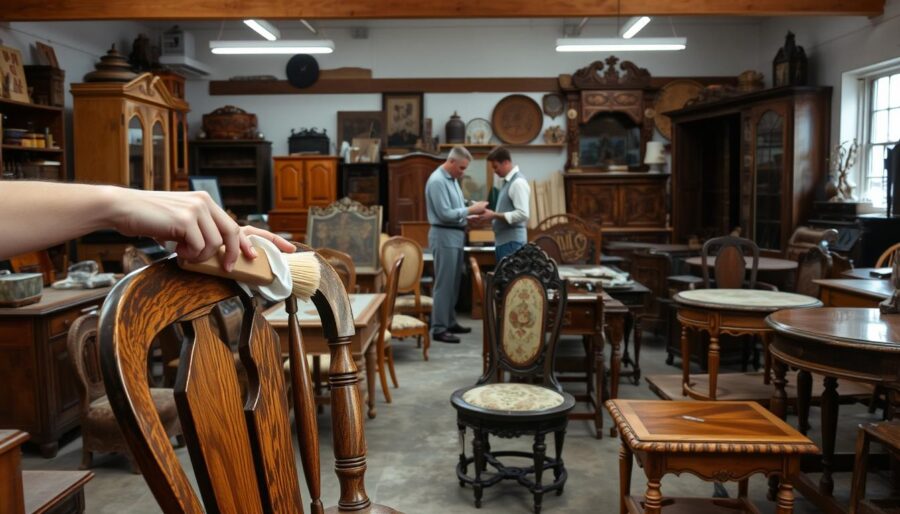
Starting to breathe new life into old furniture begins with a deep clean and a careful look. Our tips will guide you in turning worn pieces into beautiful treasures. It’s key to know the condition of your antique furniture before starting any project.
How to Properly Clean Different Materials
Cleaning vintage furniture needs a gentle touch and special methods for each material:
- Wood surfaces need gentle cleaning with specialized wood cleaners
- Fabric pieces require careful spot treatment and the right cleaning solutions
- Metal components demand rust removal and a protective coating
Signs of Damage and Restoration Needs
Repurposing antique furniture starts with a detailed damage check. Look for these important signs:
| Material | Damage Signs | Recommended Action |
|---|---|---|
| Wood | Cracks, warping, loose joints | Wood filler, glue, sanding |
| Fabric | Tears, stains, worn patches | Patch repair, reupholstering |
| Metal | Rust, corrosion, structural weakness | Sanding, priming, protective coating |
Pro tip: Always test cleaning products on a small, hidden area first to prevent unexpected damage during your furniture restoration journey.
Restore It to Its Former Glory
Bringing vintage furniture back to life needs passion, skill, and the right steps. Upcycling old decor turns forgotten items into beautiful pieces with a story. Our guide will show you how to restore classic furniture with confidence and creativity.

Starting diy vintage furniture projects might seem tough, but it’s doable. Experts say to start with simple steps and build your skills over time.
DIY Restoration Tips for Beginners
- Start with clean and simple pieces for initial projects
- Invest in quality restoration tools
- Research the furniture’s original era and style
- Practice techniques on less valuable pieces first
When to Refinish vs. Repaint
| Technique | Best Used For | Difficulty Level |
|---|---|---|
| Refinishing | Wooden furniture with good structural integrity | Moderate |
| Repainting | Pieces with surface damage or outdated finish | Beginner |
Choosing the Right Products for Restoration
When refinishing retro furniture, pick the right products to keep its original charm. Look for eco-friendly, specialized materials that protect and improve vintage surfaces.
- Wood conditioners for preventing uneven staining
- Gentle cleaning solutions
- High-quality primer and paint
- Protective sealants
Our journey of restoration turns old furniture into treasured design pieces. With patience and practice, you’ll discover the hidden beauty in every vintage item.
Repurpose Vintage Furniture for Modern Use
Upcycling vintage pieces gives old furniture a new life. It turns forgotten items into stunning art that’s also functional. Our hacks make old treasures into creative home solutions.
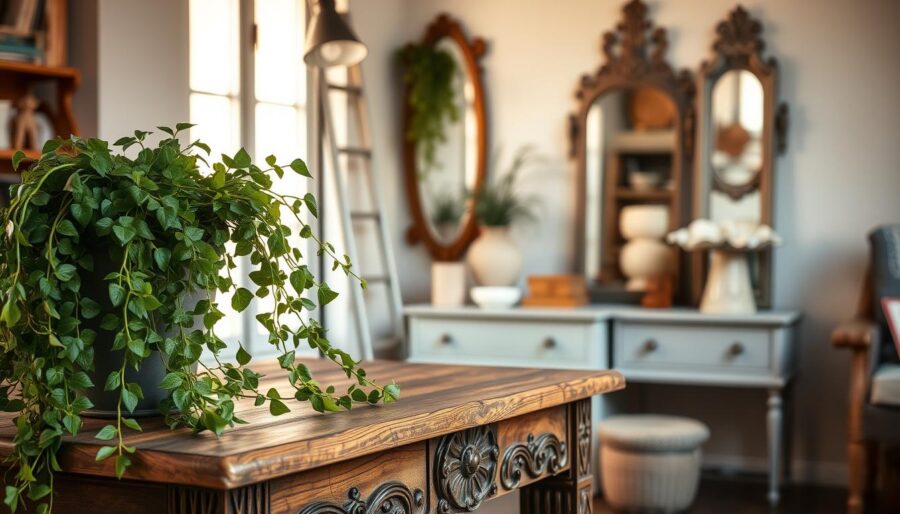
Recycling old furniture is good for the planet and sparks a design revolution. These transformations can change your home with unique, personal touches.
Creative Dresser Transformations
Old dressers are full of possibilities. Here are some exciting ideas:
- Turn a vintage dresser into a charming bathroom vanity
- Make a wooden dresser into a kitchen island with extra storage
- Create a custom entertainment center with built-in media storage
Armoires: From Storage to Workspaces
Vintage armoires can become amazing multipurpose spaces. Imagine turning a classic wooden armoire into a compact home office or craft station. Remove shelves, add outlets, and make a hidden workspace that disappears when not in use.
Unexpected Furniture Reimaginations
Get creative with these unique ideas:
- Vintage ladders as stylish bookshelves or blanket displays
- Antique trunks transformed into elegant coffee tables
- Old suitcases as distinctive storage solutions
Our upcycling journey shows that with imagination, no vintage furniture is outdated. It’s just waiting for its next amazing transformation.
Reimagine It with Paint and Upholstery
Refurbishing retro decor gives old furniture a new life. It turns forgotten pieces into stunning design statements. Paint and upholstery are key tools for this, blending history with modern style.
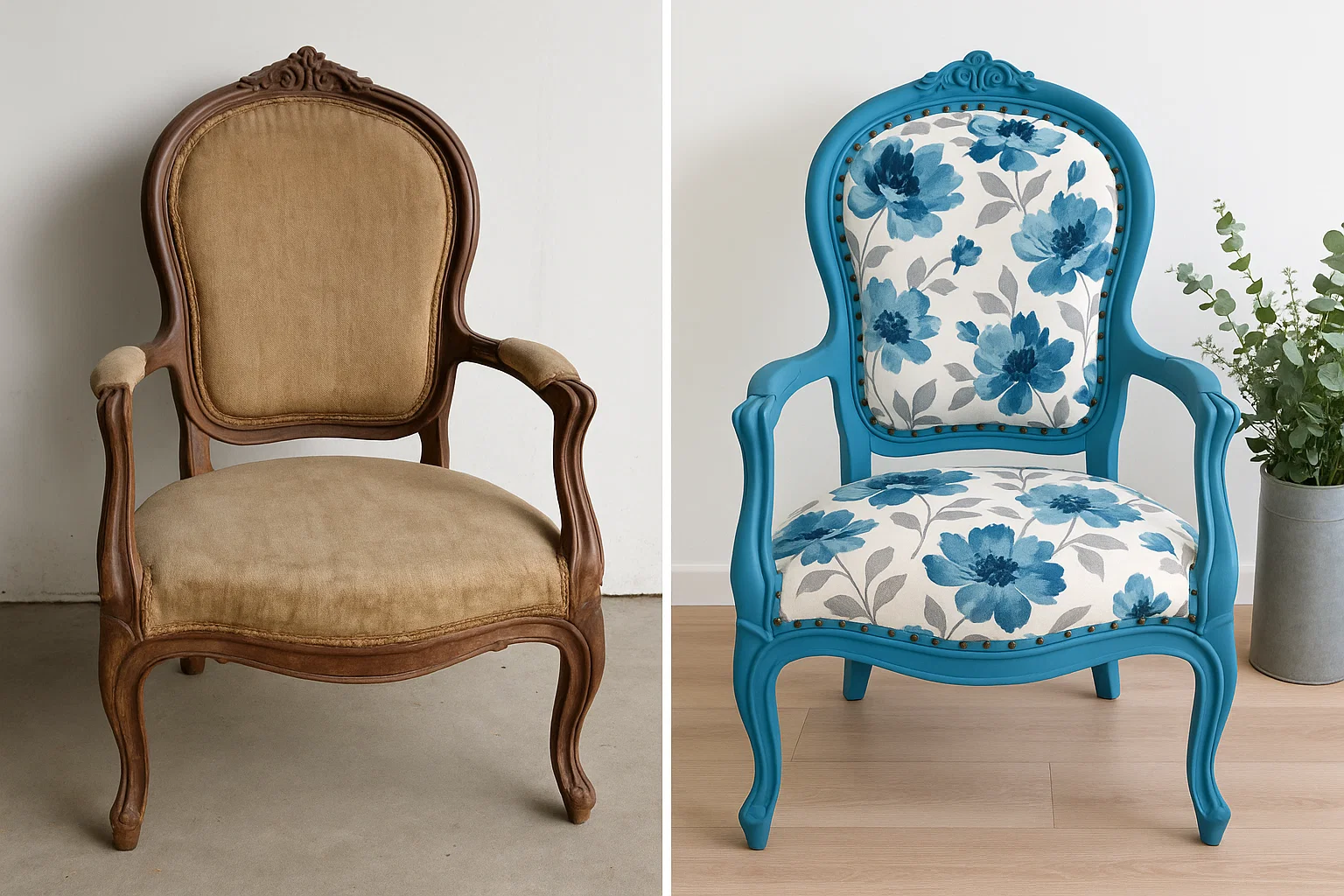
Revamping classic designs needs creativity and strategy. We’ll look at how to revive antiques with new painting and upholstery techniques. These methods will make your vintage pieces shine.
Trending Paint Colors and Finishes for 2025
The latest trends in furniture restoration include:
- Sage green for a calming, natural look
- Warm terracotta for depth and warmth
- Muted blue-gray for sophisticated neutrals
- Creamy whites with subtle undertones
How to Reupholster for a Fresh Look
Reupholstering vintage furniture can change its look completely. Start by:
- Removing old fabric carefully
- Inspecting padding and springs
- Selecting durable, modern fabrics
- Using proper stapling techniques
Blending Vintage with Modern Fabric Styles
Mixing vintage pieces with modern interiors needs thought. Choose fabrics that match both the furniture’s original look and your design style. Opt for textured linens, subtle patterns, or rich velvet. These materials connect old and new styles.
Combine Old Pieces to Create Something New
Thrifting furniture makeovers open up a world of creative design. We don’t just fix old furniture; we turn forgotten pieces into amazing works of art.
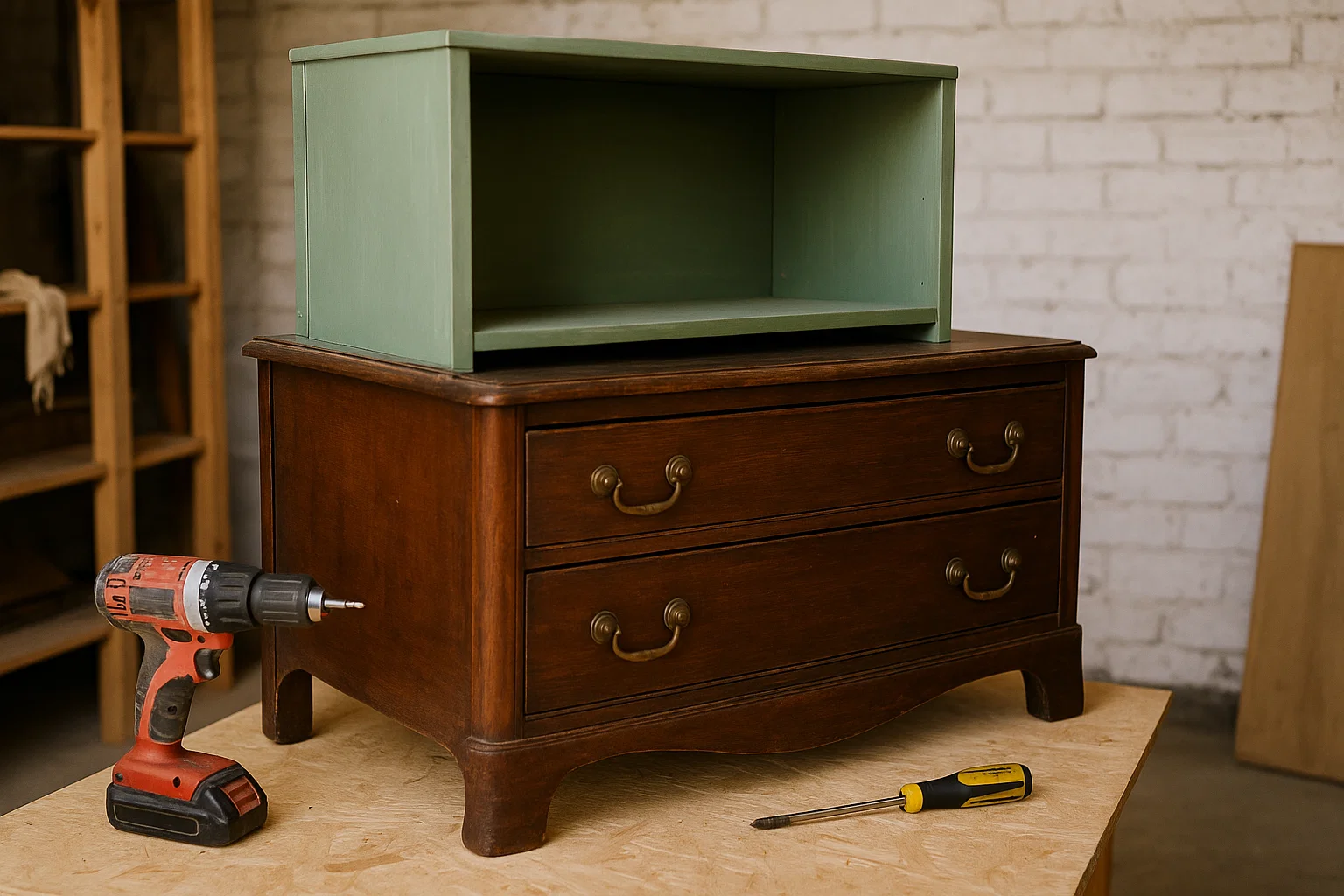
Sustainable decor trends are changing the game. They inspire designers and DIY fans to see furniture in new ways. Upcycling means seeing each piece as part of something new and surprising.
Mixing Parts for Unique Hybrid Furniture
Making hybrid furniture needs creativity and smart planning. Here are some tips for mixing furniture:
- Find pieces that fit together well
- Look for materials and styles that match
- Make sure the structure is strong before combining
- Try out unusual pairings
Modular and Multi-functional Designs
Today’s homes need to be flexible. Our favorite ways to restore vintage furniture focus on making pieces that can change with your needs. Imagine dresser drawers turned into floating shelves, or old ladders as cool room dividers.
The beauty of hybrid furniture is its ability to tell a story and solve design problems. By carefully combining old parts, we create pieces that are both useful and personal.
Where and How to Style Reused Vintage Furniture
Turning old furniture into eye-catching pieces needs creativity and smart design. Our guide will show you how to make antique furniture revamps stand out. They can add life to today’s homes.
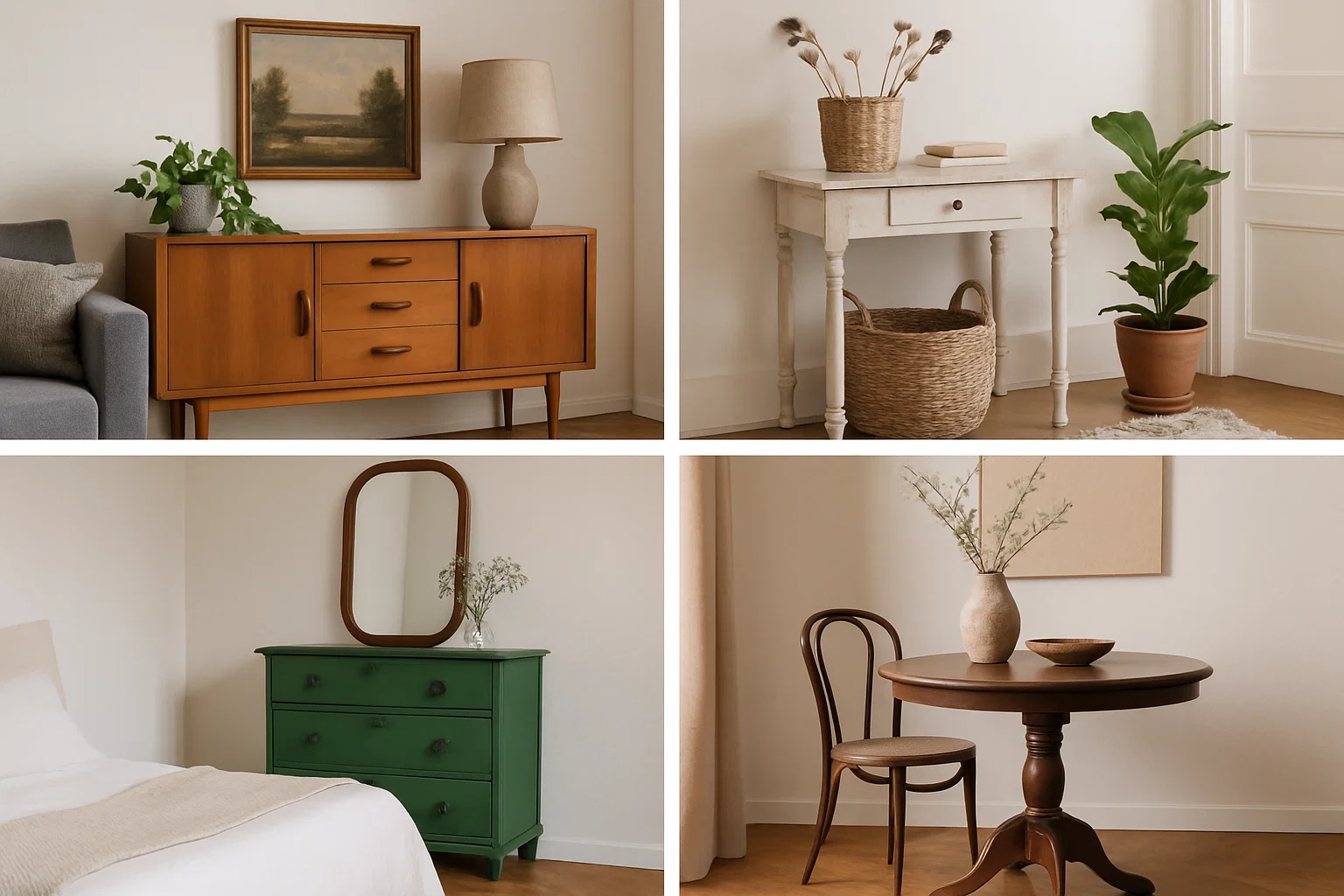
Making Vintage a Statement Piece in Modern Rooms
To add interest, balance and contrast are key. Pick one special piece, like a restored dresser or a fancy armchair. Place it in a way that grabs attention and starts conversations.
- Choose a single standout vintage piece as your room’s centerpiece
- Pair bold vintage items with neutral, contemporary surroundings
- Use unexpected color combinations to create dramatic impact
Styling Tips: Minimalism Meets Retro
Mixing minimalist style with vintage flair needs careful selection. Less is more when adding retro furniture to modern spaces. Look for items with simple designs and subtle beauty that fit your decor.
Lighting, Accessories, and Placement Ideas
Highlight your vintage furniture with smart lighting and accessories. Modern lights or floor lamps can make your pieces shine. Add simple decorations that boost the furniture’s charm without overpowering it.
- Use directional lighting to showcase intricate details
- Select complementary accessories in neutral tones
- Create visual breathing room around statement pieces
Tools & Materials You’ll Need for Refurbishing Projects
Starting a secondhand furniture makeover needs careful planning and the right tools. Our guide will show you how to build a DIY kit for upcycling and repurposing with ease.
Essential DIY Kit for Furniture Restoration
For a successful retro furniture makeover, you need the right tools. Here’s a list of must-haves:
- Protective safety gear (gloves, goggles, dust mask)
- Sandpaper in various grits (80-220)
- Paint brushes and rollers
- Wood filler and putty knife
- Electric sander
- Clean rags and microfiber cloths
- Primer and paint specifically for furniture restoration
Safety Tips When Handling Old Furniture Materials
Working with vintage furniture requires safety first. Always work in a well-ventilated area and wear protective gear. Older furniture may contain lead paint or other hazardous materials, so be careful:
- Test for lead paint before sanding
- Use respiratory protection
- Clean work areas thoroughly
- Dispose of chemical materials properly
With the right tools and safety knowledge, you can turn vintage pieces into stunning, unique furniture. It will tell a story of its own.
Mistakes to Avoid When Working with Vintage Pieces
Starting a diy furniture makeover is thrilling. But, it’s key to know the pitfalls that could mess up your project. Restoration needs careful planning and a thoughtful approach to keep the vintage charm.
Beginners often make big mistakes when working on sustainable furniture ideas. These errors can harm the integrity of your finds. Refurbishing furniture requires patience, skill, and a soft touch.
Avoiding Destructive Restoration Techniques
Some common mistakes can damage vintage furniture:
- Over-sanding which strips away valuable historic patina
- Using harsh chemical strippers that destroy delicate wood finishes
- Aggressive cleaning methods that remove original protective layers
Preserving Original Character
The charm of vintage furniture is its unique story. We suggest:
- Documenting original features before restoration
- Using minimal intervention techniques
- Choosing restoration methods that respect the piece’s heritage
Planning and Precision Matters
Successful makeovers need careful preparation. Always double-check your measurements and plan well. Test restoration methods on small, hidden areas before doing the whole piece.
By avoiding these mistakes, you can turn vintage furniture into beautiful, functional pieces. These pieces will honor their original craftsmanship and fit well in today’s homes.
Final Thoughts: Give Old Furniture New Life
Our journey through diy vintage furniture makeovers shows the amazing potential in old pieces. Antique furniture refinishing is more than a hobby; it’s a way to give new life to cherished items. We’ve seen how vintage furniture restoration can turn old pieces into stunning highlights that share unique stories.
By choosing to restore old furniture, we do more than make our homes beautiful. We also support sustainable design and keep craftsmanship alive from past times. Each restored piece has a story, connecting us to memories and traditions that might be lost. Our creative efforts give furniture with character a second chance at life.
The beauty of furniture restoration is seeing potential where others see only age and wear. Whether you’re experienced or just starting, every vintage piece is a chance to express yourself. We invite you to tackle each project with patience, creativity, and an open mind. Your unique touch can turn forgotten furniture into treasured home pieces that show your style and care for the environment.
Our exploration shows that furniture restoration is not just a skill; it’s an art form that celebrates renewal, creativity, and caring for our planet. Start your own vintage furniture journey, and see how ordinary pieces can become extraordinary parts of your home.