Did you know you spend about 26 years sleeping in your lifetime? The quality of your sleep space greatly affects your health and happiness. As a sleep expert, I’m excited to share how to make your bedroom a sleep haven.
Creating a restful bedroom is more than just looks. It’s about the right mix of environmental factors that boost your sleep and recovery. Sleep experts have found key ways to make your bedroom perfect for sleep.
I aim to teach you science-backed ways to improve your bedroom. We’ll cover everything from lighting and temperature to noise and bedding. Making these changes can help your body heal and perform better.
In this guide, I’ll mix science with practical tips for your bedroom. You’ll see how simple changes can make your bedroom a sleep and wellness powerhouse.
Why Your Bedroom Environment Matters for Sleep Quality
Your bedroom is more than a place to sleep. It’s a complex space that affects your sleep and health. To create a sleep-friendly room, you need to know how your environment affects your sleep cycles.
Sleep is closely tied to our surroundings. Studies show how our bedroom can either help or hurt our sleep patterns.
The Intricate Connection Between Sleep Cycles and Environment
Our bodies are very sensitive to outside factors. The sounds and quiet in your bedroom greatly affect your sleep. Important factors include:
- Light exposure
- Noise levels
- Room temperature
- Air quality
How Circadian Rhythms Respond to Environmental Triggers
Keeping the right temperature is key for good sleep. Studies say the best bedroom temperature is between 60-71°F (15.6-22°C). This helps your body sleep naturally.
Light is the strongest signal for our body’s clock. Natural and artificial light can change our sleep-wake cycles. It affects hormone levels and how we metabolize food.
By knowing and adjusting these factors, you can make your bedroom a sleep haven. It will help your body follow its natural rhythms.
Mastering Bedroom Lighting for Restful Nights
Your bedroom’s lighting is key to better sleep and keeping your body’s clock in sync. It’s not just about how bright it is. It’s about setting the right mood for waking up and going to sleep.
Getting the right lighting in your bedroom is important. Our bodies react differently to different kinds of light. This makes choosing the right lighting crucial for a good night’s sleep.
Natural Light: Your Morning Energy Booster
Natural light in the morning helps set your body’s clock. Here’s what I recommend:
- Open your curtains right after waking up
- Place your bed near windows
- Use curtains that filter light
Evening Lighting: Creating Sleep-Friendly Environments
As night falls, the right lighting is key. Blue light from screens can mess with your sleep. It makes it harder to fall asleep.
| Light Type | Sleep Impact | Recommended Use |
|---|---|---|
| Blue Light | Suppresses Melatonin | Avoid 2-3 hours before bed |
| Warm Light | Promotes Relaxation | Use after sunset |
| Dim Lighting | Signals Sleep Preparation | Gradually reduce brightness |
Smart Lighting Strategies
Smart bulbs and dimmers are a smart choice. Warm, low-intensity lights between 2700-3000K are best for sleep.
- Choose warm-toned LED bulbs
- Install dimmer switches
- Look into smart lighting systems
By using these tips, you can turn your bedroom into a sleep haven. It will help you sleep better and feel refreshed.
The Ideal Bedroom Temperature and Air Quality
Creating the perfect sleep environment is more than just picking a mattress. It’s also about controlling the temperature and air quality in your bedroom. Let’s explore how to make your bedroom the ideal place for restful sleep.
The Science of Body Temperature and Sleep Regulation
Our bodies have a special way to control temperature that affects our sleep. As night falls, our body temperature drops. This tells our brain it’s time to sleep. The right bedroom environment helps this process, making sleep easier and more refreshing.
Best Bedroom Temperatures for Deep Sleep
Studies say the best bedroom temperature for sleep is between 60-67 degrees Fahrenheit. Here’s a quick guide on how temperature affects sleep:
- Below 60°F: Can make it hard to fall asleep
- 60-67°F: The best temperature for deep sleep
- Above 70°F: May cause trouble sleeping and wake-ups
Improving Air Quality for Better Sleep
Good air quality in your bedroom is key for a good night’s sleep. Bad air can disrupt sleep and harm your health. Here are some tips to improve your sleep space:
| Air Quality Solution | Benefits |
|---|---|
| Air Purifiers | Clears out allergens and pollutants |
| Indoor Plants | Natural air cleaning and oxygen boost |
| Humidity Control | Keeps mold away and ensures easy breathing |
Pro tip: Get a top-notch air purifier with a HEPA filter. It will greatly improve your bedroom’s air and help you sleep better.
Silence or Soothing Sounds? Managing Bedroom Noise
Creating the perfect bedroom acoustics is key for restful sleep. Noise can greatly affect your sleep quality. It can interrupt sleep cycles and stop you from getting deep, restorative rest. I’ll show you how to manage sound in your sleep space.
How Noise Disrupts Sleep Cycles
Unexpected sounds can wake you up and stress your brain. Research shows that reducing noise is essential for health. Sounds as low as 50 decibels can still disrupt your sleep.
Effective Sound-Minimizing Bedroom Setup Strategies
- Install thick, sound-absorbing curtains
- Use area rugs to dampen floor vibrations
- Apply acoustic wall panels
- Seal window and door gaps
Peaceful Sound Solutions
Not all sounds are bad for sleep. Some can actually help you relax. Here are some audio tools:
- White noise machines that mask external sounds
- Calming nature soundtracks
- Low-volume instrumental music
- Gentle rain or ocean wave recordings
By understanding bedroom acoustics and using noise management strategies, you can make your bedroom a peaceful place. It will help you get deep, uninterrupted rest.
Choosing the Right Mattress, Pillows, and Bedding
Creating the perfect sleep sanctuary starts with understanding sleep ergonomics. It’s about picking the right bedroom essentials. Your mattress, pillows, and bedding are key to good sleep and comfort.
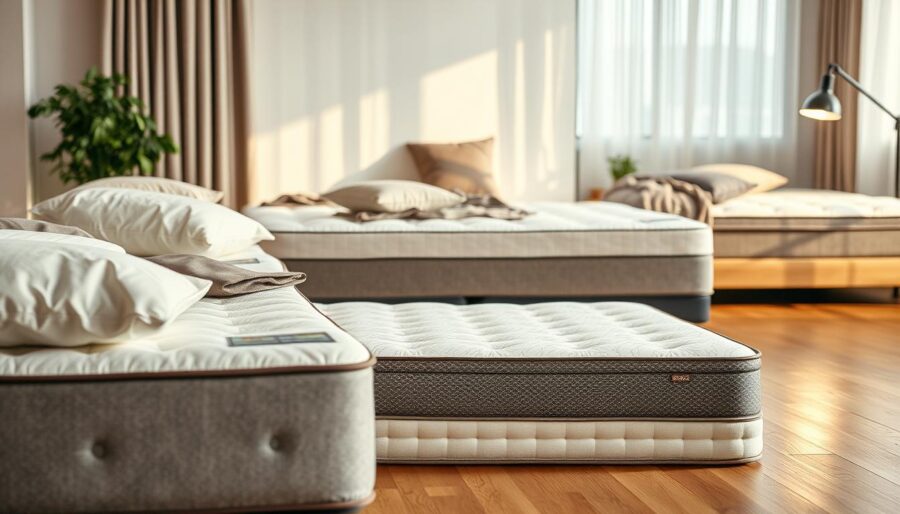
Exploring mattress firmness science can be tough. I’ll guide you through the important steps to create your dream sleep space.
Exploring Mattress Types for Optimal Support
When choosing a mattress, you have three main options:
- Memory Foam: Shapes to your body, easing pressure
- Hybrid Mattresses: Mixes innerspring support with foam comfort
- Natural Latex: Offers responsive support and eco-friendly materials
Pillow Selection Based on Sleep Position
Your sleep position affects pillow choice. Side sleepers need thicker pillows. Back and stomach sleepers prefer thinner pillows for spinal alignment.
Temperature-Regulating Bedding Materials
Breathable fabrics are key for comfort. Look into these materials:
- Cotton: Lightweight and breathable
- Bamboo: Moisture-wicking and cool
- Linen: Great for hot sleepers
Choosing the right sleep components turns your bedroom into a cozy rest haven. Knowing about sleep ergonomics helps you pick what’s best for your body.
Colors, Design, and Decluttering for Sleep-Friendly Vibes
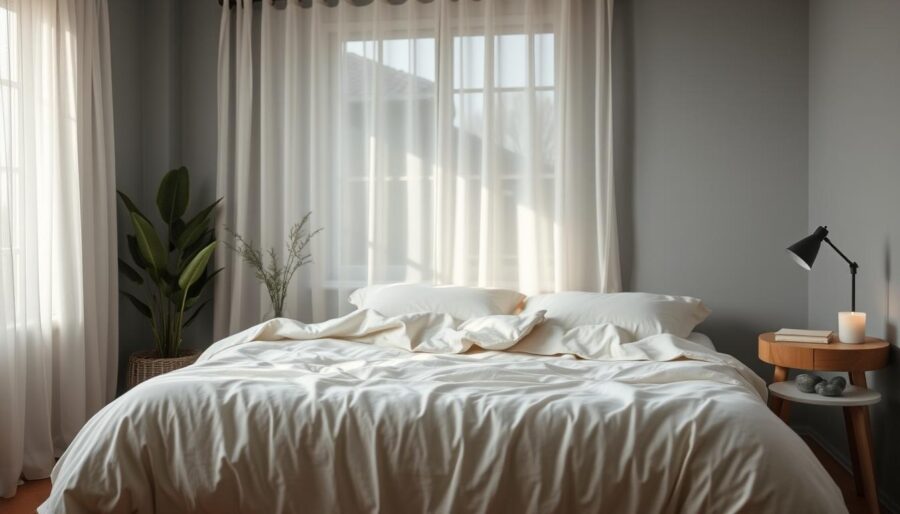
Creating a sleep-inducing decor is more than just looks—it’s a science. Your bedroom’s environment is key to getting ready for sleep. I’ll show you how to turn your space into a restful haven.
The Psychology of Calming Colors
Colors can greatly affect your sleep quality. Soft, cool tones are best for relaxation:
- Blue: Reduces heart rate and blood pressure
- Green: Promotes a sense of tranquility
- Lavender: Calms the nervous system
- Neutral grays: Create a peaceful backdrop
Minimalism: Your Path to Peaceful Spaces
A calm bedroom starts with decluttering. Too many items can stress you out and disrupt sleep. Here’s what to do:
- Remove work-related items from the bedroom
- Clear surfaces to reduce visual chaos
- Use hidden storage solutions
- Keep only essential, calming decorations
Feng Shui Insights for Better Sleep
Feng Shui isn’t science, but it has interesting ideas for harmonious spaces. Place your bed away from doors and avoid mirrors at night.
By carefully designing your bedroom, you’ll set up a great sleep environment. Even small changes can make a big difference in your sleep.
Aromatherapy and Sleep-Inducing Scents
Turning your bedroom into a cozy sleep spot is more than just about looks. Scents are key in making a calm space for better sleep. Aromatherapy can really help make your bedroom a sleep haven.
The right smells can calm your nervous system. This helps your body and mind get ready for a good night’s sleep. It’s not just about what you see in your bedroom. It’s also about the scents you smell.
Best Calming Scents for Sleep
- Lavender: The gold standard of relaxation scents
- Chamomile: Gentle and soothing
- Sandalwood: Grounding and calming
- Vanilla: Warm and comforting
Methods to Introduce Sleep-Friendly Aromas
There are many ways to add sleep-friendly scents to your bedroom:
- Essential oil diffusers
- Pillow sprays
- Scented candles
- Linen mists
Some essential oils can slow down your heart rate and blood pressure. This tells your body it’s time to relax. Start with a little and find the scent that helps you sleep best.
Tech in the Bedroom: Friend or Foe?
In our modern world, technology is everywhere, even in our bedrooms. As someone who loves sleep science, I’ve found that tech can affect our sleep. It can help or hurt our sleep quality.
Screen time can mess with our natural sleep patterns. Devices like smartphones and laptops give off blue light. This light tells our brain it’s time to stay awake, making it hard to sleep.
Why Screens Disrupt Melatonin Production
Our bedrooms need to be dark to sleep well. Blue light from screens stops our body from making melatonin. Melatonin is key for sleeping.
- Smartphones emit intense blue light that mimics daylight
- Late-night scrolling can delay sleep onset by 30-60 minutes
- Consistent blue light exposure disrupts natural circadian rhythms
Sleep Tech Tools for Better Rest
Not all tech is bad for sleep. New sleep tech helps us sleep better:
| Device | Sleep Enhancement Feature |
|---|---|
| Sunrise Alarm Clocks | Mimics natural light progression for gentle wake-up |
| Smart Thermostats | Maintains ideal sleeping temperature automatically |
| Air Quality Monitors | Tracks and improves bedroom air conditions |
By using tech wisely, we can make our bedrooms true sleep sanctuaries.
Personalized Bedroom Hacks for Better Sleep
Creating a sleep sanctuary that meets your unique needs can transform your nighttime experience. Every person’s sleep requirements are different. Understanding how to customize your bedroom design for insomnia can make a significant difference in your rest quality.
Let’s dive into some innovative ways to optimize your sleeping environment:
Cooling vs. Warming: Your Personal Temperature Control Strategy
Temperature control for sleep is crucial for achieving restful nights. I recommend exploring these personalized solutions:
- Use cooling mattress toppers for hot sleepers
- Invest in breathable bamboo sheets
- Try dual-zone electric blankets for couples
- Experiment with fan placement and airflow
Couples’ Sleep Solutions
Sharing a bed doesn’t mean compromising sleep quality. Dual-zone mattresses offer a game-changing approach for partners with different temperature preferences. These innovative beds allow each person to set their ideal sleeping temperature.
Budget-Friendly Bedroom Upgrades
Creating an allergen-free sleeping space doesn’t have to break the bank. Simple, cost-effective changes can significantly improve your sleep environment:
- Use hypoallergenic pillow covers
- Add air-purifying plants
- Invest in washable mattress protectors
- Use white noise machines to block disruptive sounds
Pro tip: Small investments in your sleep environment can yield substantial improvements in sleep quality and overall well-being.
Building a Pre-Sleep Routine to Match Your Bedroom Environment
Creating a pre-sleep routine is key for better sleep. It helps your body follow its natural sleep cycle. This routine tells your brain it’s time to relax and sleep.
Your bedroom’s setup is also important for a good night’s sleep. By having a bedtime routine, your brain learns to respond to sleep signals.
The Power of Bedtime Rituals
Start a calm evening routine to enhance your sleep. Here are some relaxing activities:
- Gentle Stretching: Helps release tension and relax
- Journaling: Clears your mind by writing down thoughts
- Meditation: Reduces stress and calms your nervous system
Creating Your Wind-Down Signal
Make a routine that signals your body it’s time to sleep. This could be:
- Dimming lights 1 hour before bed
- Doing a 10-minute meditation
- Using calming essential oils
- Doing light stretching
By adding these habits to your evening, you prepare your brain for deep sleep.
Final Thoughts: Turn Your Bedroom Into a Sleep Sanctuary
Exploring the world of bedroom design for better sleep, I found it’s both art and science. Your bedroom’s design is key to sleep hygiene, turning it into a place for rest and recovery. It supports your body’s natural sleep cycles.
Research shows small changes can greatly improve sleep. Adjusting temperature and lighting are crucial. Each detail helps create a peaceful space for sleep. It’s important to make changes that feel right for you, as everyone is different.
Improving sleep doesn’t need a big change or a lot of money. Start with small steps: adjust the room’s temperature, reduce electronic use, pick soothing colors, and establish a bedtime routine. These small actions can lead to big improvements in your sleep and health.
Your bedroom is more than a place to sleep. It’s a personal space for healing and rest. By making it sleep-friendly, you’re investing in your health and well-being. Remember, good sleep is essential for living your best life.