
In our fast-paced modern world, the relentless pursuit of productivity often leads us to believe that juggling multiple things at once is the key to success. However, the truth about multitasking isn’t what it seems. This article explores the profound transformations that occur in your brain, focus, and overall productivity when you make the conscious decision to stop multitasking.
Why Multitasking Feels Productive but Isn’t
The illusion of productivity associated with multitasking is a pervasive challenge in contemporary professional and academic environments, leading many to rapidly switch between tasks without realizing the hidden costs.

The Modern Work & Study Culture of Constant Switching
The contemporary work and study culture often glorifies the ability to handle multiple things simultaneously, encouraging constant switching between emails, projects, and meetings. This environment creates a false sense of accomplishment, where individuals feel like they’re making progress because they are always busy, even if the quality of their work suffers.
Why This Topic Matters for Productivity in 2026
As we advance into 2026, understanding the detrimental effects of chronic multitasking becomes even more crucial for sustained productivity and brain health. With an ever-increasing deluge of digital distractions and the prevalence of remote work, the ability to focus on one thing at a time will be a defining factor in achieving meaningful output and reducing mental fatigue.
What Multitasking Actually Does to Your Brain
Despite popular belief, multitasking causes significant strain on your brain, leading to reduced efficiency and impaired cognitive function rather than enhanced productivity.

Cognitive Switching: How the Brain Juggles Tasks
When you think you’re multitasking, your brain is actually engaged in rapid cognitive switching, where it quickly shifts its full attention from one task to another. This process, according to psychologists, is much less efficient than focusing on a single task, as it requires the prefrontal cortex to constantly reorient itself, leading to a noticeable drop in performance.
The Hidden “Attention Cost” Behind Multitasking
Multitasking creates a significant “attention cost” because each time you rapidly switch between activities, your brain expends valuable mental energy to re-engage with the new task. This constant interruption means that your cognitive resources are drained, making it harder to maintain sustained focus and ultimately lowering the quality of your work.
Why Multitasking Reduces Mental Efficiency
The cumulative effect of cognitive switching and attention cost is a substantial reduction in mental efficiency; your brain is simply not designed to process multiple complex tasks simultaneously. Instead, it becomes less efficient at information processing and problem-solving, causing delays and errors that would not occur if you were to single-task.
What Happens When You Stop Multitasking
Embracing single-tasking unleashes a cascade of positive changes in your brain, allowing for deeper engagement, improved mental clarity, and a healthier stress response.

Shift From Task-Switching to Deep Focus Mode
When you stop multitasking and commit to focusing on one task at a time, your brain gradually shifts from a state of constant task-switching to a deep focus mode. This transition allows your cognitive resources to be fully dedicated to the task at hand, enhancing concentration and promoting a more thorough and effective approach to your work.
Improved Cognitive Clarity and Mental Flow
A 30-day pause from multitasking can significantly improve cognitive clarity and facilitate a state of mental flow, where you become fully immersed in an activity without feeling distracted. This enhanced clarity means your thoughts are more organized and coherent, leading to better decision-making and a smoother, more enjoyable work process.
Reduced Mental Overload and Stress Response
By eliminating the constant pressure of juggling multiple things, you will experience significantly reduced mental overload and a healthier stress response. The brain will quiet down, leading to lower levels of cortisol, the stress hormone, and a greater sense of calmness and control over your daily activities, improving overall brain health.
Focus Transformation: How Single-Tasking Improves Attention
Single-tasking fundamentally transforms your ability to focus, sharpening your attention and allowing for more sustained engagement with tasks, ultimately rewiring your brain for better concentration.

The Science of Deep Work and Sustained Attention
The science of deep work highlights that sustained attention is a skill that improves with practice, much like a muscle, and single-tasking is the primary method for training it. When you deliberately focus on one thing without interruption, you are actively strengthening the neural pathways responsible for concentration, leading to a profound transformation in your attentional capacity.
Better Concentration and Fewer Distractions
When you single-task, you naturally cultivate better concentration and experience fewer distractions because your brain isn’t constantly on alert for the next interruption, such as a notification from your phone. This deliberate practice allows you to maintain your focus on one task, leading to deeper engagement and more efficient completion of your work.
How Focus Training Changes Brain Patterns Over Time
Over time, consistent focus training through single-tasking literally changes your brain patterns, strengthening the neural networks associated with sustained attention and executive function. This neuroplasticity means that your brain becomes more adept at filtering out irrelevant stimuli and maintaining concentration, making it easier to enter and sustain states of deep work without significant effort.
Productivity Boost: Why Doing Less Improves Output
By choosing to single-task and focus on one thing at a time, you unlock a significant productivity boost, transforming your output from merely busy to genuinely effective.

Faster Task Completion With Fewer Interruptions
When you stop multitasking, you experience faster task completion because you eliminate the constant interruption and cognitive switching that saps your full attention. By dedicating yourself to one task at a time, you reduce the time lost in reorienting your brain, allowing for a more streamlined and efficient workflow that naturally speeds up your progress.
Higher Quality Work and Fewer Mistakes
Focusing on one thing at a time inherently leads to a higher quality of your work and significantly fewer mistakes. When your full attention is devoted to a single task, your cognitive resources are fully engaged, enabling deeper thought, more thorough execution, and the ability to catch errors that would otherwise slip through in a fragmented multitasking environment.
Better Time Management and Workflow Efficiency
Embracing single-tasking results in better time management and enhanced workflow efficiency, as you are no longer rapidly switching between multiple things that lead to wasted time. This approach allows you to systematically address tasks, allocate appropriate time blocks, and move through your work in a more organized and productive manner, significantly boosting your overall output.
Memory and Learning Improvements After Stopping Multitasking
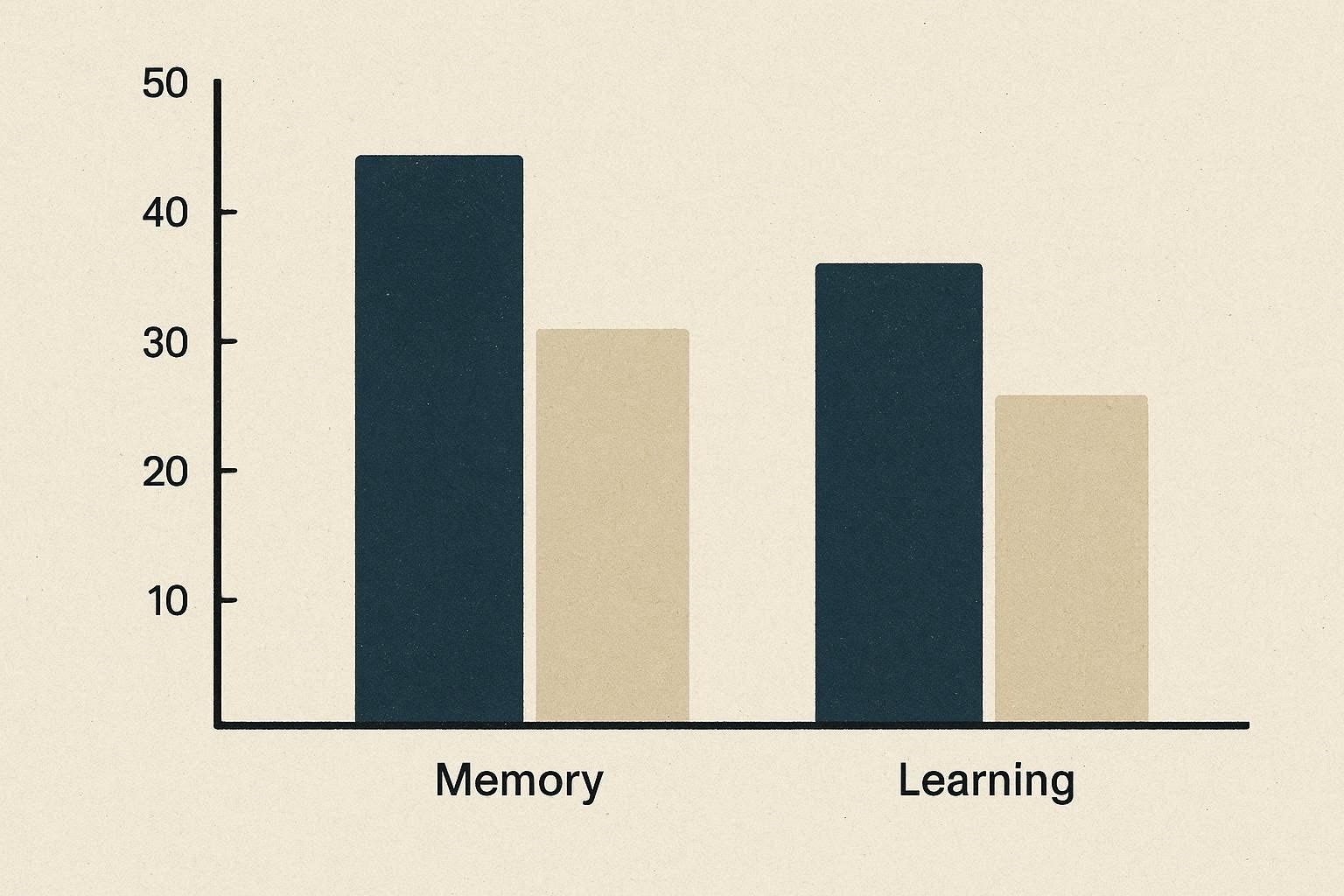
The decision to stop multitasking profoundly enhances your memory and learning capabilities, as your brain is finally able to process and retain information more effectively.
Stronger Short-Term and Long-Term Memory
When you stop multitasking, you cultivate stronger short-term and long-term memory because your brain can encode information more effectively without constant interruption. Focusing on one thing at a time allows new information to consolidate properly in your memory networks, preventing the shallow processing that often occurs when you’re multitasking and rapidly switching between tasks.
Improved Learning Retention and Skill Development
A commitment to single-tasking leads to improved learning retention and more effective skill development, as your full attention can be directed toward understanding and mastering new concepts. This focused approach ensures that the cognitive effort invested in learning translates into lasting knowledge and proficiency, rather than superficial familiarity often experienced when you’re multitasking.
Why Focused Learning Outperforms Multitasking Study
Focused learning consistently outperforms multitasking study methods because it allows for deep engagement with the material, fostering a more robust understanding and better recall. When you dedicate yourself to one task at a time, your brain can establish stronger neural connections, leading to more profound insights and a significantly higher quality of learning, according to psychologists.
Emotional and Mental Health Benefits
Stopping multitasking offers a wealth of emotional and mental health benefits, contributing to a greater sense of well-being and a calmer, more controlled daily experience.

Reduced Stress and Cognitive Overload
One of the most immediate benefits of stopping multitasking is significantly reduced stress and cognitive overload, as the brain will quiet down from constant demands. The pressure to rapidly switch between multiple things is lifted, allowing your mind to relax and process information at a more natural pace, which contributes to overall brain health and a more balanced mental state.
Increased Sense of Control and Calmness
When you single-task, you experience an increased sense of control and calmness because you are deliberately managing your attention rather than being pulled in multiple directions. This intentional approach to your work and daily activities empowers you to direct your focus, leading to less mental clutter and a more serene internal environment, reducing the negative effects of chronic multitasking.
Lower Risk of Burnout and Mental Fatigue
Embracing single-tasking significantly lowers your risk of burnout and mental fatigue, as you are no longer subjecting your cognitive cortex to the relentless strain of constant task-switching. This allows your brain to conserve energy, leading to sustained mental endurance throughout the day and preventing the exhaustion often associated with trying to multitask on multiple things at once.
Deep Work: Entering High-Performance Focus States
Stopping multitasking is the gateway to deep work, enabling you to enter high-performance focus states where your productivity and cognitive output reach their peak.

What Deep Work Is and Why It Matters
Deep work is the ability to focus without distraction on a cognitively demanding task, and it matters because it is the key to creating high-quality output and acquiring complex skills in a world full of interruptions. This state of focused concentration, where you apply your full attention to one thing at a time, is essential for truly meaningful and impactful work, contrasting sharply with the less efficient nature of multitasking.
How Single-Tasking Enables Flow State
Single-tasking is the primary enabler of the “flow state,” a highly productive and enjoyable mental condition where you are completely immersed in one task. When you eliminate the cognitive switching associated with trying to multitask, your brain can fully engage with the activity, allowing for sustained focus and a seamless, almost effortless progression through challenging work, leading to peak performance.
Productivity Peaks During Deep Focus Sessions
Your productivity peaks significantly during deep focus sessions, which are only truly possible when you commit to single-tasking. During these periods, your cognitive resources are fully directed toward one task, leading to accelerated problem-solving, higher quality output, and a more profound sense of accomplishment compared to the fragmented efforts of those who multitask.
Common Myths About Multitasking
“Multitasking Makes Me More Productive” Myth
The “multitasking makes me more productive” myth is a widespread misconception, as many people genuinely feel like they’re accomplishing more when they’re rapidly switching between tasks. However, according to psychologists, this perception is misleading because multitasking creates an illusion of progress while actually lowering the quality of your work and increasing the time it takes to complete one task. The constant interruption prevents your brain from truly focusing on one thing at a time.
“I’m Good at Multitasking” Misconception
The “I’m good at multitasking” misconception stems from the brain’s ability to rapidly switch between simple, well-practiced tasks, giving the false impression of simultaneous processing. However, when it comes to cognitively demanding activities, this isn’t true multitasking; instead, it’s inefficient task-switching that taxes the cognitive cortex. A 30-day pause from multitasking can reveal just how much more effective you become when you focus on one thing at a time.
Why Task-Switching Is Not Real Multitasking
Task-switching is not real multitasking because your brain can only truly focus on one thing at a time, especially for complex cognitive functions. What appears as multitasking is merely your brain rapidly shifting its full attention from one task to another, incurring a cognitive cost with each switch. This constant interruption significantly lowers productivity and the quality of your work, demonstrating that single-tasking is far more efficient for brain health.
Practical Ways to Stop Multitasking in Daily Life
To truly stop multitasking and reap the benefits of single-tasking, intentional strategies must be adopted to cultivate sustained focus in your daily routines.
Time Blocking for Focused Work Sessions
Implementing time blocking for focused work sessions is a highly effective method to stop multitasking, as it dedicates specific blocks of time to focus on one thing at a time. This practice helps eliminate the temptation to rapidly switch between multiple things, ensuring your full attention is directed towards a single task, which significantly boosts productivity and the quality of your work.
Eliminating Digital Distractions and Notifications
Eliminating digital distractions and notifications is crucial for anyone trying to stop multitasking, as these constant interruptions are major culprits behind fragmented attention. When you single-task, turning off alerts and closing unnecessary tabs allows your cognitive cortex to maintain full attention on one task at a time, preventing the negative effects of chronic multitasking and improving overall brain health.
Prioritizing Tasks Using Single-Task Methods
Prioritizing tasks using single-task methods means focusing on one thing at a time, tackling your most important items with your full attention before moving to the next. This approach prevents the feeling of being overwhelmed by multiple things and ensures that high-value work receives the dedicated focus it requires, ultimately leading to higher productivity and a better quality of your work.
Work, Study, and Daily Life Applications
The principles of single-tasking extend beyond work, transforming study habits and improving the efficiency and quality of everyday activities.
Single-Tasking in Professional Work Environments
In professional work environments, embracing single-tasking means dedicating your full attention to one task at a time, such as responding to emails or working on a report, rather than rapidly switching. This approach, which directly counters the less efficient nature of multitasking, significantly improves the quality of your work and overall productivity, as your cognitive resources are fully engaged without constant interruption.
Focus Strategies for Students and Learning
For students and those engaged in learning, focus strategies rooted in single-tasking are paramount for optimal brain health and retention. When you focus on one thing at a time, such as reading a chapter or solving a problem, you prevent the cognitive overload that multitasking creates, leading to deeper understanding and improved learning retention, according to psychologists.
Improving Everyday Tasks Through Attention Control
Improving everyday tasks through attention control means applying the principle of single-tasking to routine activities, from making breakfast to cleaning the house, which can dramatically reduce the negative effects of chronic multitasking. By focusing your full attention on one thing at a time, you enhance efficiency and enjoyment, preventing the mental fatigue that often comes when you’re multitasking even simple chores.
Common Challenges When Transitioning to Single-Tasking
Transitioning to single-tasking presents its own set of challenges, as breaking old habits of constant activity requires conscious effort and patience.
Withdrawal from Constant Digital Stimulation
One of the initial challenges when you stop multitasking is the withdrawal from constant digital stimulation, as the brain will quiet down after being accustomed to rapid inputs and notifications. This can feel uncomfortable at first, as you’re retraining your cognitive cortex to appreciate sustained focus on one thing at a time rather than seeking constant interruption from multiple things.
Difficulty Staying Focused at First
When you single-task, particularly after a long period of trying to multitask, you might experience difficulty staying focused at first, as your brain needs to re-learn how to maintain sustained attention. Don’t worry if you catch yourself multitasking; this initial struggle is a normal part of the process as your cognitive abilities adapt to dedicating full attention to one task at a time.
Building Long-Term Focus Habits
Building long-term focus habits requires consistent effort and patience, particularly when you’re accustomed to the rapid pace of trying to multitask. However, by gradually increasing your time dedicated to one task at a time and consciously avoiding interruption, you can strengthen your cognitive ability to maintain full attention, ultimately leading to significant improvements in productivity and overall brain health.
Conclusion: The Long-Term Transformation of Stopping Multitasking
In conclusion, the decision to stop multitasking isn’t merely a productivity hack; it’s a profound long-term transformation that reshapes your brain, enhances your focus, and dramatically boosts your output. By committing to single-tasking and truly focusing on one thing at a time, you unlock a cascade of benefits, from improved memory and higher quality of your work to reduced stress and a greater sense of calm. This deliberate shift away from the less efficient habit of trying to multitask empowers you to achieve deep work states, cultivating sustained attention and optimal brain health. The next time you’re tempted to rapidly switch between multiple things, remember that your cognitive cortex is designed for focused effort, and embracing one task at a time is the most powerful way to unlock your full potential.