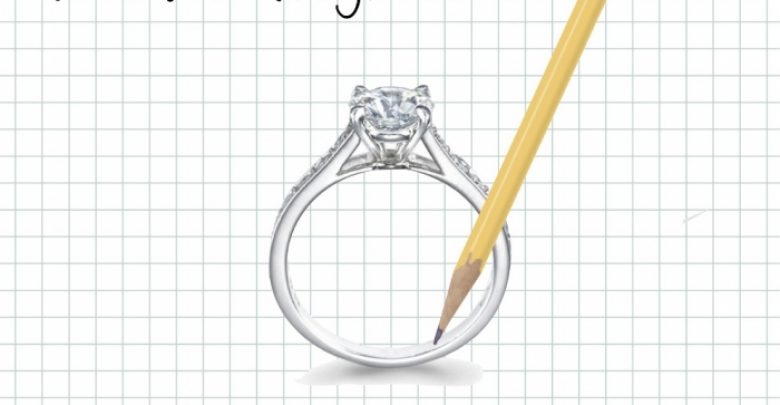
Getting the perfect fit for a ring, whether it’s an engagement ring or a fashion accessory, is crucial for comfort and security. This guide will walk you through simple methods to accurately determine your ring size from the comfort of your home.
Why Getting Your Ring Size Right Matters
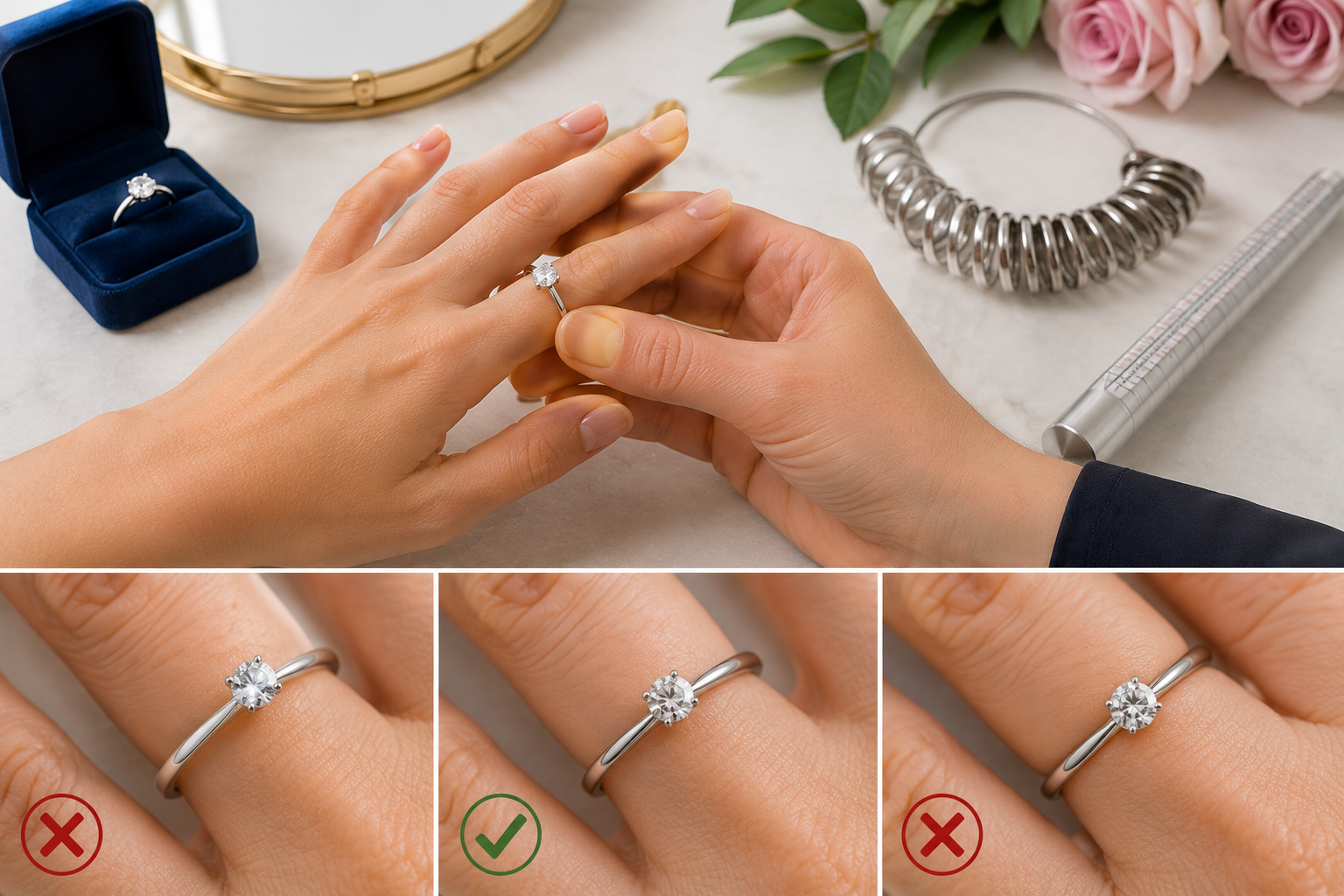
The importance of knowing your precise ring size cannot be overstated, as an accurate measurement ensures your perfect ring not only looks great but also feels comfortable and secure on your finger. Understanding how to measure your ring size at home is a valuable skill for any jewelry enthusiast.
The Importance of Accurate Measurements
Accurate measurements are fundamental when you buy a ring, preventing the inconvenience of having to get your ring resized. Learning how to measure your ring size accurately ensures you choose a size that feels just right, providing a comfortable ring fit for everyday wear.
Common Uses for Ring Size Measurements
Knowing how to measure your ring size is incredibly useful for various occasions, from purchasing an engagement ring as a surprise to simply treating yourself to a new piece of jewelry. This skill allows you to find your ring size confidently for any finger size.
Understanding the Consequences of Incorrect Sizing
Choosing an incorrect size can lead to discomfort, the risk of losing a ring that is too loose, or even cutting off circulation if it’s too tight. Ensuring you find your perfect fit initially saves time and avoids the potential costs of resizing your precious ring.
What You Need to Measure Your Ring Size at Home
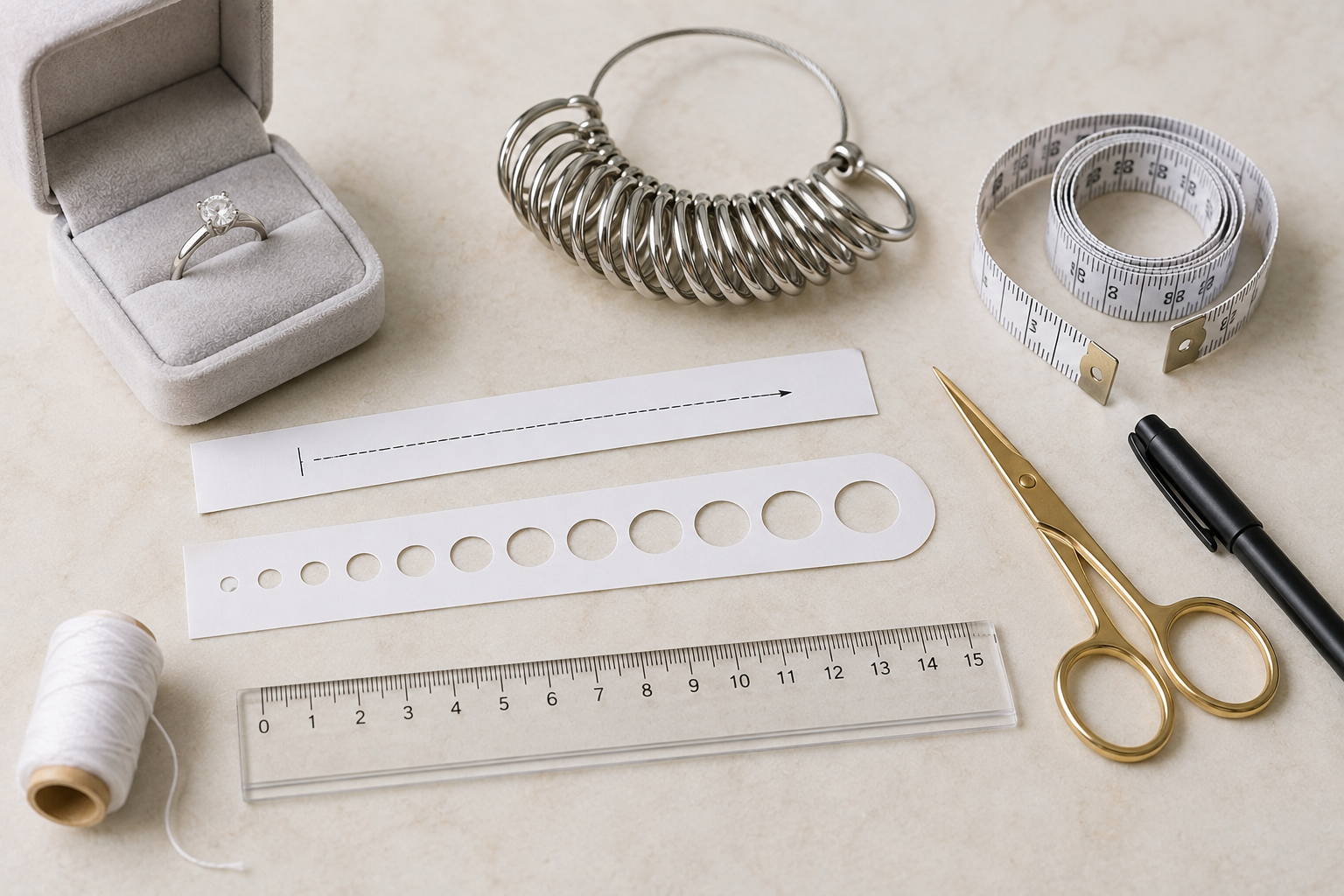
To accurately measure your ring size at home, gathering the correct tools is essential. These simple items will help you determine your size effectively, ensuring you get the right ring size for a comfortable and secure fit.
Paper or Non-Stretchy String
A thin strip of paper or a piece of non-stretchy string is an excellent way to measure your finger circumference directly. This simple method allows you to wrap the material around your ring finger to determine your size without needing a professional ring sizer.
Ruler and Pen
A standard ruler and a pen are indispensable for converting your finger measurement into a precise ring size. Once you have measured the length in millimeters of your paper or string, you can use a ring size chart to find your corresponding size.
Optional Tools for Enhanced Accuracy
For even greater precision, consider using a printable ring sizer or a measuring tape designed for jewelry. These tools can help you determine your size with more confidence, especially if you want to double-check your initial measurements for a perfect fit.
Method 1: Measure Your Finger with Paper or String
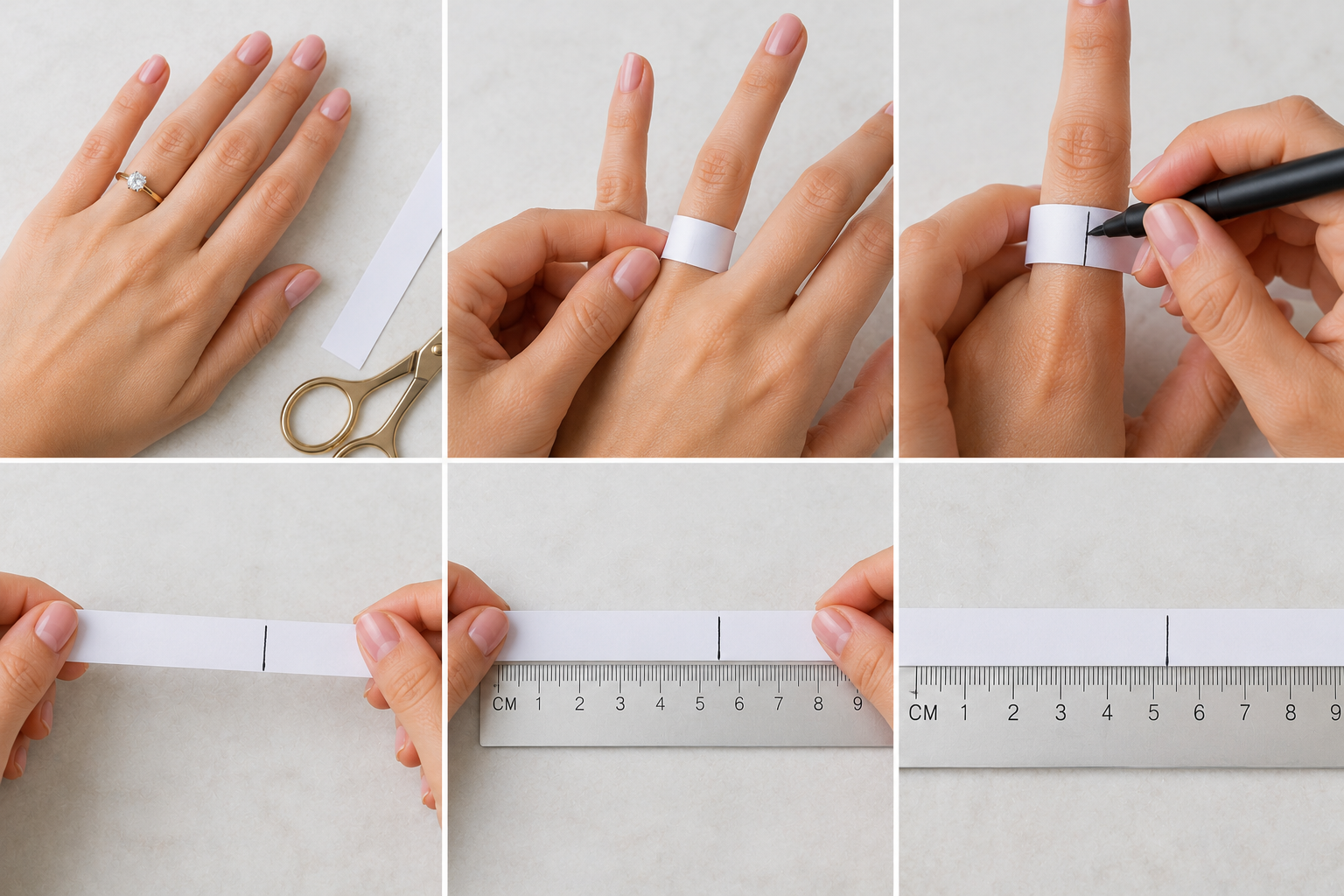
One of the most accessible ways to measure your ring size at home is by using a simple strip of paper or a piece of non-stretchy string. This method allows you to find your size by directly measuring the circumference of your ring finger.
Step-by-Step Finger Measurement
To measure your finger, wrap a strip of paper or string around the base of your desired ring finger. Mark where the end overlaps with a pen, then unwrap and measure the length in millimeters to find your finger circumference, which is a key step to determine your size.
How to Convert Finger Circumference into Ring Size
Once you have the circumference, refer to a printable ring size chart to find your corresponding ring size. This chart to find your ring size will match the measured length to standard ring sizes, helping you determine your size for the perfect ring.
Tips for Ensuring Accurate Measurements
For the most accurate measurement, ensure the paper or string is snug but not too tight around your finger. Measure your finger multiple times at different times of the day to account for natural fluctuations, helping you to find the perfect fit and the correct size.
Method 2: Measure an Existing Ring
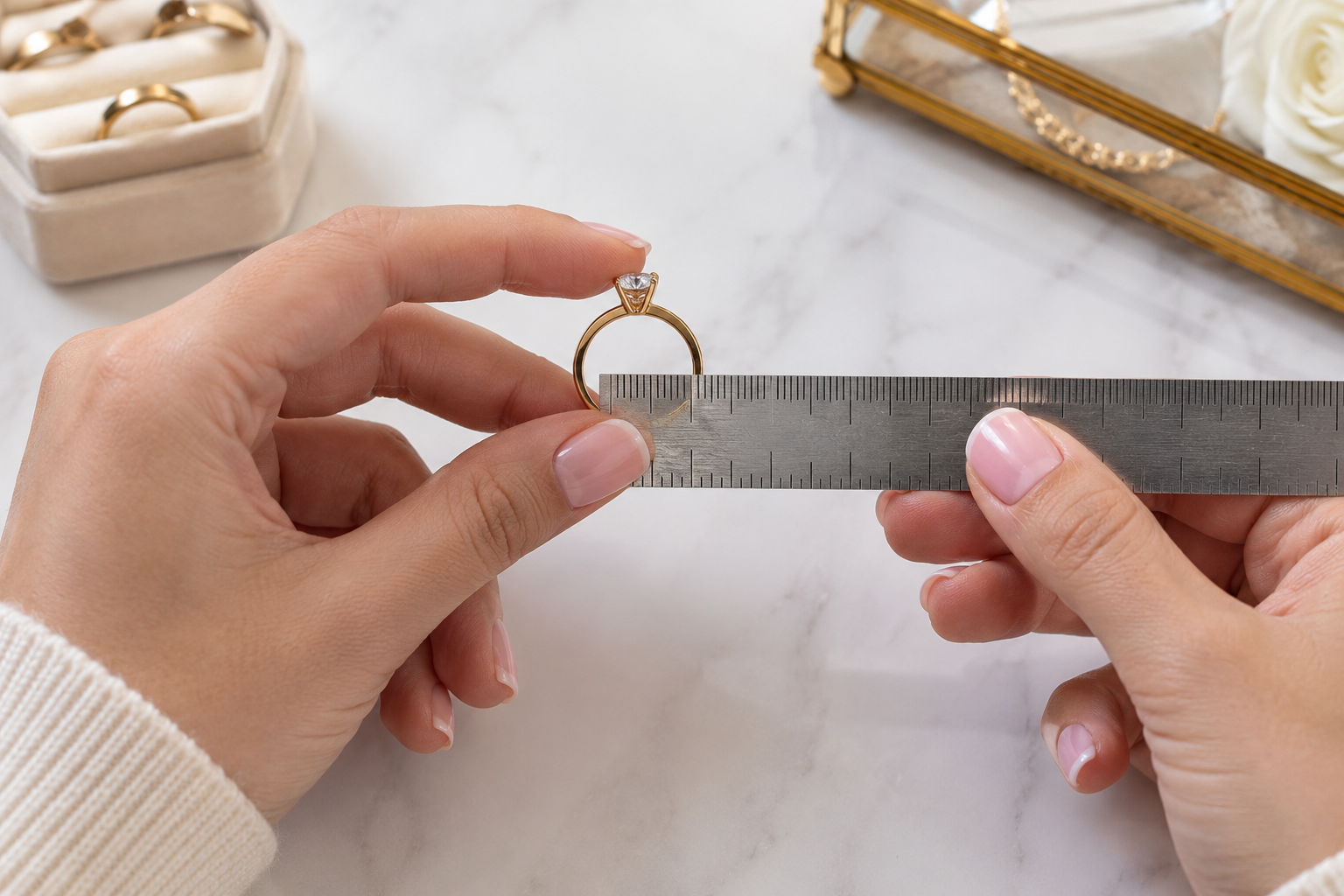
How to Measure the Inside Diameter
If you already own a ring that fits the desired finger, you can use it to determine your ring size. Lay the ring on a flat surface and use a ruler or a measuring tape to measure the inside diameter of the ring. It is essential to measure only the inside edge of the ring, from one side to the other, ensuring you get an accurate measurement without including the metal thickness.
Matching Diameter to a Ring Size Chart
Once you have precisely measured the inside diameter of your existing ring, compare this measurement to a standard ring size chart. These charts typically list diameters in millimeters and their corresponding ring sizes, allowing you to find your ring size quickly. This method helps you match the diameter of a ring that fits well to its correct size.
What to Do If You Don’t Have a Ring Size Chart
Should you find yourself without a physical ring size chart, many jewelers and online retailers offer free ring size charts or printable ring size guides on their websites. You can easily access and print a printable ring size chart, or simply use an online ring size conversion chart to cross-reference your measured diameter and determine your size.
Method 3: Use a Printable Ring Size Guide
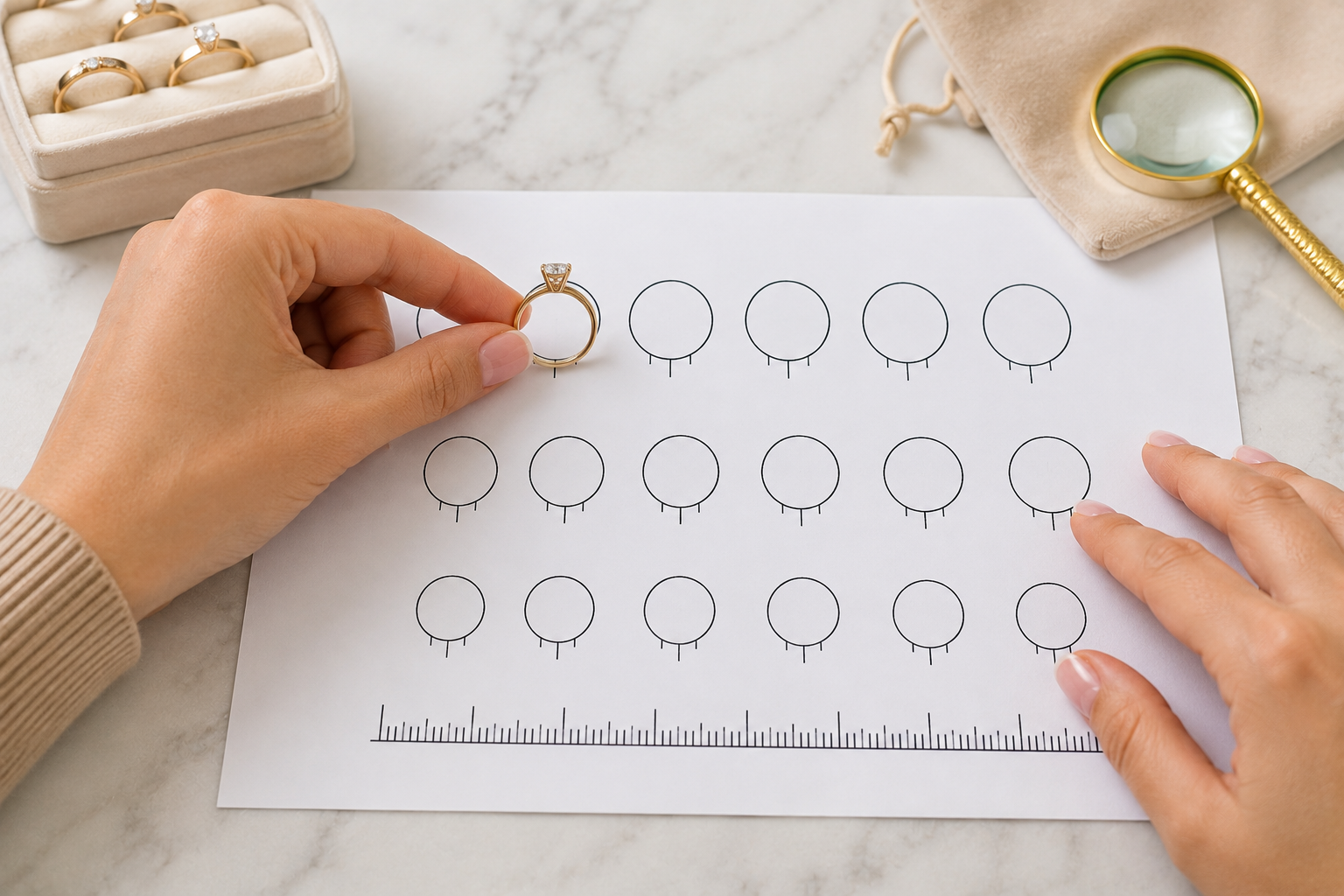
How to Print the Guide at the Correct Scale
A printable ring size guide or printable ring sizer is a convenient way to measure your ring size at home. When printing, ensure that the scale is set to 100% or “actual size” to prevent distortion. Verifying the scale with a ruler on the printed sheet will confirm accuracy, which is crucial to find your ring size precisely.
How to Match Your Ring to the Guide
With a correctly printed guide, you can place an existing ring on the various circles until you find the one that perfectly matches the inside diameter of your ring. The corresponding number next to the circle will indicate your ring size, making this a simple way to find your perfect fit for any engagement ring or other jewelry.
Benefits of Using a Printable Size Guide
Using a printable ring size guide offers a straightforward and visual way to measure your ring size without needing specialized tools. It provides a quick reference to determine your ring size, often including options for different international ring sizes, ensuring you can choose a size that feels just right.
How to Measure Your Ring Size Accurately
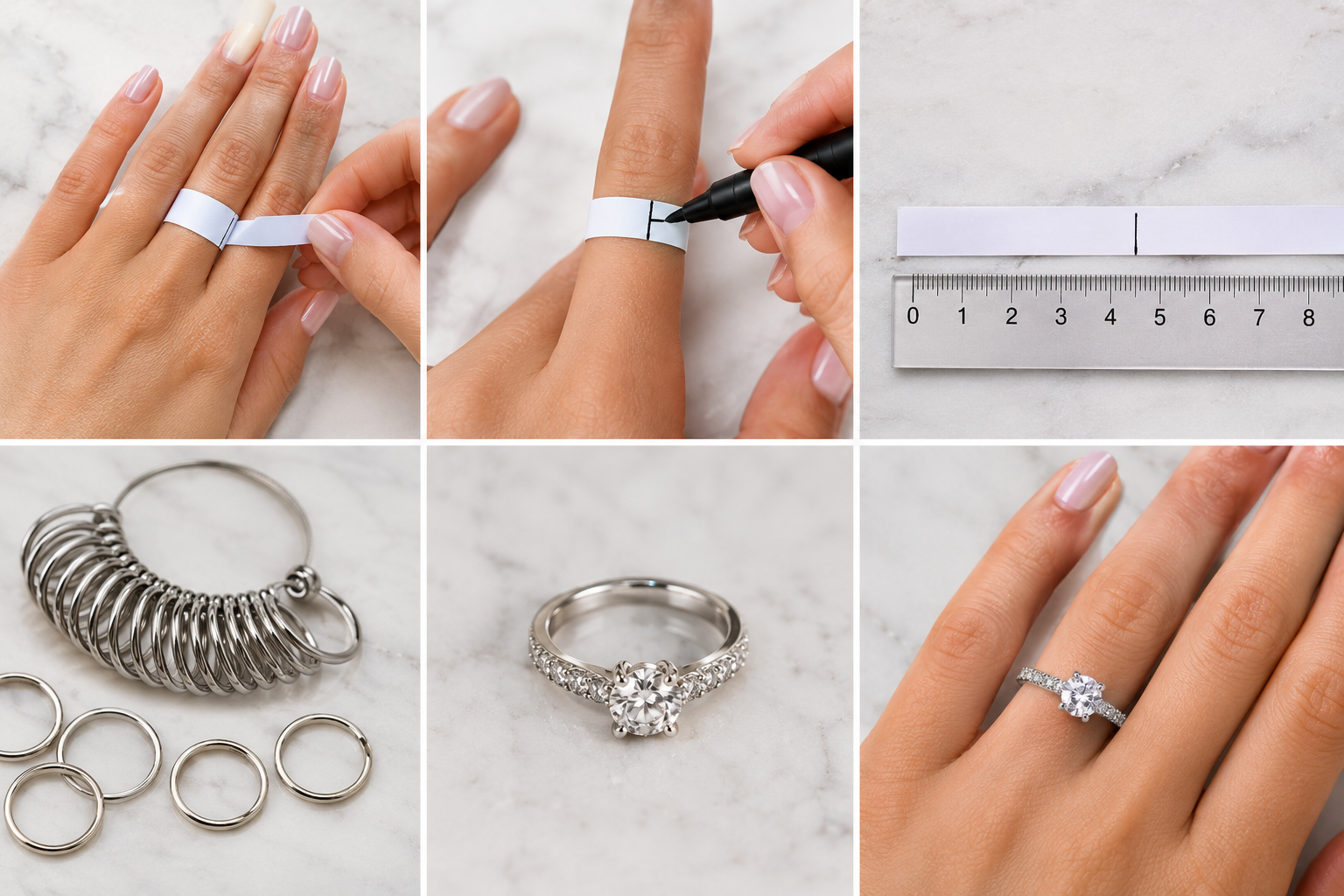
Measure Your Finger More Than Once
To achieve the most accurate ring size, it’s highly recommended to measure your finger more than once. Fluctuations in finger size can occur throughout the day, so taking multiple measurements and averaging them will give you a more reliable result and help you find the perfect fit.
Choose the Right Time of Day
Your finger size can slightly change due to temperature, activity, and even diet. It’s best to measure your finger when it’s at its normal size, typically in the evening when your fingers are usually at their largest, to ensure you determine your ring size accurately for a comfortable ring fit.
Consider Your Knuckle Size
When measuring your ring size, always consider the size of your knuckle. If your knuckle is significantly larger than the base of your finger, you will need a size that can comfortably slide over it. In such cases, it’s often best to size up by half a size to avoid the ring getting stuck.
Ring Size Conversion: US, UK, and European Sizes
Understanding Ring Diameter and Circumference
When attempting to determine your ring size, it’s crucial to understand the fundamental concepts of ring diameter and circumference. The diameter of a ring refers to the measurement across the exact middle of the inside edge of the ring, while the circumference is the total distance around the inside of the ring, corresponding directly to your finger size. Both are essential measurements when using a ring size chart to find your size.
Why International Ring Sizes Can Differ
International ring sizes can significantly differ due to various historical and cultural measurement standards, which means a “size 7” in the US is not the same as a “size 7” in the UK or Europe. This divergence makes using a ring size conversion chart or a reliable ring sizer indispensable when purchasing an engagement ring or any jewelry from abroad to ensure you get the perfect fit.
Using a Ring Size Conversion Chart
To navigate the complexities of international sizing, a ring size conversion chart is an invaluable tool. You can use a ring size chart to convert your measured ring size at home into various global standards, ensuring that when you buy a ring online, you choose a size that perfectly matches your needs. These charts help you determine your ring size accurately across different regions.
How Ring Width Affects the Perfect Fit
Choosing Sizes for Thin Rings
When selecting thin rings, you might find that your usual ring size provides a looser fit compared to wider bands. This is because thinner bands have less surface area in contact with your finger, often allowing for a slight reduction in size. For a thin ring, it might be best to size down by half a size to ensure a secure and comfortable perfect fit.
Measuring for Wide or Stacked Rings
For wide or stacked rings, the increased contact area with your finger often necessitates a larger ring size. These styles can feel tighter than a single, thin band. Therefore, when measuring for wide rings or planning to wear multiple rings, it’s generally advisable to size up by at least half a size to achieve a comfortable ring fit and accommodate the extra width.
Understanding the Relationship Between Width and Fit
The relationship between ring width and fit is critical for comfort and security. A wider ring, or multiple stacked rings, will feel tighter than a narrow band of the same measured ring size because it covers more of your finger. Understanding this nuance is key to finding your perfect fit and ensuring the ring feels just right on your finger.
Common Ring-Sizing Mistakes to Avoid
Wrapping the Measuring Material Too Tightly
One of the most common ring-sizing mistakes is wrapping the measuring material too tightly around your finger. If the paper or string used to measure your finger is pulled too taut, you will end up with a circumference measurement that is too small, leading you to buy a ring that is uncomfortably tight and will need to be resized.
Measuring Cold or Swollen Fingers
Measuring cold or swollen fingers can lead to inaccurate ring size results. Cold fingers tend to shrink, yielding a smaller measurement, while swollen fingers will provide a larger one. For the most accurate ring size, measure your finger when it is at a normal temperature and not experiencing any temporary swelling, ensuring a true perfect fit.
Using the Wrong Finger or an Incorrectly Sized Ring
A significant mistake is using the wrong finger for measurement or relying on an incorrectly sized ring to determine your size. Each finger can have a different finger size, so always measure the specific finger on which you intend to wear the ring. If using an existing ring, ensure it is a ring that fits well to accurately find your ring size.
What to Do If You’re Between Ring Sizes
When to Choose the Larger Size
If your measurement falls between two standard ring sizes, it is generally recommended to choose the larger size, especially if you are purchasing a wider band or an engagement ring. Opting for a slightly larger size ensures a more comfortable ring fit, preventing the ring from feeling too tight and allowing for natural fluctuations in your finger size throughout the day. This is often the best to size up rather than down.
Considering the Ring’s Design and Width
The design and width of the ring are crucial factors when you are between ring sizes. A wider band or a ring with an intricate design will typically feel tighter than a thin band of the same size. Therefore, for wider rings or those with substantial detailing, choosing the larger size will help you achieve the perfect fit and ensure the ring slides comfortably over your knuckle.
Making the Final Decision on Size
To make the final decision on your ring size when you’re between measurements, consider factors like the time of day you typically wear rings, potential weight fluctuations, and the specific finger size you are measuring. If in doubt, choosing the larger size by half a size often provides a more comfortable ring fit, as it is easier to resize a ring down than to enlarge it.
When You Should Get Professionally Sized
Buying Expensive or Custom-Made Rings
For expensive or custom-made rings, such as a bespoke engagement ring or a significant anniversary piece, it is highly advisable to get professionally sized. A jeweler has specialized tools, like a complete ring sizer set, and expertise to accurately determine your ring size, ensuring the perfect fit for such valuable and sentimentally important purchases. This ensures you find the perfect fit and the correct size.
Getting Sized for Engagement and Wedding Rings
Engagement and wedding rings are worn daily and hold immense personal significance, making a precise ring size paramount. A professional sizing for these rings guarantees a comfortable ring fit that will last a lifetime. Jewelers can also provide advice on how different ring styles and metals might affect the fit, helping you to find your perfect ring size.
When to Consult a Jeweler
You should consult a jeweler if you have unusually shaped fingers, very large knuckles, or if you consistently find yourself between ring sizes using at-home methods. A professional can provide an accurate measurement, discuss different ring size options, and offer expert guidance to ensure you choose a size that feels just right and prevents the need for a ring resized in the future.
Final Thoughts: Get a Comfortable Ring Fit with a Simple Home Measurement
Measuring your ring size at home can be a straightforward and effective way to ensure a comfortable ring fit for your jewelry purchases. By following the detailed steps and tips provided, you can confidently determine your ring size and choose a size that feels just right. Utilize a printable ring size chart or a simple measuring tape to achieve the perfect fit.