Did you know the global perfume market wastes over 70% of synthetic fragrance ingredients? These never even make it to the consumer. This fact shows why making your own essential oil perfumes is a great alternative.
We’re exploring the world of DIY natural perfumes. Here, organic fragrance recipes are your personal art. Our guide will show you how to create unique natural scents that are healthy and personal.
Making your own perfume is more than a hobby. It’s a journey of exploring your senses. By learning to blend essential oils, you can turn simple ingredients into amazing fragrances. These fragrances tell your unique story.
Whether you’re new to fragrances or already love aromatherapy, this guide is for you. We’ll teach you everything you need to know to start making your own natural perfumes. You’ll learn how to create scents that show off your style and wellness goals.
From picking the right essential oils to understanding fragrance notes, we’ll help you become a DIY perfume expert. Get ready to change how you think about personal fragrance. Discover the beauty of natural, handcrafted scents.
Why Make Your Own Natural Perfumes
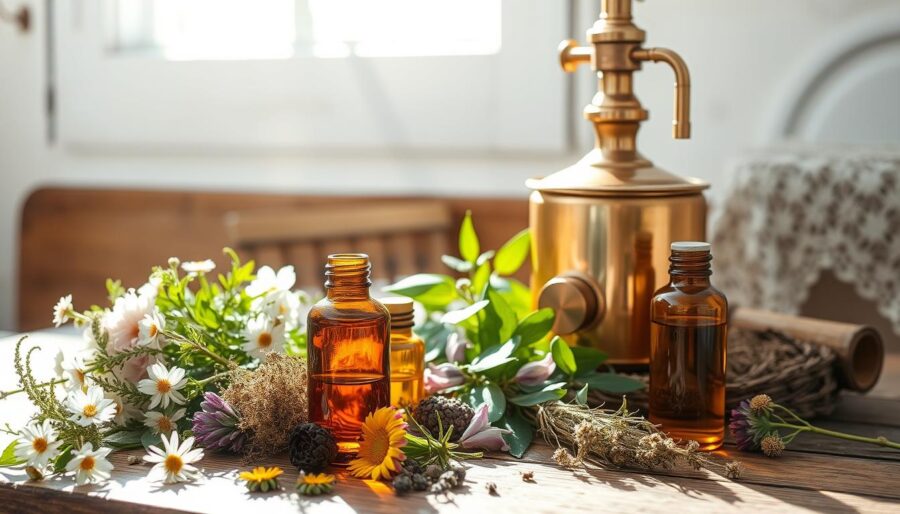
Exploring botanical perfumery opens a world of creativity and wellness. Traditional fragrances often have harmful chemicals. These can harm our health and the environment. We start our journey by learning how to make our own natural scents.
Making your own perfumes is more than a hobby. It’s a way to control what we use on our bodies. It also lets us explore the world of aromatherapy.
Benefits of DIY Natural Perfumes Over Commercial Fragrances
Commercial fragrances often have synthetic ingredients. These can:
- Disrupt hormone balance
- Trigger allergic reactions
- Introduce potentially toxic chemicals to your body
Personalization and Creativity: Crafting Your Signature Scent
DIY perfumes let you be a true fragrance artist. Each drop is a reflection of your unique personality. By choosing your own essential oils, you create a scent that’s all yours.
Health and Environmental Advantages of Natural Ingredients
Natural perfume ingredients are full of benefits. They support our health and help the environment. Plant-based oils and botanical extracts offer:
- Pure, therapeutic-grade fragrances
- Minimal processing
- Reduced carbon footprint
- Support for sustainable agriculture
Our journey into natural perfumery is exciting. It’s a path of self-discovery, creativity, and well-being.
Essential Ingredients for Natural Perfumes
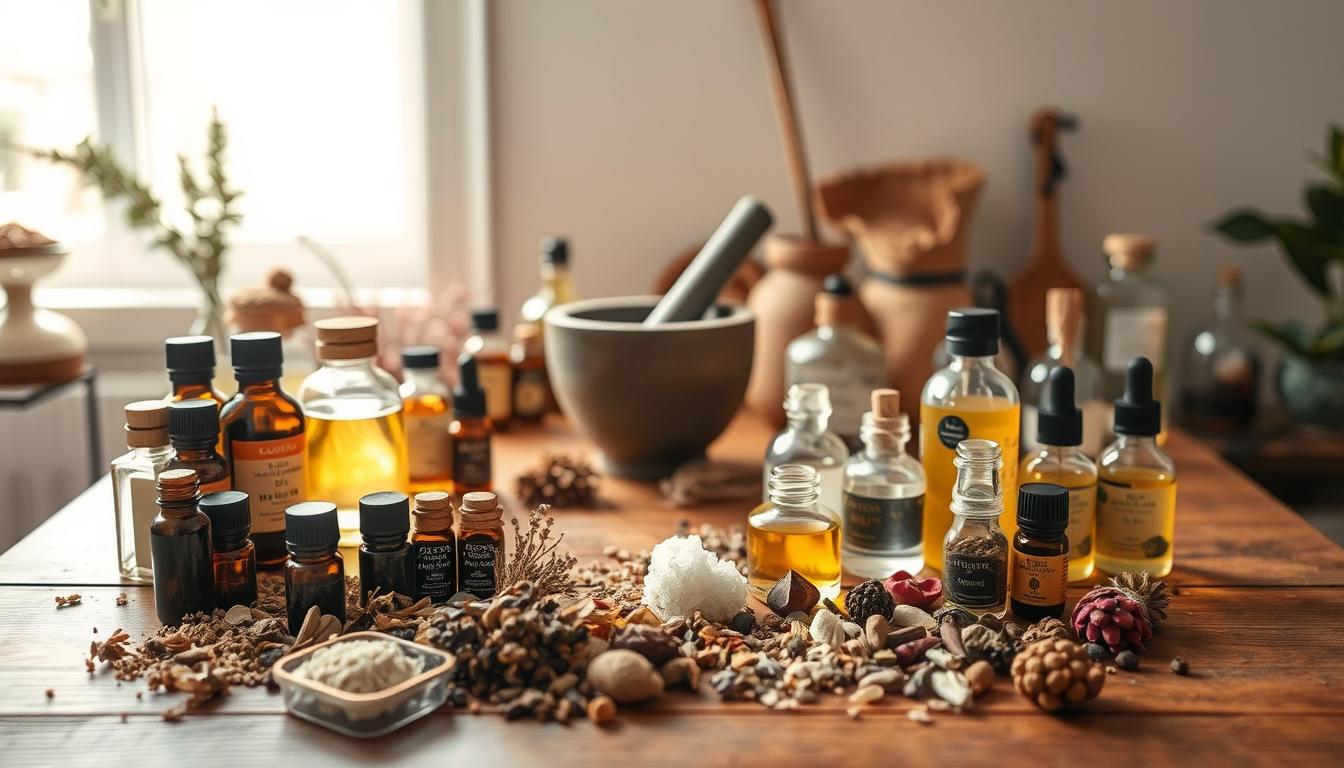
Making homemade essential oil fragrances is all about the right ingredients. We start by picking the best natural ingredients for your scent. These will be the base of your unique fragrance.

Carrier Oils: The Foundation of Your Perfume
Carrier oils are key for mixing and spreading essential oils safely. Here are three top carrier oils for making your perfume:
- Jojoba Oil: Feels like your skin’s natural oil
- Sweet Almond Oil: Light and absorbs quickly
- Fractionated Coconut Oil: A stable, scentless base
Essential Oils: Building Your Aromatic Palette
Knowing about essential oil notes is key for a balanced scent. Each note adds to the fragrance:
| Note Type | Characteristics | Example Oils |
|---|---|---|
| Top Notes | First impression, quickly goes away | Bergamot, Lemon |
| Middle Notes | The fragrance’s heart, lasts 2-4 hours | Lavender, Rosemary |
| Base Notes | The scent’s lasting foundation | Sandalwood, Vanilla |
Optional Perfume Enhancers
For a special touch, try these optional ingredients:
- Alcohol (mixes and preserves)
- Witch Hazel (a natural preservative)
- Distilled Water (for mixing)
Playing with these can make your scent truly unique and personal.
Understanding Fragrance Notes
Exploring sustainable perfumery at home means learning about fragrance notes. These elements turn simple plant extracts into rich, complex scents. Perfumes, like music, have layers that blend together for a unique smell.

Natural scent making at home involves understanding three key layers of fragrance notes:
- Top Notes: The first scent you smell
- Middle Notes: The fragrance’s main body
- Base Notes: The scent that lasts the longest
Top Notes: First Impressions and Fresh Scents
Top notes are the first scents you notice. They are light and fade fast but make a big impact. Citrus oils like bergamot and lemon are great examples.
Middle Notes: The Perfume’s Personality
Middle notes come after the top notes fade. They are the fragrance’s core. Floral and herbal oils like lavender and rose are common here.
Base Notes: Creating Lasting Depth
Base notes are the scent’s foundation and last the longest. They are deep and rich. Oils like sandalwood and vanilla are perfect for this.
Step-by-Step Guide to Making Your Own Perfume
Starting your journey in sustainable fragrance crafting is exciting. It lets you express yourself creatively. Our guide will help you go from beginner to expert in making natural perfumes.

Mixing Essential Oils: Creating Balanced Combinations
Making a natural perfume is all about finding the right mix of essential oils. Begin by picking oils that go well together. A good starting point is to choose:
- One base note (deep, lasting scent)
- One middle note (heart of the fragrance)
- One top note (initial impression)
Adding Carrier Oils and Adjusting Strength
Carrier oils are key in sustainable scent crafting. Jojoba oil is great as a base. It helps dilute essential oils and makes the fragrance last longer.
| Oil Type | Recommended Quantity | Purpose |
|---|---|---|
| Jojoba Oil | 30 ml | Base carrier oil |
| Base Note Essential Oil | 25-30 drops | Depth and longevity |
| Middle Note Essential Oil | 20-25 drops | Fragrance body |
| Top Note Essential Oil | 15-20 drops | Initial impression |
Aging and Perfecting Your Fragrance
Patience is important in making natural perfumes. Let your perfume sit in a cool, dark place for 2-6 weeks. This time allows the oils to blend and the scent to deepen.
Storing Your Signature Scent
Keep your perfume safe by storing it in dark glass bottles. Avoid direct sunlight and heat. A cool, steady temperature will keep your perfume fresh and strong.
DIY Natural Perfume Recipes to Try at Home
Making your own natural cologne is a fun journey. Our recipes will help you create unique scents at home. You can choose from alcohol-free bases to make healthy, personal fragrances.
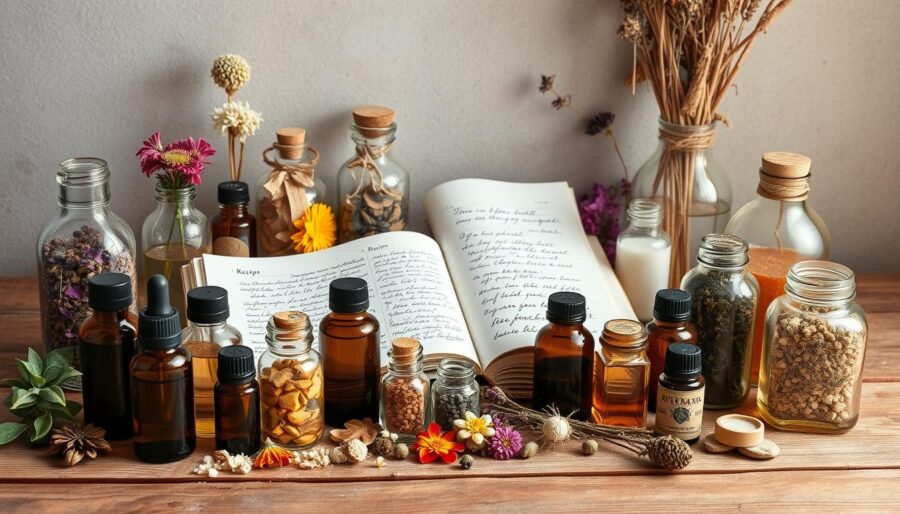
Romantic Floral Perfume Recipes
Floral scents are like the sweet smell of flowers. Here are some great blends:
- Rose and Lavender Blend
- Jasmine and Geranium Mix
- Ylang-Ylang and Bergamot Fusion
Vibrant Citrus & Fresh Perfumes
Citrus perfumes are bright and refreshing. They add a lively touch to your collection:
- Bergamot and Grapefruit Combination
- Sweet Orange and Lemon Blend
- Bergamot with Palmarosa
Grounding Woody & Earthy Perfumes
These scents are deep and connect you with nature:
- Sandalwood and Cedarwood Mix
- Patchouli and Vetiver Blend
- Clove and Frankincense Fusion
Exotic & Spicy Perfume Creations
These fragrances are warm and inviting:
- Vanilla and Cinnamon Blend
- Ylang-Ylang with Cardamom
- Nutmeg and Ginger Combination
Creating your own scent is like art. Don’t be afraid to try new things. Find the perfect natural perfume that shows off your personality.
Tips for Customizing and Experimenting with Scents
Start your adventure in natural scent making with confidence and creativity. Our guide will show you how to turn botanical cologne ingredients into unique fragrances. Making flower-based scents is an art that mixes science, intuition, and personal touch.
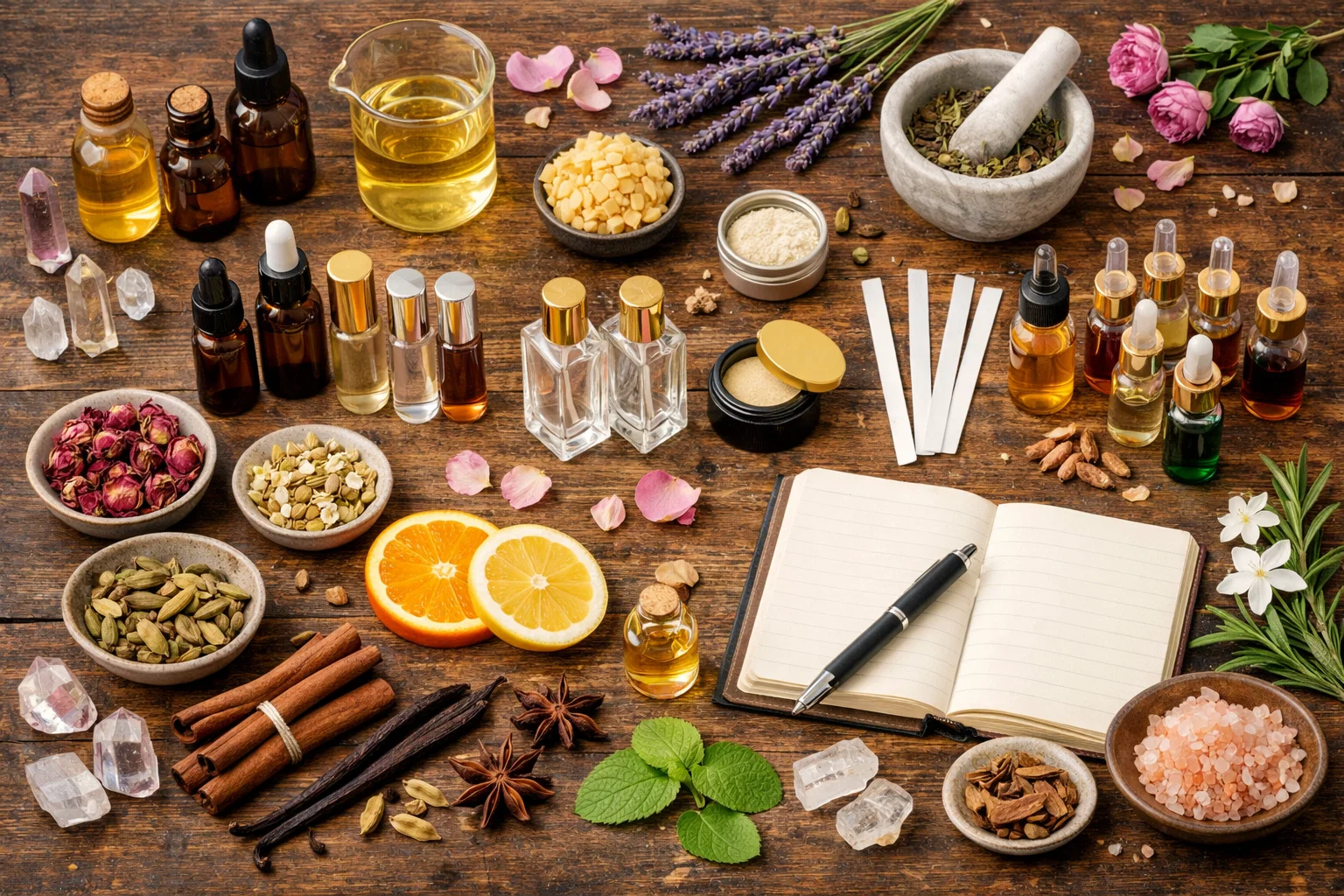
Creating your own sustainable fragrances needs attention to detail and a spirit of exploration. Here are the main strategies for making your own signature scent:
Adjusting Scent Intensity
Changing the strength of your perfume is easy with essential oils. Just follow these steps:
- For a lighter scent: Use less essential oils
- For a stronger fragrance: Add more drops of concentrated oils
- Carrier oils can help soften strong smells
Safe Oil Combination Practices
Mixing essential oils needs knowledge and care. Here’s how to blend them safely and nicely:
- Start with base notes
- Add middle notes next
- Finish with top notes
- Test small amounts before making more
Recipe Documentation
Professional perfume makers know the value of keeping detailed records. Keep a notebook or digital file for your experiments. Note:
- Oil types and amounts
- Blending ratios
- First impressions
- Notes on aging and development
Your journey in natural scent making is a continuous adventure. Each blend teaches you something new about botanicals and your scent preferences.
Creative Uses and Applications of DIY Perfumes
Exploring non-toxic personal fragrances is more than just spray bottles. Our DIY perfume journey opens up exciting possibilities. It transforms everyday experiences into something special. Chemical-free scent crafting lets us reimagine how we enjoy natural fragrances in many creative ways.
Solid Perfume Balms: Portable and Travel-Friendly
Botanical cologne alternatives aren’t just for liquids. Solid perfume balms are a convenient and compact option. They fit perfectly in your pocket or travel bag, letting you enjoy your custom scents anywhere.
- Easy to carry during travel
- No liquid restrictions for airports
- Precise application with fingertips
- Long-lasting fragrance in a compact form
Perfume Gifts: Personalized Scents for Loved Ones
Creating personalized fragrances is a heartfelt way to show care. Handcrafted perfumes make unique gifts that capture memories and emotions. Each blend tells a special story, making your present truly one-of-a-kind.
- Customize scents for individual personalities
- Create meaningful, personal gifts
- Showcase your creative skills
- Offer a natural, thoughtful alternative to store-bought perfumes
Home Fragrance: Using Perfumes for a Pleasant Living Space
Use your sustainable perfume making skills beyond personal use. Transform your living space with natural room fragrances. These chemical-free scent crafting techniques can create a welcoming atmosphere in any room.
- Create room sprays with natural ingredients
- Develop signature home scents
- Avoid synthetic air fresheners
- Customize fragrance intensity
Conclusion: Start Crafting Your Own Signature Scent Today
Our journey into botanical scent blends has shown us the power of making chemical-free perfumes at home. We’ve delved into the art and science of sustainable perfumery. This has uncovered the magic of creating scents that show off your unique personality.
Aromatherapy perfumes do more than smell good – they let you express yourself in a personal way. We’ve shared techniques that open up a world of possibilities. You can mix essential oils, carrier oils, and unique blends to create amazing scents.
Christian Dior once said, “A woman’s perfume tells more about her than her handwriting.” Your signature scent is a powerful way to show who you are. By exploring natural perfumery, you’re not just making a fragrance. You’re creating an art form that connects you to ancient traditions and supports sustainable living.
We encourage you to start your scent-making journey. Gather your ingredients, trust your instincts, and explore. Your perfect signature scent is out there, waiting to be found. It will blend your creativity, personal style, and the natural world.