Sarah’s daughter Emma had trouble focusing on homework because of noise and clutter. But when they set up a dedicated study space, everything changed. Her grades went up, and she felt more confident in her studies.
Setting up a study room for your kids can be tough. But a well-designed space can change how they see learning. Our guide will help you create a space that inspires and supports your child’s education.
Creating a study space is more than just picking furniture and lights. It’s about designing a space that boosts focus, creativity, and independence. We’ll share tips to make studying an exciting journey, not a chore.
Whether you have a small or big home, we’ve got you covered. Our expert advice will help you design a study area that grows with your child. It will adapt to their changing needs and learning styles.
Get ready to change your child’s learning experience with a study space that really works. Let’s start the journey to academic success!
Why a Dedicated Study Space Matters for Kids
Creating a special study area can change your child’s learning path. A well-designed study room is more than a place to sit. It’s a key to success and growth.

Creating a quiet study area is more than finding a quiet spot. It’s about making a space that helps with learning and growing.
Boosting Focus and Productivity at Home
Study room essentials are key for kids to focus. A dedicated area helps students:
- Stay away from family distractions
- Keep study and play times separate
- Follow a regular study routine
Encouraging Responsibility and Independence
Ergonomic furniture does more than make studying comfy. It teaches kids important life skills by:
- Helping them take care of their study space
- Teaching them to organize
- Building self-management skills
Supporting Healthy Learning Habits
Good study room lighting and design greatly affect learning. We suggest creating an environment that:
- Reduces eye strain
- Helps clear the mind
- Keeps focus strong
| Study Space Element | Impact on Learning |
|---|---|
| Dedicated Workspace | Increases focus and productivity |
| Ergonomic Furniture | Supports physical comfort and mental engagement |
| Proper Lighting | Reduces fatigue and enhances concentration |
By creating a thoughtful study space, we prepare our kids for success and lifelong learning.
Step 1: Choose the Ideal Location in Your Home
Creating the perfect kid-friendly study space starts with selecting the right location. Every child has unique learning preferences. Understanding their study style is crucial for designing an effective home study area design.

When exploring study room organization hacks, consider your child’s personality and learning needs. Some kids thrive in quiet environments, while others prefer more dynamic spaces.
Quiet Zones vs Shared Spaces: Matching Learning Styles
Identifying the right study location involves understanding your child’s concentration patterns. Here are key considerations:
- Solitude seekers might prefer bedroom corners or dedicated quiet areas
- Social learners could benefit from shared family spaces like kitchen or living room
- Adapt the space to match your child’s unique learning personality
Natural Light and Airflow: Essential for Productivity
When designing a kid-friendly study decor, prioritize spaces with:
- Abundant natural sunlight
- Good ventilation
- Minimal direct external distractions
Managing Potential Distractions
Strategic placement can minimize disruptions. Avoid high-traffic areas and create boundaries that protect study time. Consider noise-reducing techniques like using room dividers or selecting locations away from main household pathways.
Remember, the perfect study space evolves with your child’s changing needs. Stay flexible and observant to create an environment that truly supports their learning journey.
Step 2: Select the Right Furniture for Comfort and Focus
Setting up the perfect learning space starts with picking the right furniture. A dedicated study area needs furniture that’s both comfy and supports learning. This is key for your child’s growth.

Creating a study area that keeps distractions away starts with the right furniture. It’s important to choose pieces that grow with your child. Ergonomic furniture helps keep your child’s posture right and prevents strain during study time.
Ergonomic Desk and Chair Essentials
- Choose a desk height that allows elbows to rest comfortably at a 90-degree angle
- Select chairs with adjustable height and back support
- Ensure feet can rest flat on the floor or use a footrest
Adjustable Furniture Options
| Furniture Type | Age Range | Key Features |
|---|---|---|
| Adjustable Desk | 6-16 years | Height-adaptable, tilting surface |
| Ergonomic Chair | 5-18 years | Lumbar support, adjustable height |
| Modular Storage | All ages | Expandable, customizable design |
Space-Saving Solutions for Small Rooms
Organizing a study room gets easier with smart furniture picks. Wall-mounted desks and fold-down workstations are great for small spaces. They make sure your child has a comfy study spot without taking up too much room.
Invest in furniture that grows with your child. It should support their comfort and learning. The right furniture turns a simple space into a place of inspiration for learning.
Step 3: Use Smart Lighting to Reduce Eye Strain
Creating the perfect study space for kids needs careful lighting. The right light can make a study area comfy and good for learning and eyes.

Good lighting is key for focus and less eye strain during study. We’ll look at how to make the best lighting for your child’s study area.
Desk Lamp vs Overhead Light: Understanding the Differences
When setting up a study area for kids, mix different lights:
- Overhead lights give general light
- Desk lamps offer focused, adjustable light
- Task-specific lighting cuts down eye fatigue
Choosing the Right Bulbs for Study Time
| Bulb Type | Benefits | Recommended Use |
|---|---|---|
| LED Daylight Bulbs | Reduces eye strain | Homework and reading |
| Warm White Bulbs | Creates calming atmosphere | Evening study sessions |
| Adjustable Color Temperature Bulbs | Flexible lighting options | Multi-purpose study areas |
Positioning Lighting for Maximum Comfort
Smart light placement can greatly improve study time for kids:
- Put desk lamp away from direct glare on screens
- Use natural light when you can
- Go for even, consistent illumination
With these smart lighting tips, we can make a study area that helps kids learn, keeps their eyes safe, and makes homework fun.
Step 4: Organize with Functional Storage Solutions
Creating a good homework space needs smart ways to organize. It turns your child’s study area into a place where they can learn well. A clean space helps kids focus and feel less stressed while studying.
Organizing a kid’s room is more than just tidying up. It’s about making learning fun and easy to get to.

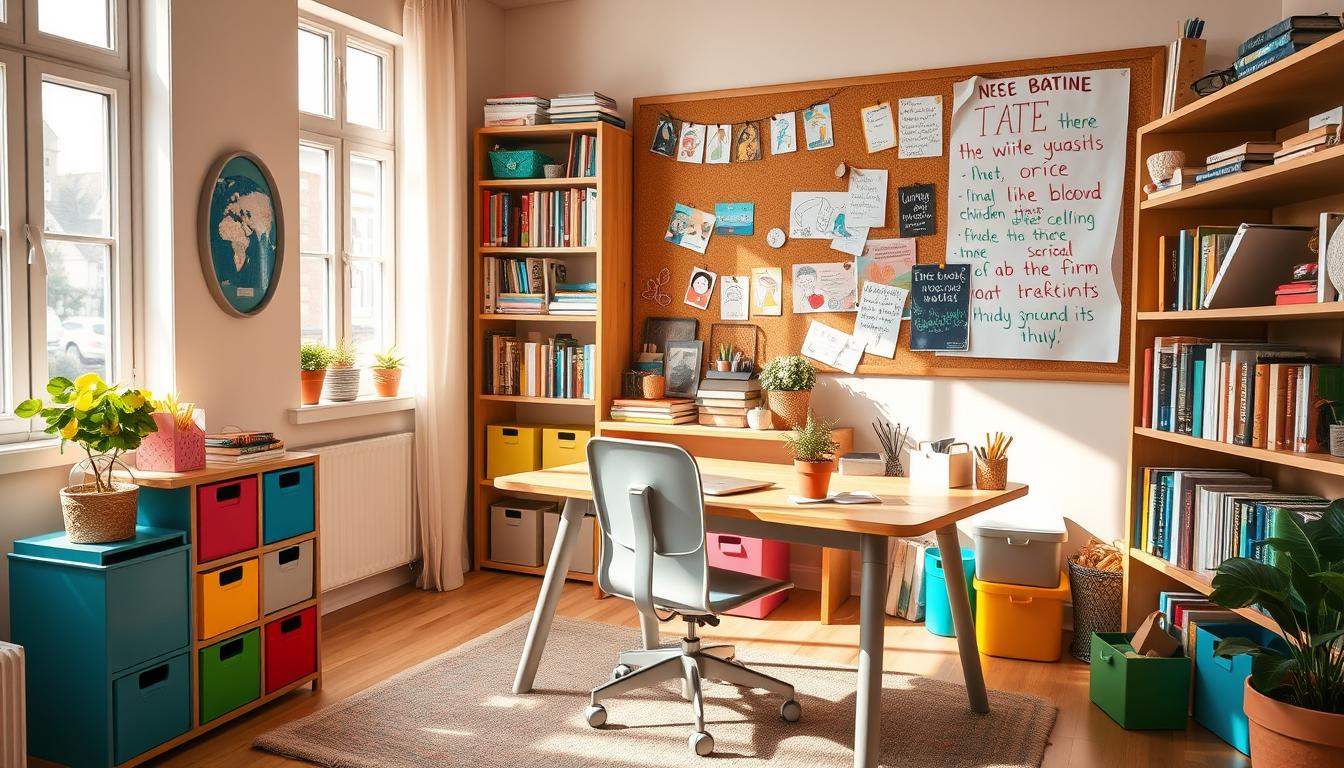
Shelves, Drawers, and Bins: Keeping Everything in Place
Smart storage can change your child’s study area. Here are some tips:
- Clear plastic drawers for school supplies
- Floating wall shelves for books and display items
- Color-coded bins for different subject materials
- Desk organizers with multiple compartments
DIY Organization Hacks Kids Will Love
Get your kids involved in making their study space. Try these fun DIY projects:
- Decorate storage boxes together
- Create personalized labels
- Design a wall-mounted pegboard for hanging supplies
- Make a magnetic board for important notes
Labeling and Zoning: Workflow Magic
Use a zoning strategy to teach your child where things go. Use fun, clear labels to make organizing exciting.
By making storage creative, we make homework space design fun and useful. The aim is to create a space that inspires and supports your child’s learning.
Step 5: Add Inspiring and Personalized Touches
Creating a productive study setup is more than just furniture. It needs personal touches to spark creativity and motivation. We’ll show how to make a study corner vibrant and reflect your child’s personality.

Color is key in kids study room design. It affects mood and learning. Here are some color tips:
- Blue: Promotes calmness and concentration
- Green: Reduces eye strain and enhances reading comprehension
- Yellow: Stimulates creativity and positivity
- Orange: Encourages enthusiasm and social interaction
Decorate with Meaningful Art and Inspiration
Make the study corner personal with elements that motivate. Hang posters, quotes, or artwork that interest your child. These can turn a plain space into a lively learning area.
Create a Motivation Board
Design a board to track progress and goals. Your child can:
- Set academic goals
- Track achievements
- Display completed projects
- Celebrate milestones
Adding personal touches helps kids see learning as positive. A well-designed study space becomes a place of growth and creativity.
Step 6: Keep Tech Tools Organized and Safe
In today’s world, managing tech in a study space for kids is key. We need to balance digital tools with less distraction. Let’s see how to make your child’s study area tech-friendly and focused on learning.

Modern learning needs smart tech use. Our goal is to create study areas that boost learning. We keep digital tools organized and easy to use.
Managing Screen Time and Device Access
- Set clear device usage guidelines
- Use parental control apps
- Create designated tech check-in/check-out times
- Establish screen-free study periods
Cable Management and Charging Stations
Cluttered cables can mess with focus. We suggest setting up charging zones. This keeps devices charged and tidy.
| Tech Organization Solution | Benefits |
|---|---|
| Cable Management Box | Reduces visual clutter |
| Multi-Device Charging Station | Centralizes device charging |
| Cord Labels | Prevents device mix-ups |
Essential Tech Supplies for Learning
Give your child’s study space smart technological tools for better learning:
- Noise-canceling headphones
- Educational tablets
- Digital timers
- Blue light filtering screen protectors
With these tips, kids learn to use tech wisely. They stay focused and productive in their study area.
Step 7: Design a Flexible, Multi-Purpose Learning Area
Creating a dynamic children’s study space needs careful planning and creativity. A well-designed home learning environment can change how kids study and explore their interests. Our goal is to make a flexible study area that grows with your child’s educational needs.

Designing a multi-purpose learning area involves strategic considerations that support fostering good study habits. Let’s explore key strategies to make your study nook ideas come to life:
- Create distinct zones for different activities
- Use modular furniture that adapts to changing needs
- Incorporate versatile storage solutions
- Select neutral color palettes with adaptable decor
Add a Reading Corner or Quiet Zone
A dedicated reading nook can become your child’s sanctuary for focused learning. Add a comfortable chair, soft lighting, and shelves to create an inviting study area design. This encourages reading and relaxation.
Include Space for Creative Exploration
Integrate areas for drawing, crafting, and STEM play to support holistic learning. A multipurpose surface can transform from homework station to art studio. This keeps the space engaging and dynamic.
Adapting the Space as Your Child Grows
Invest in adjustable furniture and flexible design elements that can easily transition with your child’s developmental stages. This approach ensures your learning environment remains relevant and inspiring.
| Age Group | Learning Space Characteristics |
|---|---|
| Elementary | Colorful, playful, interactive surfaces |
| Middle School | More structured, technology-integrated workspace |
| High School | Professional study setup with advanced organizational tools |
By thoughtfully designing a flexible learning area, we empower children to explore, learn, and grow in a supportive environment tailored to their unique needs.
Bonus Tips for Keeping the Study Space Engaging
Setting up a great study space for kids is just the start. We’ll share ways to keep the learning area inspiring and organized. This will help your child stay motivated and focused.
Seasonal Decor Rotation for Continuous Inspiration
Changing up a kid’s desk setup keeps things fresh and exciting. We suggest swapping out educational decor and supplies every few months. This keeps the area tidy and adds visual interest.
- Update wall art quarterly
- Swap out organizational tools seasonally
- Introduce new learning-themed decorations
Collaborative Maintenance Strategies
Getting your child involved in keeping their study space tidy is key. It teaches them responsibility and helps them feel more in control. Make cleaning a fun activity together.
- Create a weekly cleaning checklist
- Use colorful storage bins
- Make organization a fun family activity
Motivation Through Smart Incentives
Set up a reward system to encourage your child to stay organized. Positive reinforcement can turn keeping a tidy study area into a fun challenge.
| Organization Goal | Reward | Frequency |
|---|---|---|
| Desk stays clean for 1 week | Extra screen time | Weekly |
| Monthly deep clean | Special outing | Monthly |
| Consistent organization | Small gift/privilege | Quarterly |
By using these tips, we can make the study space a lively, engaging place. It will support your child’s learning and personal growth.
Conclusion: Set the Stage for Academic Success
Creating the perfect student workstation is more than just arranging furniture. It’s about designing an academic retreat that inspires learning and growth. Our guide has shown you how to turn a simple space into a scholastic sanctuary. Here, children can thrive academically and personally.
By designing a study nook thoughtfully, we empower kids to take ownership of their learning environment. The right setup boosts motivation and concentration. It also makes studying a positive experience. A well-planned study nook design is an investment in your child’s educational journey.
We encourage parents to see this space as a dynamic learning zone that grows with their child. Involve your kids in the process, listen to their preferences, and be open to change. The best academic spaces reflect the unique personality and learning style of the student.
With careful planning and ongoing support, you’re not just creating a study area. You’re building a foundation for academic success, self-discipline, and lifelong learning. Your commitment to creating an inspiring learning environment can greatly impact your child’s educational experience.