
Discover the power of Non-Exercise Activity Thermogenesis (NEAT) and how it can help desk workers burn fat without intense workouts. Learn the science behind NEAT and practical strategies to integrate it into your daily routine for effective weight management and improved metabolic health.
Can You Really Burn Fat Without Exercise? The Science Behind It

Why traditional workout-based fat loss is not the only solution
Traditional workout-based fat loss is not the only approach, as it often overlooks the importance of consistent daily movement. Many find it hard to maintain structured exercise routines. Focusing solely on workouts neglects the significant impact of non-exercise activity thermogenesis on overall calorie burn and long-term weight control.
The overlooked role of daily movement in metabolism and weight control
Daily movement plays a crucial role in metabolism and weight control, often underestimated in its impact. Simple activities throughout the day contribute significantly to the total daily energy expenditure. Overlooking these activities can hinder fat loss efforts, even with regular workouts, as they help regulate metabolic rate and prevent weight gain.
What NEAT means and why it is a game-changer for desk workers
Non-exercise activity thermogenesis, or NEAT, is a game-changer for desk workers because it offers a practical way to burn calories without structured exercise. By increasing their amount of NEAT through simple activities like standing and walking, they can significantly boost their metabolism and combat the effects of a sedentary lifestyle.
Understanding NEAT: Non-Exercise Activity Thermogenesis Explained
Definition of NEAT in simple science terms
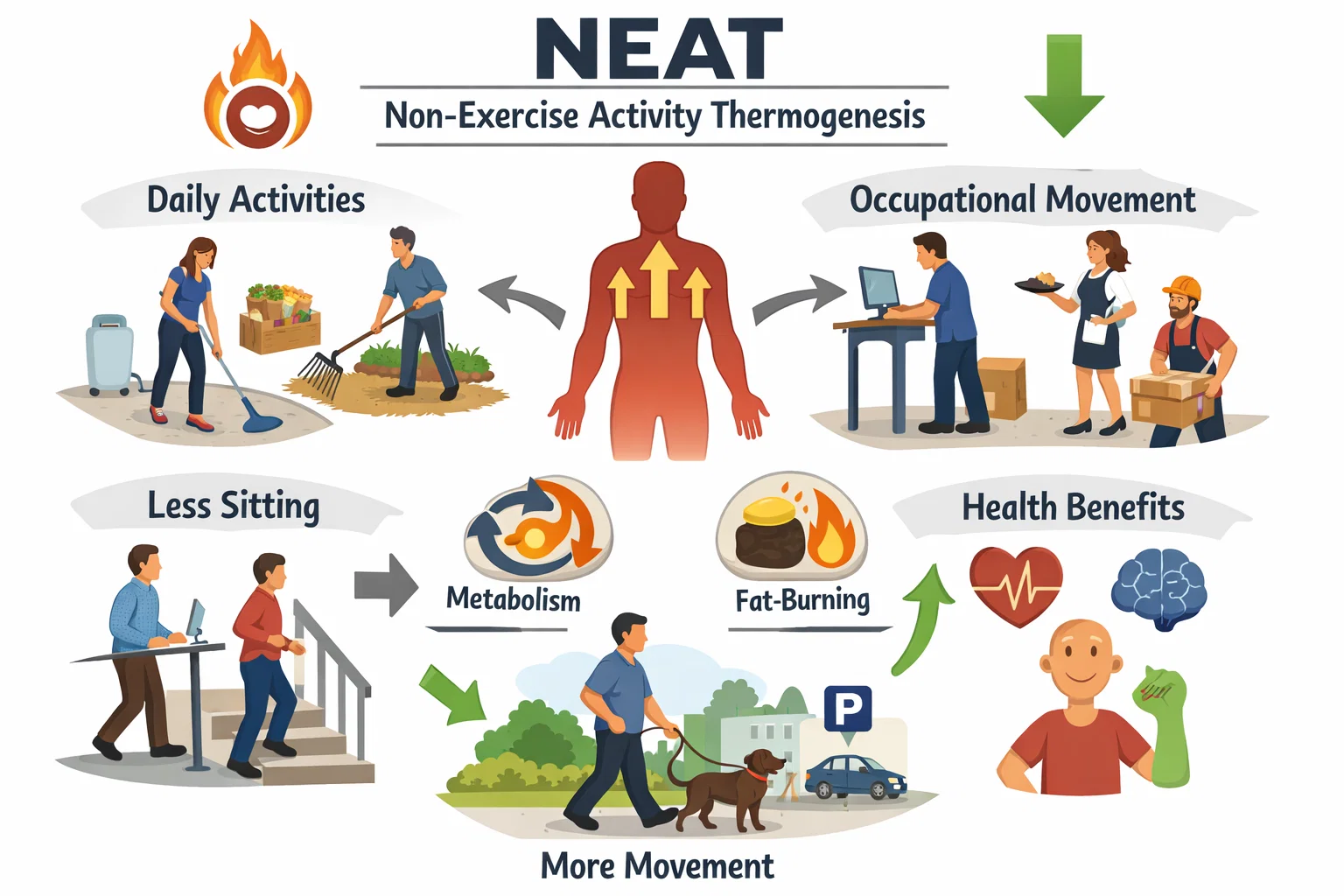
Non-exercise activity thermogenesis, in simple terms, refers to the energy expended for all physical activities that are not structured exercise, sleeping, eating, or sports-like exercise. Increasing NEAT involves all the unconscious movement done during the day. This NEAT approach to weight may be a key part of weight management.
Examples of NEAT in daily life (standing, walking, fidgeting)
Here are some examples of how to increase NEAT in your daily life. These include simple actions like:
- Fidgeting
- Standing or walking during phone calls
- Taking the stairs
Even small movements like changing posture or stretching at your desk contribute to calorie burn. These spontaneous physical activity examples illustrate how everyday actions can significantly impact total energy expenditure.
How NEAT differs from structured exercise and workouts
Non-exercise activity thermogenesis differs from structured exercise and workouts because it includes all the physical activities that are not considered exercise. It is usually lower intensity and spread throughout the day. NEAT may be more sustainable for some than structured exercise when following strategies for weight.
The Science of Fat Burning Without Exercise
How the body burns calories outside of workouts (TDEE explained)
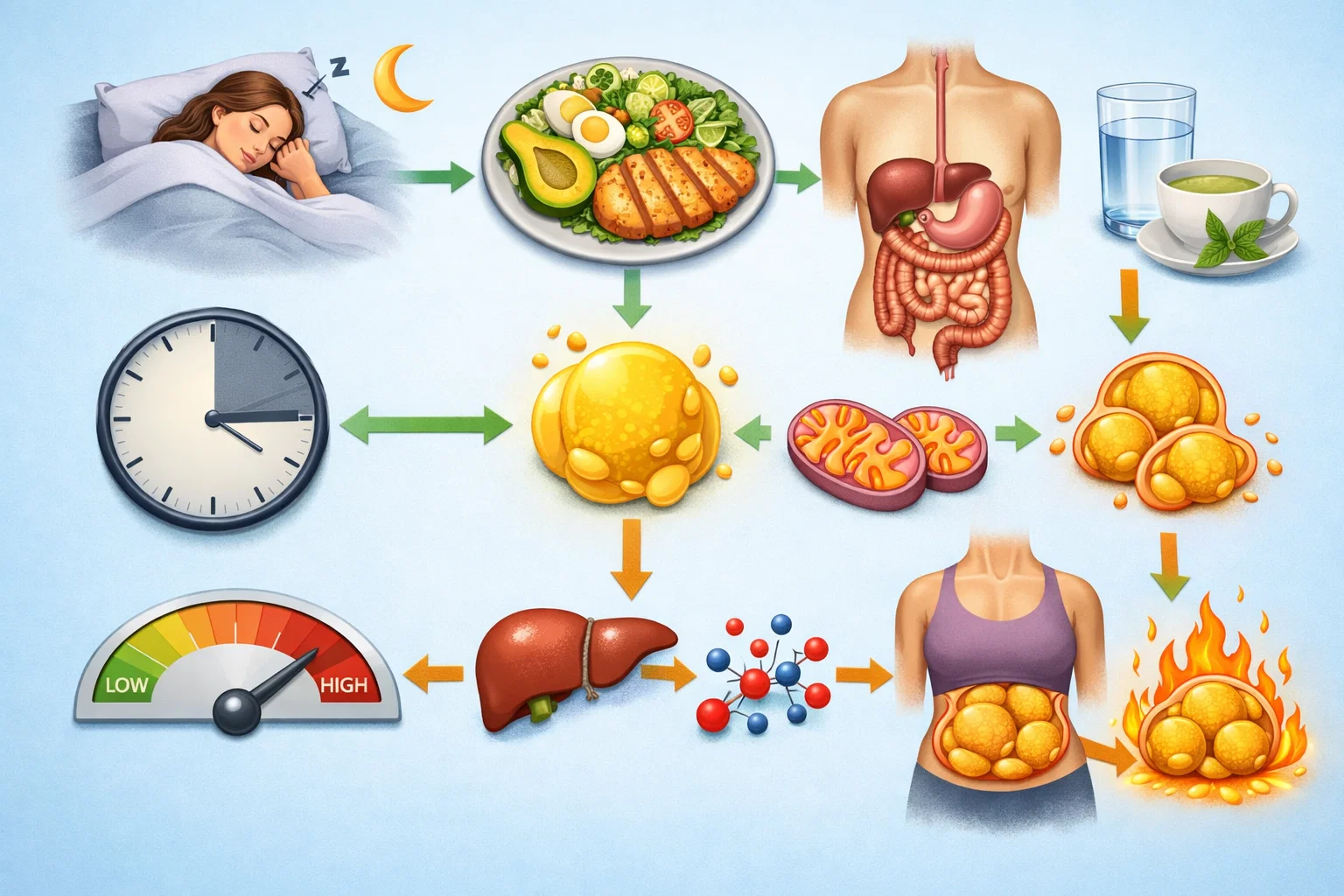
The body burns calories outside of workouts through its total daily energy expenditure, or TDEE, which includes basal metabolic rate (resting metabolic rate), the thermic effect of food, and activity expenditure. Increasing NEAT impacts the activity expenditure, which includes nonexercise activity thermogenesis and planned exercise. This allows for increased energy expenditure.
Role of energy balance and calorie expenditure
Energy balance, the relationship between calories consumed and calorie expenditure, is crucial for fat loss. When you burn more calories than you consume, the body taps into stored fat for energy. Increasing calorie burn through NEAT activities and daily movement helps create this calorie deficit, promoting fat loss over time.
Why small movements create long-term fat loss effects
Small movements, such as regular standing and walking, create long-term fat loss effects by consistently elevating calorie expenditure. Increasing NEAT integrates easily into daily routines and are more sustainable than intense workouts. Consistent daily movement helps prevent the accumulation of body fat and improves overall metabolic health.
Why Desk Workers Gain Belly Fat More Easily

Impact of prolonged sitting on metabolism
Prolonged sitting has a significant impact on metabolism, leading to a reduced resting metabolic rate. When sedentary, the body burns fewer calories per day, contributing to weight gain and obesity. This decrease in activity levels affects how efficiently the body processes sugars and fats, impacting overall metabolic health and fat loss.
Reduced insulin sensitivity from inactivity
Inactivity reduces insulin sensitivity, making it harder for the body to use glucose for energy. This can lead to higher blood sugar levels and increased fat storage. Increasing NEAT and daily movement can improve insulin sensitivity, helping to regulate blood sugar and prevent the accumulation of body fat.
Hormonal effects of a sedentary lifestyle (cortisol & fat storage)
A sedentary lifestyle has several hormonal effects, including increased cortisol levels, which promote fat storage, especially in the abdominal area. High cortisol can also interfere with metabolic rate and lead to weight gain. Increasing NEAT and daily movement can help regulate cortisol levels, supporting better fat loss results.
Hidden calorie deficit failure caused by low daily movement
Low daily movement can lead to a hidden calorie deficit failure, where individuals underestimate their total daily energy expenditure. Even with a healthy diet and exercise, a lack of increasing NEAT can sabotage fat loss efforts. Increasing NEAT is crucial for creating a sufficient calorie burn, preventing weight gain, and promoting fat loss.
The NEAT Protocol: How to Burn Fat Without Exercise

Hourly movement strategy (breaking long sitting periods)
An hourly movement strategy involves breaking up long sitting periods with short bursts of activity. Get out of your seat and stretch, walk around, or do some desk exercises every hour. This increases NEAT at work, boosts metabolism, and prevents the negative effects of prolonged sitting and helps strategies for weight.
Step accumulation goals for fat loss (daily walking targets)
Step accumulation goals for fat loss involve setting daily walking targets to increase NEAT and calorie burn. Aim for a number of calories burned per day. Using a pedometer or fitness tracker can help monitor activity levels. Regular walking contributes to fat loss and improves overall physical activities.
Standing vs sitting ratio optimization for desk workers
Optimizing the standing vs sitting ratio for desk workers is a practical approach to increase NEAT and calorie expend. Using a standing desk or alternating between sitting and standing throughout the day can significantly increase energy expenditure. This simple change can combat sedentary behavior and promote fat loss.
Micro-movements (fidgeting, posture changes, stretching)
Micro-movements, like fidgeting, posture changes, and stretching, can contribute to calorie expend throughout the day. Even small movements can add up and support NEAT activities. Encourage these spontaneous physical activity to increase NEAT activities and promote better weight management.
Active commuting and daily habit stacking techniques
Active commuting, such as walking or biking to work, and daily habit stacking techniques can significantly increase NEAT activities. Combine existing habits with new movement goals, like walking during phone calls. These strategies increase NEAT and promote a more active lifestyle.
Best NEAT Activities for Maximum Fat Loss

Walking during phone calls and meetings
Walking during phone calls and meetings is a simple yet effective way to increase NEAT activities and calorie burn. Instead of sitting, pace around the office or home while talking. This easy adjustment turns sedentary time into an opportunity for spontaneous physical activity.
Using stairs instead of elevators
Using stairs instead of elevators is a straightforward way to increase NEAT activities and strengthen muscles. Taking the stairs boosts cardiovascular health and increases daily calorie expend. This simple choice adds up to significant long-term benefits for NEAT for weight loss.
Light household movement and cleaning routines
Light household movement and cleaning routines provide opportunities to increase NEAT activities. Activities like vacuuming, sweeping, and gardening burn calories and add to daily movement. These chores contribute to a more active lifestyle and support fat loss efforts and weight control.
Desk-friendly mobility exercises and stretches
Desk-friendly mobility exercises and stretches can be incorporated into the workday to combat the effects of prolonged sitting. Simple stretches, shoulder rolls, and leg extensions can improve posture and increase NEAT activities. These activities promote better circulation and reduce muscle stiffness from the seat.
How NEAT Directly Impacts Belly Fat Reduction
Reduction of visceral fat through consistent movement
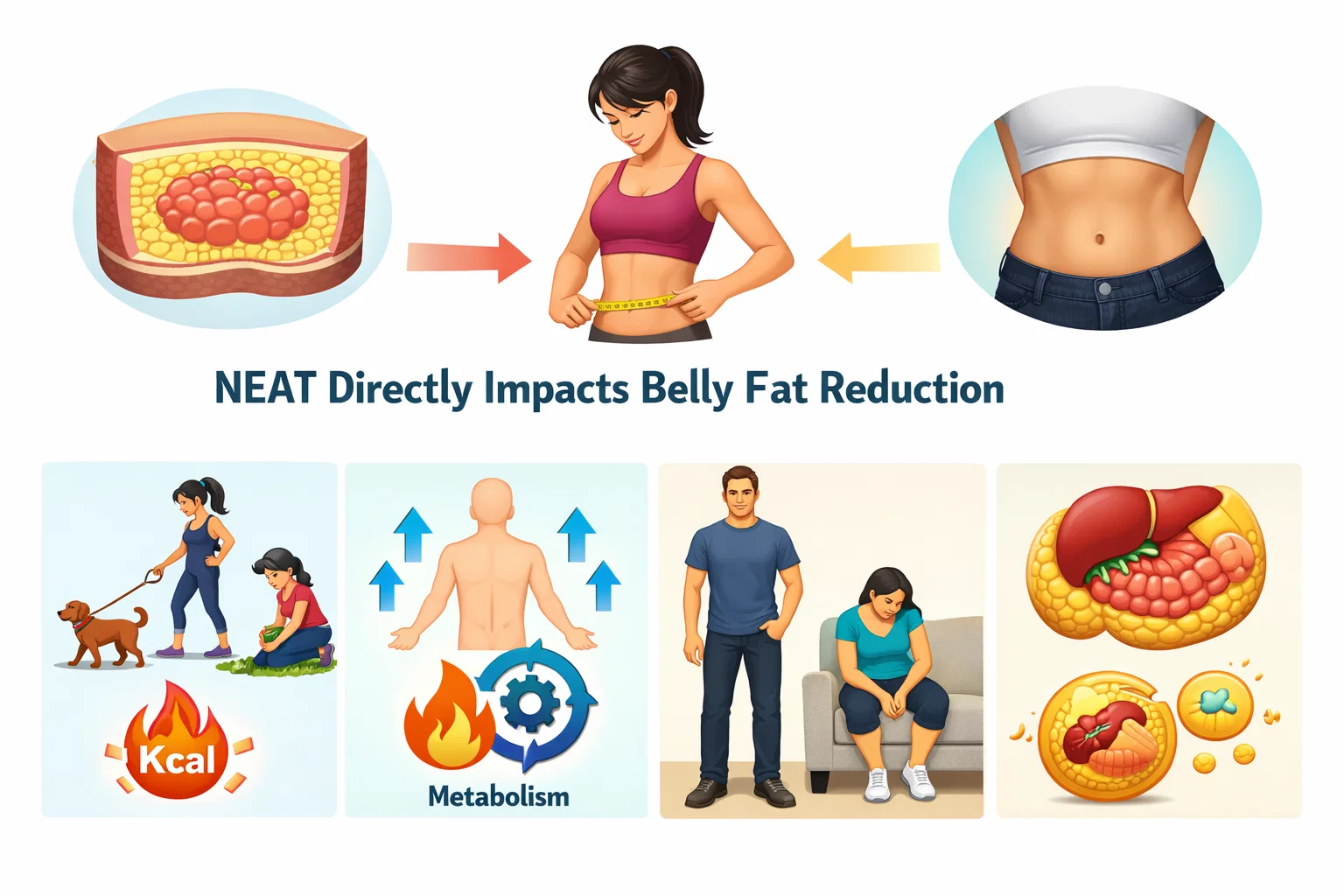
Consistent movement, achieved through increasing NEAT, directly aids in the reduction of visceral fat, the harmful fat stored around abdominal organs. Regular physical activities and spontaneous physical activity prevent the accumulation of this dangerous body fat. Increasing NEAT also improves overall metabolic rate, further supporting fat loss. Increasing NEAT prevents obesity.
Improved insulin sensitivity and fat storage control
Increasing NEAT significantly improves insulin sensitivity, allowing the body to use glucose more effectively and reducing fat storage. When insulin functions efficiently, fewer calories are stored as fat, particularly around the abdomen. Incorporating NEAT approach into daily activities helps regulate insulin levels and promoting better body weight management.
Increased calorie burn without structured exercise
Increasing NEAT burns calories without structured exercise, contributing to a daily calorie deficit and facilitating fat loss. Even small movements throughout the day accumulate, leading to a significant total daily energy expenditure. This approach is particularly beneficial for individuals who find it challenging to engage in regular workouts, or intense structured exercise.
NEAT vs Traditional Exercise: What Actually Works Better?

Calorie burn comparison between NEAT and workouts
A calorie burn comparison between increasing NEAT and workouts shows that while structured exercise may burn more calories per session, increasing NEAT can contribute significantly over the long term. The total number of calories can be suprisingly high. Increasing NEAT provides a more sustainable and consistent approach to calorie expend and weight control.
Sustainability: why NEAT is easier long-term
Sustainability is a key advantage of increasing NEAT. NEAT activities are easier to maintain long-term compared to structured exercise. Incorporating activities into daily routines doesn’t require dedicated time. This ease of integration makes NEAT activities a more practical and accessible option for individuals seeking to manage their body weight.
Combining NEAT with workouts for maximum fat loss
Combining increasing NEAT with workouts yields maximum fat loss results. Regular structured exercise sessions complemented by consistent NEAT activities ensure a higher total daily energy expenditure. This dual approach maximizes calorie burn, promoting efficient body weight management and overall health improvements. Following strategies for weight helps you reach weight loss goals.
Common Mistakes That Prevent NEAT Fat Loss Results

Sitting for long hours despite “healthy diet”
Sitting for long hours despite maintaining a “healthy diet” can hinder nonexercise activity thermogenesis fat loss results. Prolonged sedentary behavior reduces daily calorie burn, negating the benefits of a balanced diet. It’s crucial to break up sitting periods and increase NEAT throughout the day to promote weight management. Avoid sitting for too long.
Overestimating workout impact and ignoring daily movement
Overestimating workout impact and ignoring daily movement is a common mistake in fat loss efforts. While workouts are important, they only account for a fraction of total daily energy expenditure. Focusing solely on exercise while neglecting increasing NEAT can lead to a calorie deficit failure and hinder overall progress. Avoid obesity by increasing level of NEAT.
Weekend activity compensation myth
Relying on the weekend activity compensation myth, believing that intense weekend workouts can offset a sedentary workweek, is ineffective. A weekend activity cannot compensate for low nonexercise activity thermogenesis and a sedentary lifestyle during the week. Regular daily movement is essential for sustained fat loss.
How to Build a NEAT-Based Fat Loss Lifestyle

Daily movement structure for office workers
For office workers aiming to increase NEAT, structuring daily movement is essential. Incorporate short breaks every hour for physical activities like stretching or walking. Use your lunch break for a longer walk. These habits combat a sedentary lifestyle and promote increased energy expenditure throughout the day, aiding weight management.
Environmental design for more movement (desk setup, reminders)
Designing your environment to promote NEAT activities can significantly impact your daily calorie burn. A standing desk encourages more standing and walking, contributing to increased NEAT. Place reminders to take breaks and move around. A well-designed workspace that encourages movement supports weight control goals.
Habit stacking for effortless calorie burning
Habit stacking involves linking new, increasing NEAT activities to existing routines. For example, walk while on phone calls or do desk exercises during meetings. By seamlessly integrating NEAT activities into daily tasks, you can effortlessly increase your level of physical activity and promote fat loss.
Nutrition Strategy to Enhance NEAT Fat Loss Results
High-protein foods for appetite control
Including high-protein foods in your diet is essential for appetite control and to support fat loss. Protein helps you feel fuller for longer, reducing overall calorie intake. Protein also plays a key role in maintaining muscle mass during weight loss, further boosting resting metabolic rate.
Fiber-rich meals for sustained energy
Fiber-rich meals are vital for sustained energy and metabolic health. Fiber slows down digestion, preventing blood sugar spikes and crashes. This helps maintain consistent energy levels throughout the day, supporting consistent level of physical activity. Choose whole grains, fruits, and vegetables for optimal fiber intake.
Hydration’s role in movement and metabolism
Hydration plays a significant role in both movement and metabolism. Adequate water intake supports all bodily functions, including energy production and increasing NEAT. Dehydration can lead to fatigue and reduced physical activities, hindering fat loss efforts. Aim to drink plenty of water throughout the day to stay energized and support metabolic rate.
Advanced Insight: How NEAT Affects Hormones and Metabolism
NEAT and cortisol regulation (stress-fat connection)
Increasing NEAT has a positive effect on cortisol regulation, helping to manage stress and its connection to fat storage. Sedentary behavior can elevate cortisol levels, promoting fat accumulation. Regular daily movement and increasing level of physical activity helps regulate cortisol and support increased energy expenditure.
Impact on mitochondrial activity and energy output
Increasing NEAT has a significant impact on mitochondrial activity and energy output. Mitochondria, the powerhouses of cells, become more efficient with increased level of physical activity. This boost in mitochondrial function enhances the body’s ability to burn calories, making increasing NEAT a key player in weight control.
Relationship between NEAT and metabolic adaptation
The relationship between increasing NEAT and metabolic adaptation is crucial for long-term fat loss. When consistently active, the body adapts by becoming more efficient at burning calories, combating metabolic slowdown. Incorporating increasing NEAT into daily routines helps maintain a higher resting metabolic rate and supports continuous fat loss efforts.
7-Day NEAT Fat Loss Action Plan for Desk Workers
Here’s a simple 7-day plan incorporating several strategies. To increase NEAT, consider the following actions:
- Set hourly reminders to stand and stretch.
- Walk during lunch breaks.
- Use a standing desk.
- Take the stairs.
- Fidget more consciously.
- Walk during phone calls.
- Incorporate desk exercises.
Following these strategies will help you increase NEAT.
Conclusion: Why NEAT Is the Most Underrated Fat Loss Strategy
Increasing NEAT is the most underrated fat loss strategy because it’s accessible, sustainable, and highly effective for combating a sedentary lifestyle. By making small, consistent changes to increase your level of physical activity, you can significantly boost your metabolism, promote fat loss, and improve overall health and weight management.