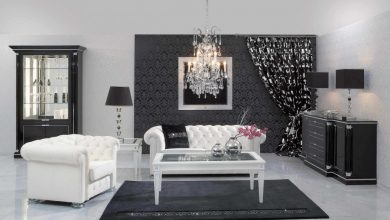
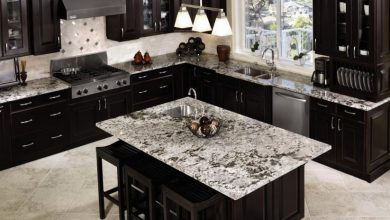
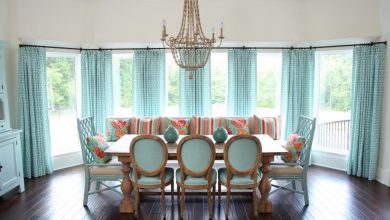
The kitchen became a very important room of the home, it is not only for cooking and eating, but also it became the place where you can watch television, read books, finish your work, your children can make their homework and also you can meet your friends in. So, choose a good lighting for your kitchen which should give different effects. Try to avoid complexity of lighting and don’t concentrate on only one lighting in the ceiling, because this may ruin the overall look of your kitchen. You should mix more than one style of lighting together to make the best result of an effective lighting.
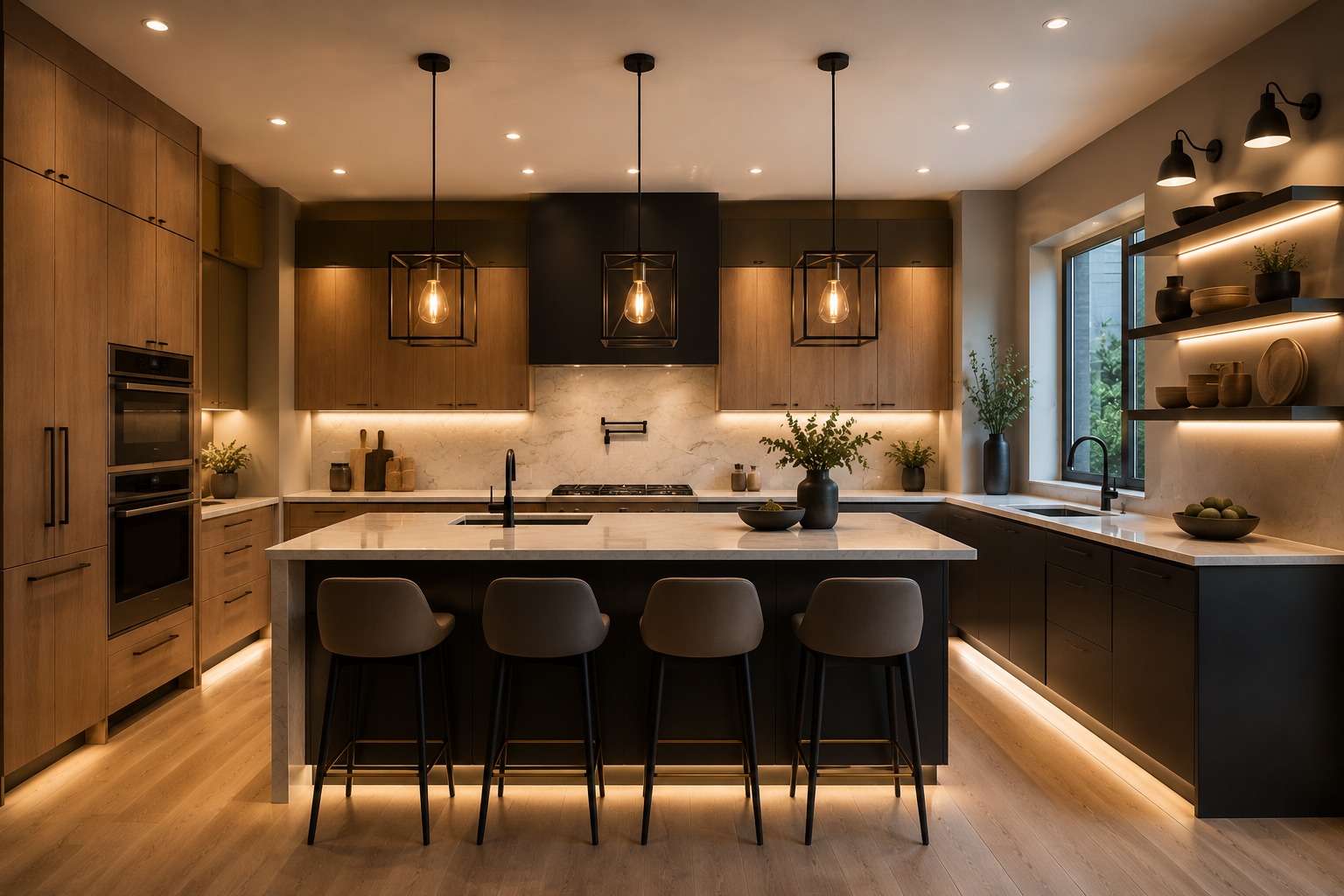
Large kitchens need a mix of task, general and accent lighting while small kitchens need only a chandelier centered in the ceiling with task lighting put under the cabinets and cupboards.
Understanding the Three Layers of Kitchen Lighting
Successful kitchen lighting starts with understanding the three essential layers of illumination.
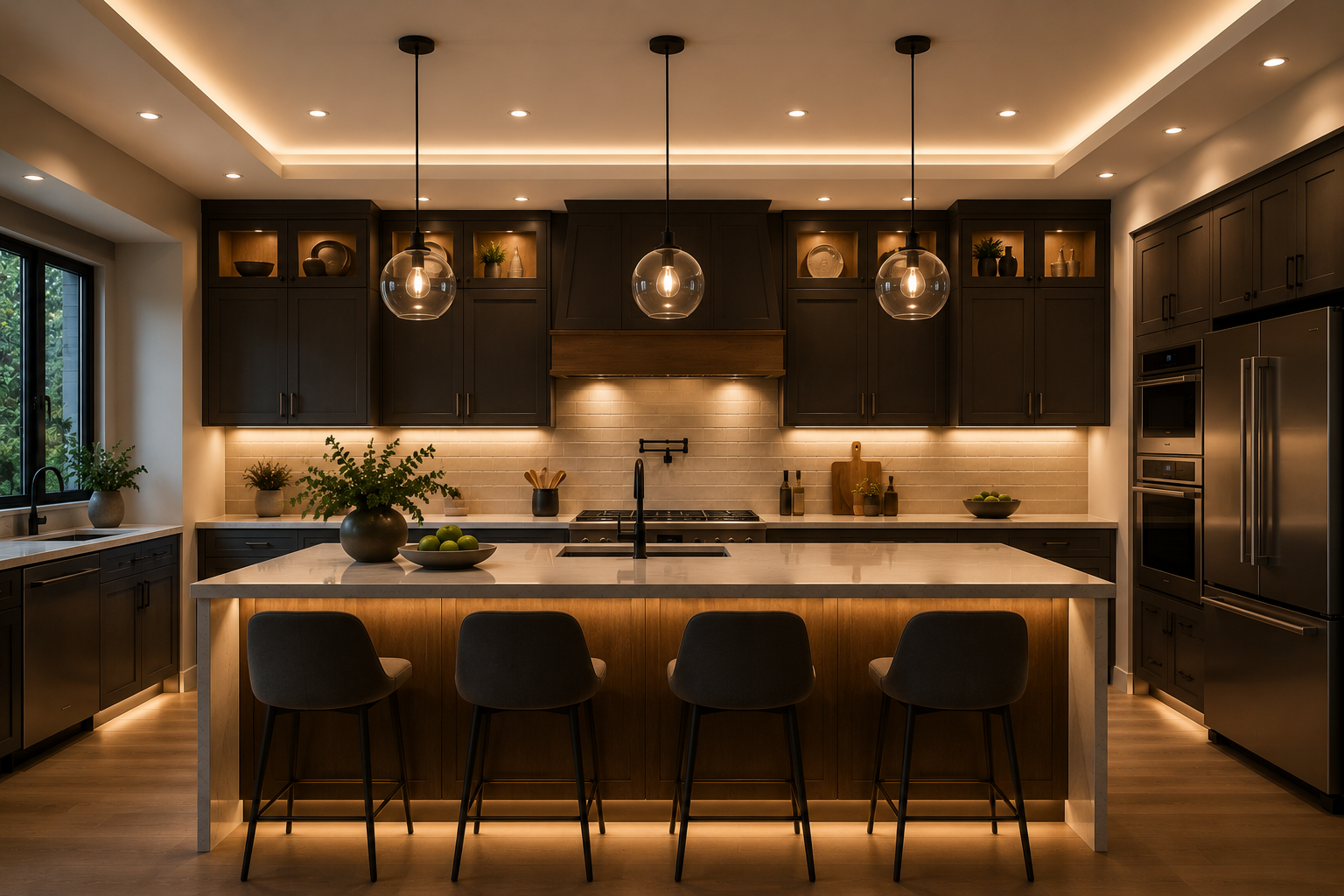
Ambient Lighting for Overall Illumination
Ambient lighting provides the primary source of brightness throughout the kitchen. It ensures the room is comfortably illuminated and safe for everyday activities.
Common ambient lighting options include:
- Recessed ceiling lights
- Flush-mount fixtures
- Chandeliers
- LED ceiling panels
Task Lighting for Cooking and Food Preparation
Task lighting focuses on specific work areas where visibility is critical.
Examples include:
- Under-cabinet lighting
- Pendant lights over islands
- Lighting above sinks
- Pantry illumination
Task lighting helps reduce shadows and improves safety while preparing meals.
Accent Lighting for Style and Visual Interest
Accent lighting adds depth and highlights decorative elements within the kitchen.
Popular accent lighting features include:
- Toe-kick lighting
- Interior cabinet lighting
- Shelf lighting
- Cove lighting
Combining all three layers creates a balanced and visually appealing lighting design.
Best Kitchen Lighting Design
#1: Elegant Pendant Lights Over Kitchen Islands
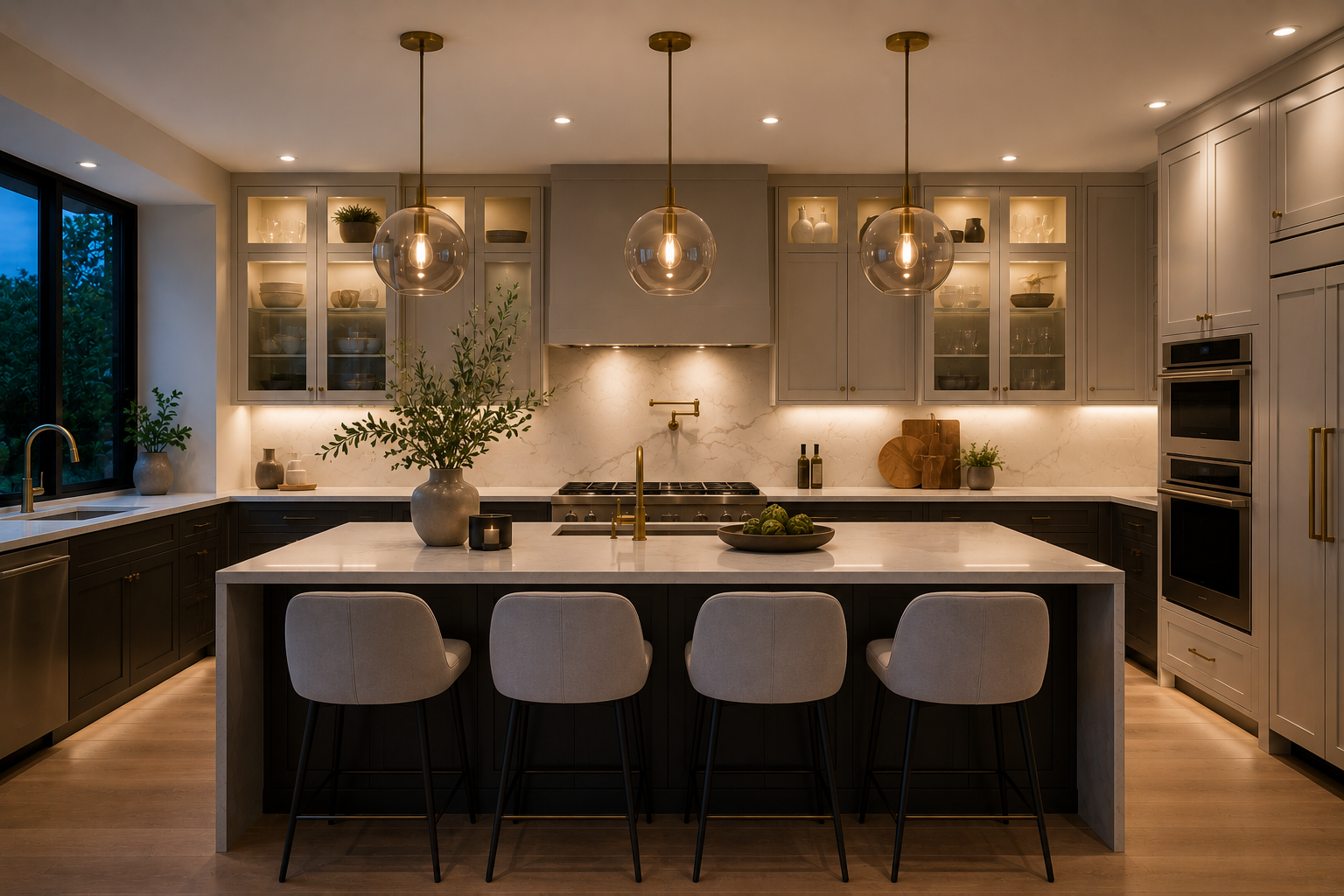
Pendant lighting remains one of the most popular choices for modern kitchens.
Choosing the Right Pendant Size and Placement
The size and placement of pendant lights significantly affect both functionality and aesthetics.
General guidelines include:
- Hang pendants 30 to 36 inches above the countertop
- Space fixtures evenly across the island
- Scale fixtures proportionally to the island size
Proper placement ensures adequate task lighting while maintaining visual balance.
Popular Pendant Lighting Styles for Modern Kitchens
Today’s homeowners can choose from a variety of styles, including:
- Glass pendants
- Industrial metal fixtures
- Globe pendants
- Geometric designs
- Farmhouse-inspired lighting
Pendant lights often become the focal point of the entire kitchen.
#2: Under-Cabinet LED Lighting
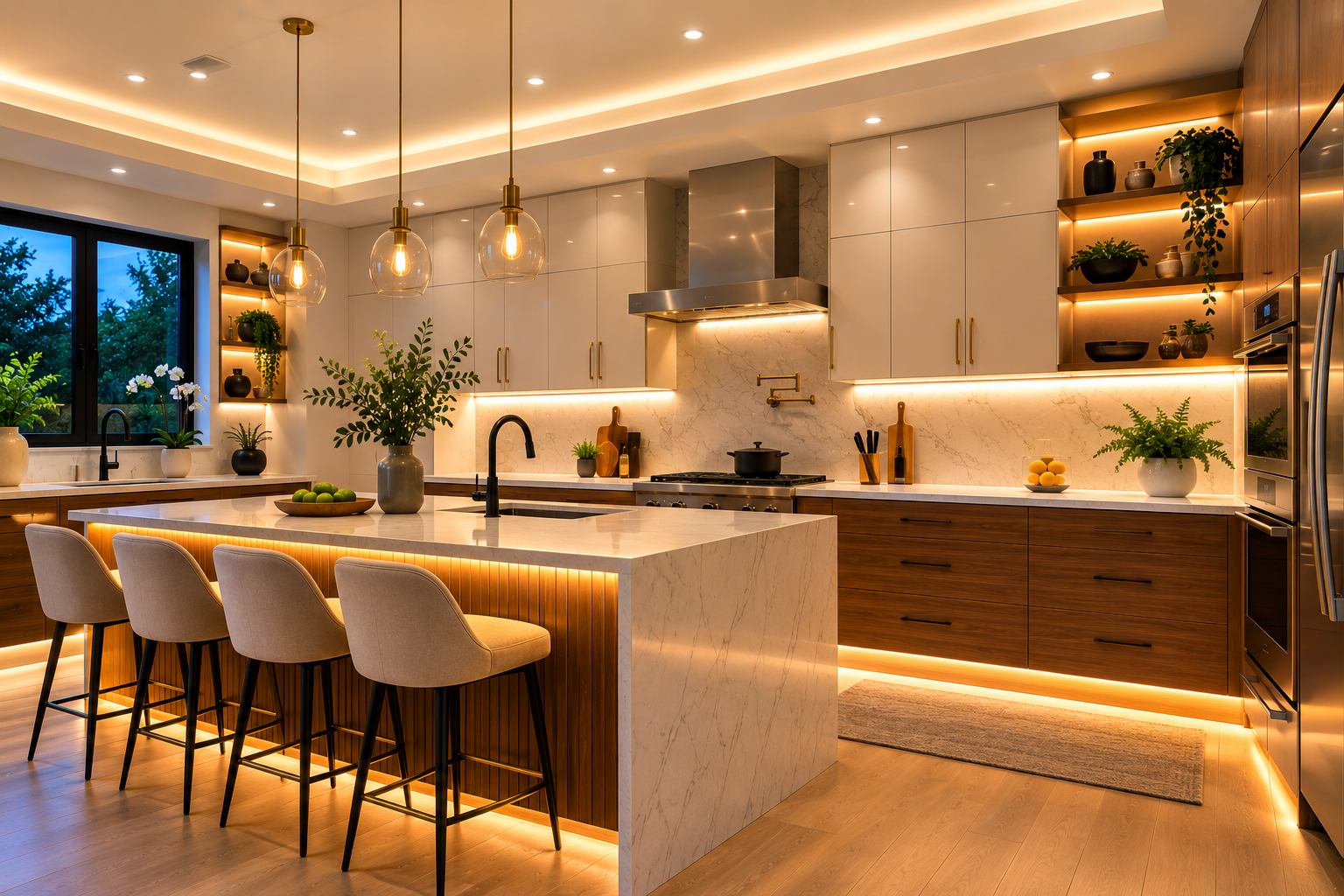
One of the simplest yet most effective kitchen upgrades is under-cabinet lighting.
Benefits of Illuminating Countertops
Cabinets can cast shadows onto work surfaces, making food preparation more difficult.
Under-cabinet lighting helps by:
- Improving visibility
- Reducing eye strain
- Enhancing safety
- Creating a high-end appearance
LED Strip Lights vs. Puck Lights
LED strip lights provide continuous illumination and are ideal for modern kitchens.
Puck lights create concentrated pools of light and can be used to highlight specific areas.
Both options offer energy efficiency and long-lasting performance.
#3: Recessed Ceiling Lighting
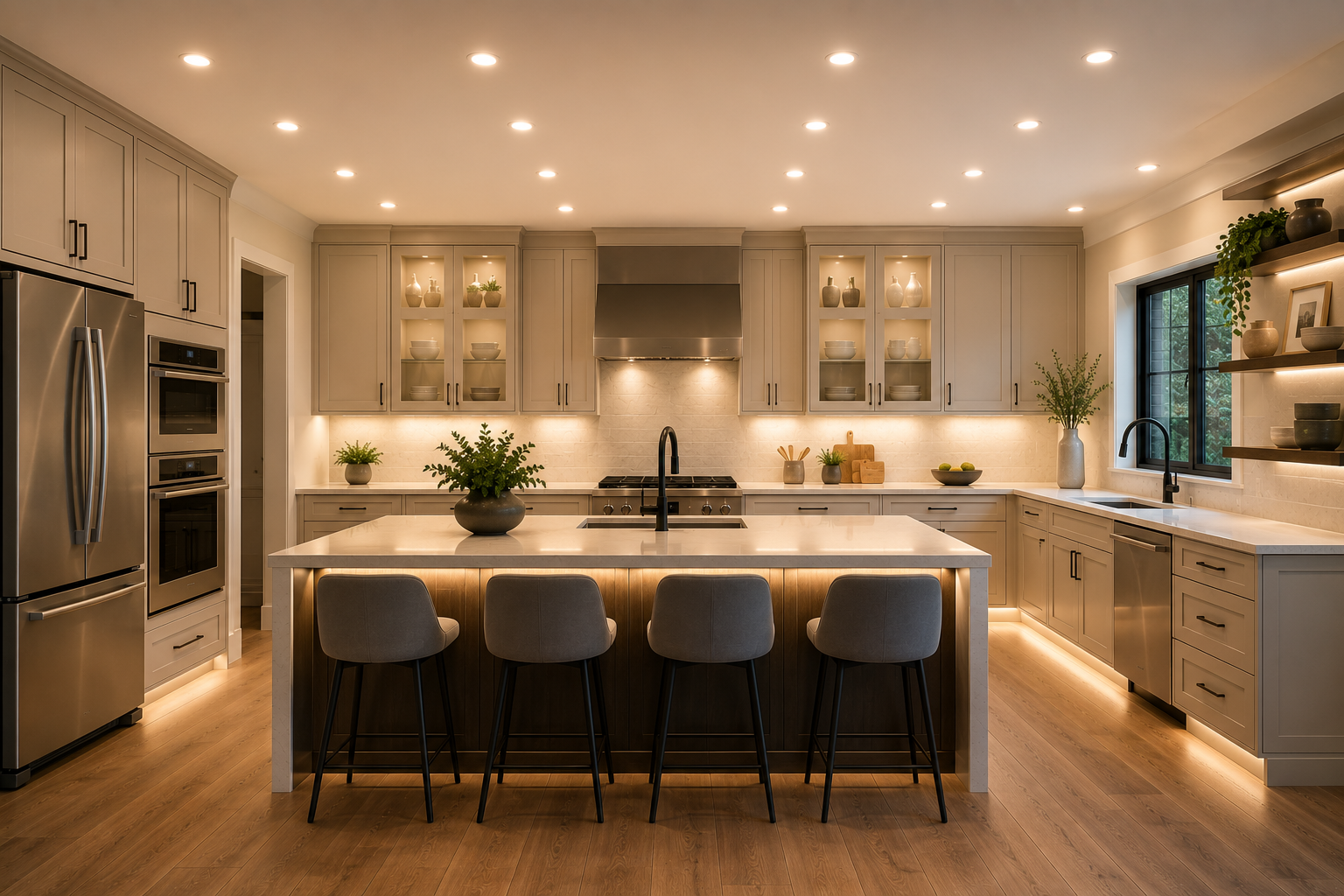
Recessed lighting is a favorite among designers because of its clean and versatile appearance.
Creating a Clean and Modern Look
Unlike hanging fixtures, recessed lights remain flush with the ceiling, helping maintain uncluttered sightlines.
They work particularly well in:
- Contemporary kitchens
- Minimalist interiors
- Open-concept layouts
Proper Spacing and Placement Tips
Even spacing is essential for achieving uniform illumination. A carefully planned layout prevents dark corners and overly bright areas.
Dimmers can also provide flexibility for different activities and times of day.
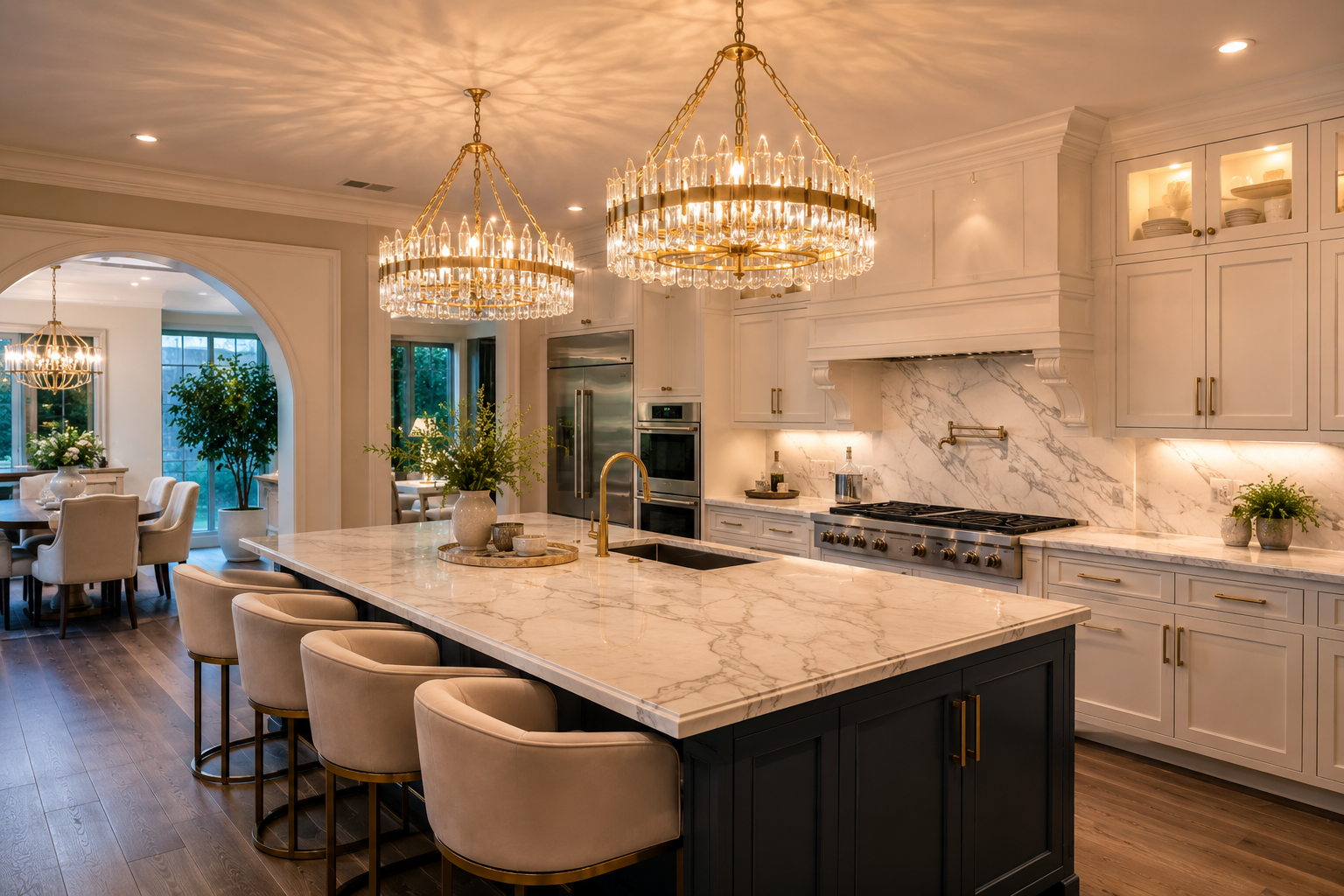
#4: Statement Chandeliers for Luxury Kitchens
Chandeliers are no longer limited to formal dining rooms.
Where Chandeliers Work Best in Kitchen Spaces
Modern chandeliers can be used above:
- Dining areas
- Kitchen islands
- Breakfast nooks
- Open-concept gathering spaces
Matching Chandeliers With Kitchen Styles
The right chandelier complements the kitchen’s design theme.
Examples include:
- Crystal chandeliers for luxury kitchens
- Rustic wood chandeliers for farmhouse designs
- Sleek metal fixtures for contemporary spaces
A striking chandelier instantly elevates the overall aesthetic.
#5: Layered Lighting for Maximum Functionality
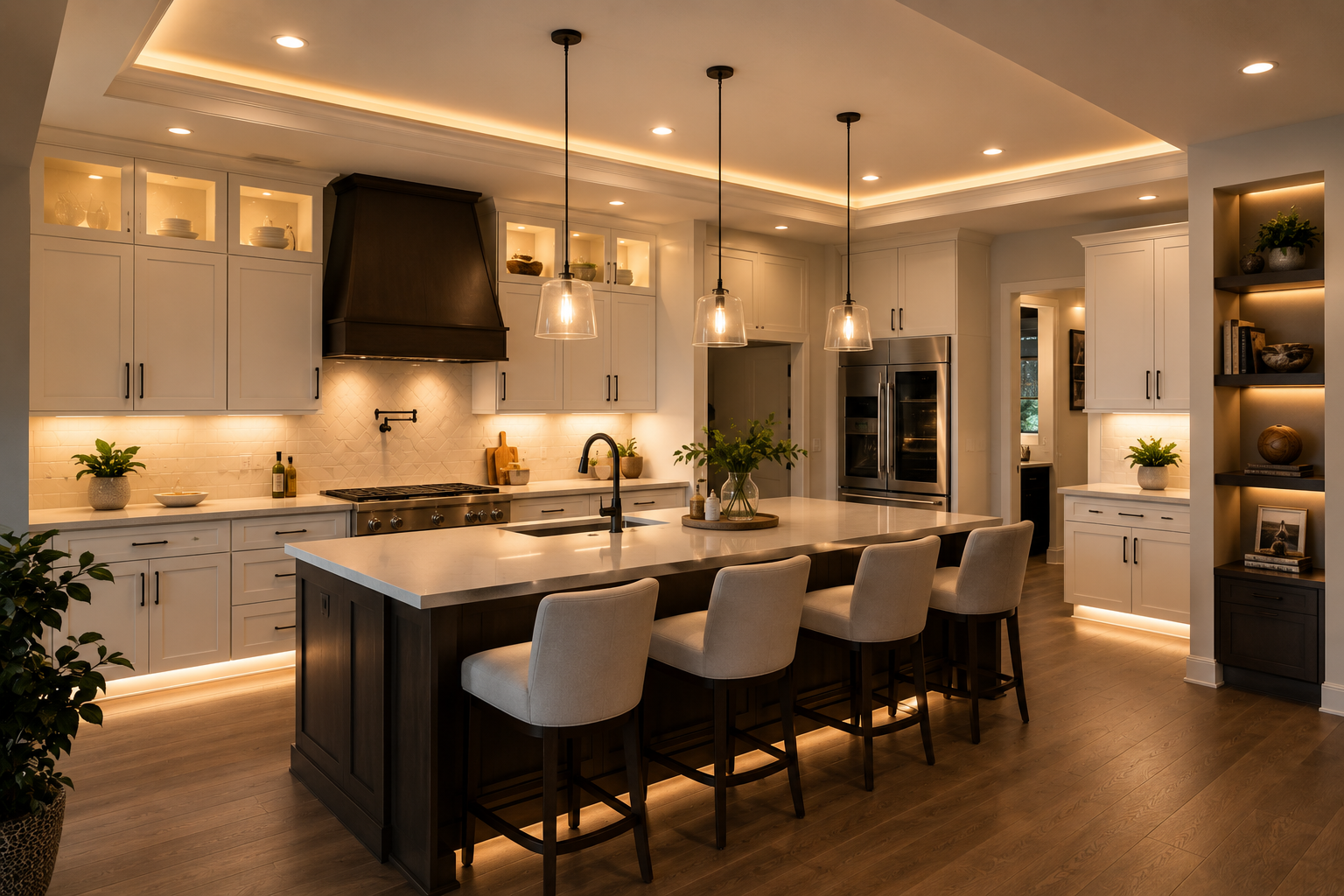
Professional kitchen designers rarely rely on a single source of light.
Combining Ambient, Task, and Accent Lighting
Layered lighting creates a flexible environment that adapts to different needs.
For example:
- Ambient lighting illuminates the entire room.
- Task lighting supports food preparation.
- Accent lighting enhances atmosphere.
Creating Flexible Lighting for Different Activities
Cooking, entertaining, dining, and cleaning all require different lighting levels.
Layered lighting allows homeowners to adjust the environment accordingly.
#6: LED Cove Lighting for a Sophisticated Glow
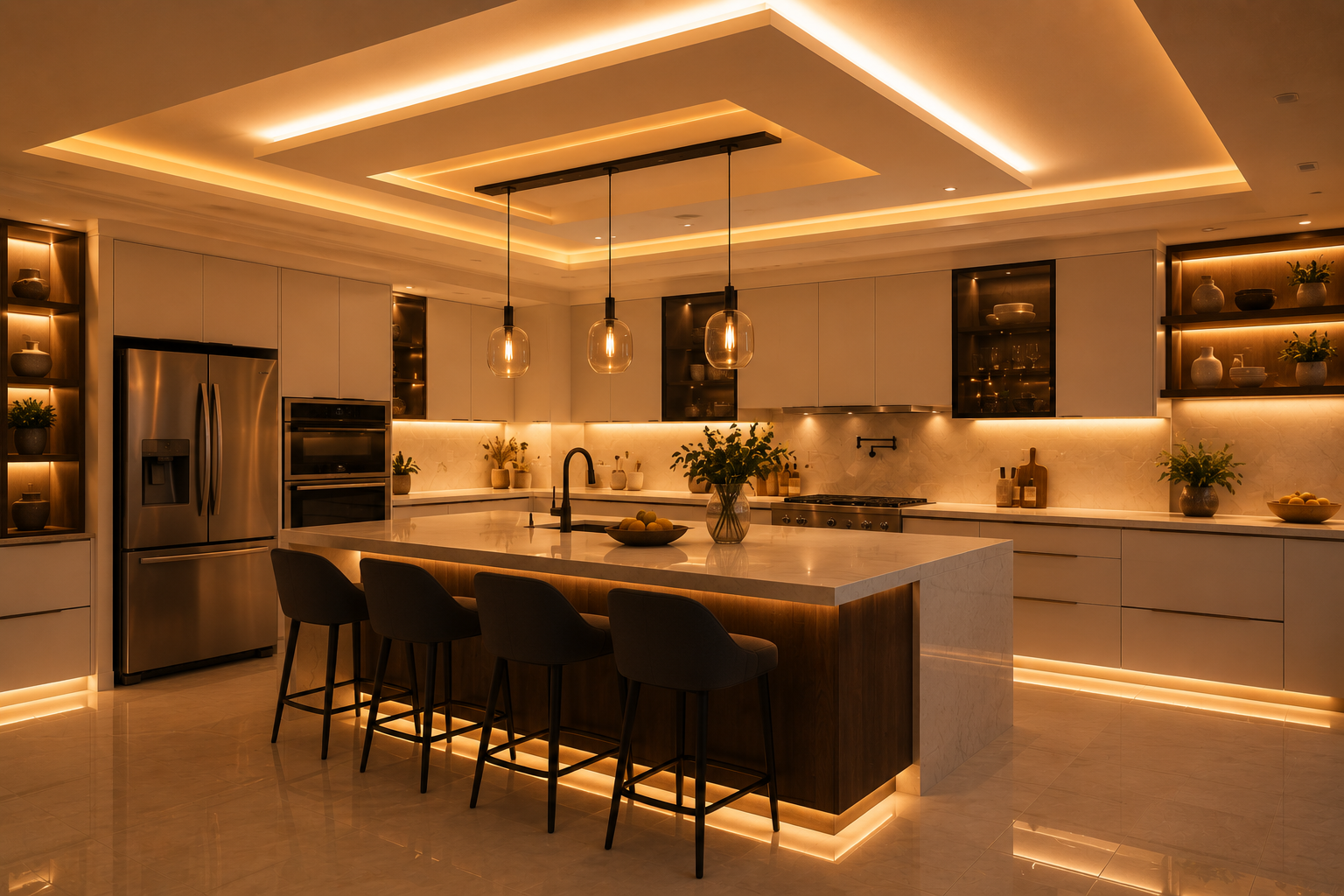
LED cove lighting introduces subtle luxury into kitchen design.
Ceiling Cove Lighting Applications
Installed within recessed ceilings or architectural details, cove lighting creates indirect illumination that softens the overall atmosphere.
Enhancing Architectural Features With Indirect Light
LED cove lighting can emphasize:
- Tray ceilings
- Floating cabinets
- Open shelving
- Decorative wall features
The result is a warm and sophisticated ambiance.
#7: Industrial-Inspired Lighting Fixtures
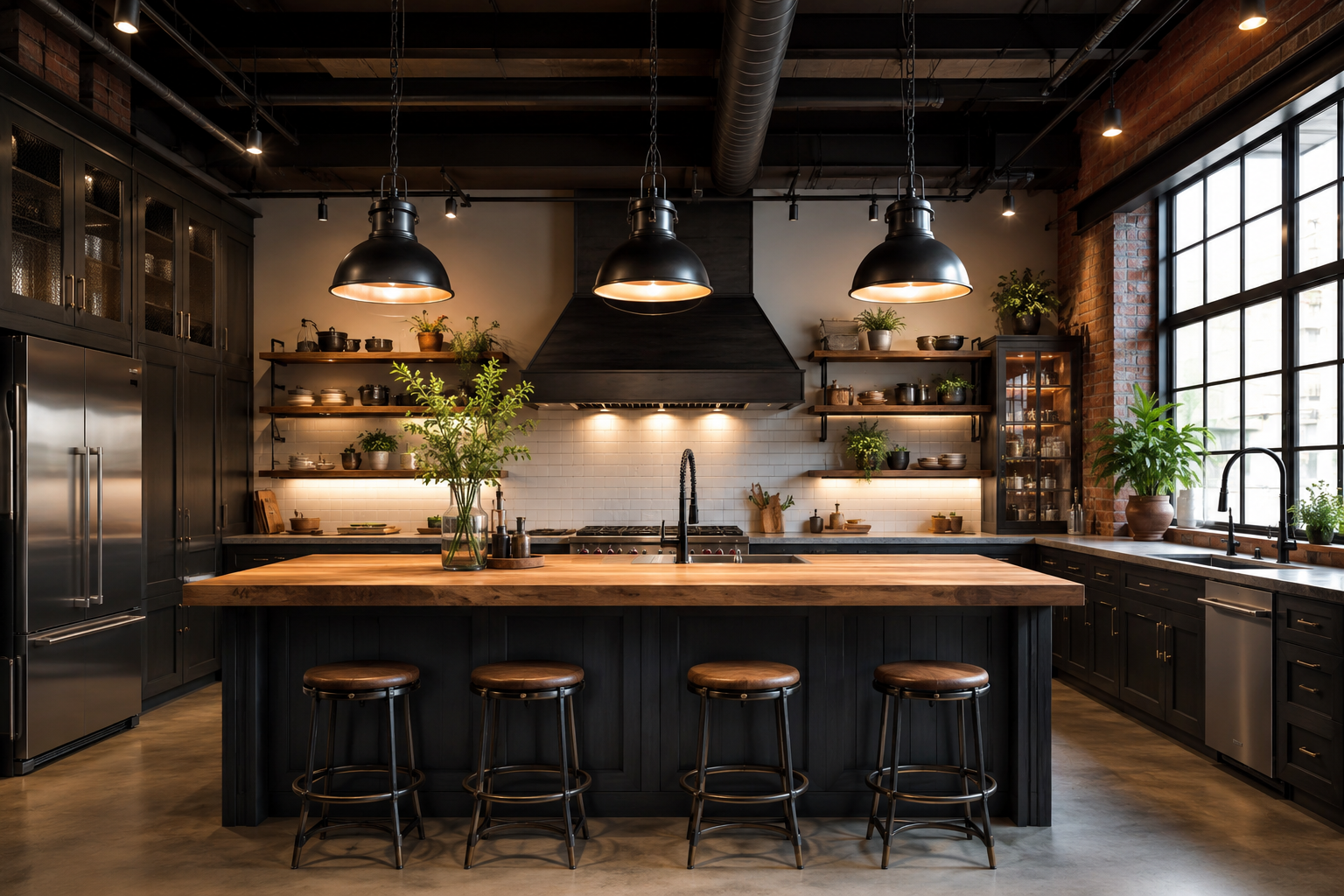
Industrial lighting continues to influence modern kitchen design.
Exposed Bulbs, Metal Finishes, and Urban Style
Typical industrial features include:
- Black metal frames
- Exposed Edison bulbs
- Wire cage fixtures
- Raw materials
Blending Industrial Lighting With Modern Interiors
Industrial elements pair surprisingly well with contemporary cabinetry, natural wood, and luxury finishes.
This combination creates a stylish contrast that feels both modern and inviting.
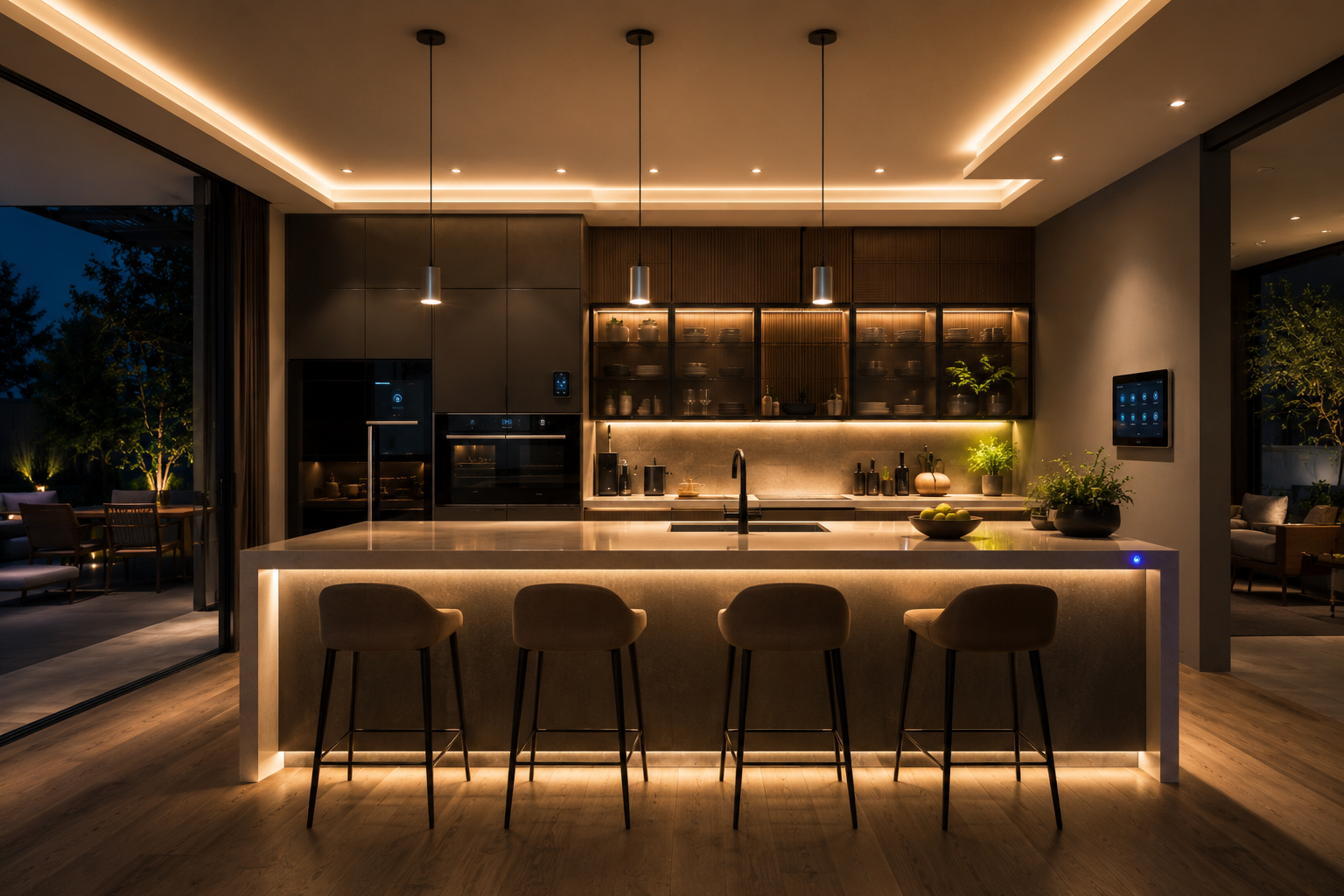
#8: Smart Kitchen Lighting Systems
Technology is revolutionizing residential lighting.
Voice-Controlled and App-Controlled Lighting
Smart systems allow homeowners to:
- Control lights remotely
- Adjust brightness levels
- Set schedules
- Change color temperatures
- Activate voice commands
Energy Savings and Personalized Lighting Scenes
Custom lighting scenes can instantly transform the atmosphere for cooking, entertaining, or relaxing.
Smart controls also help reduce energy consumption and utility costs.
#9: Toe-Kick and Base Cabinet Lighting
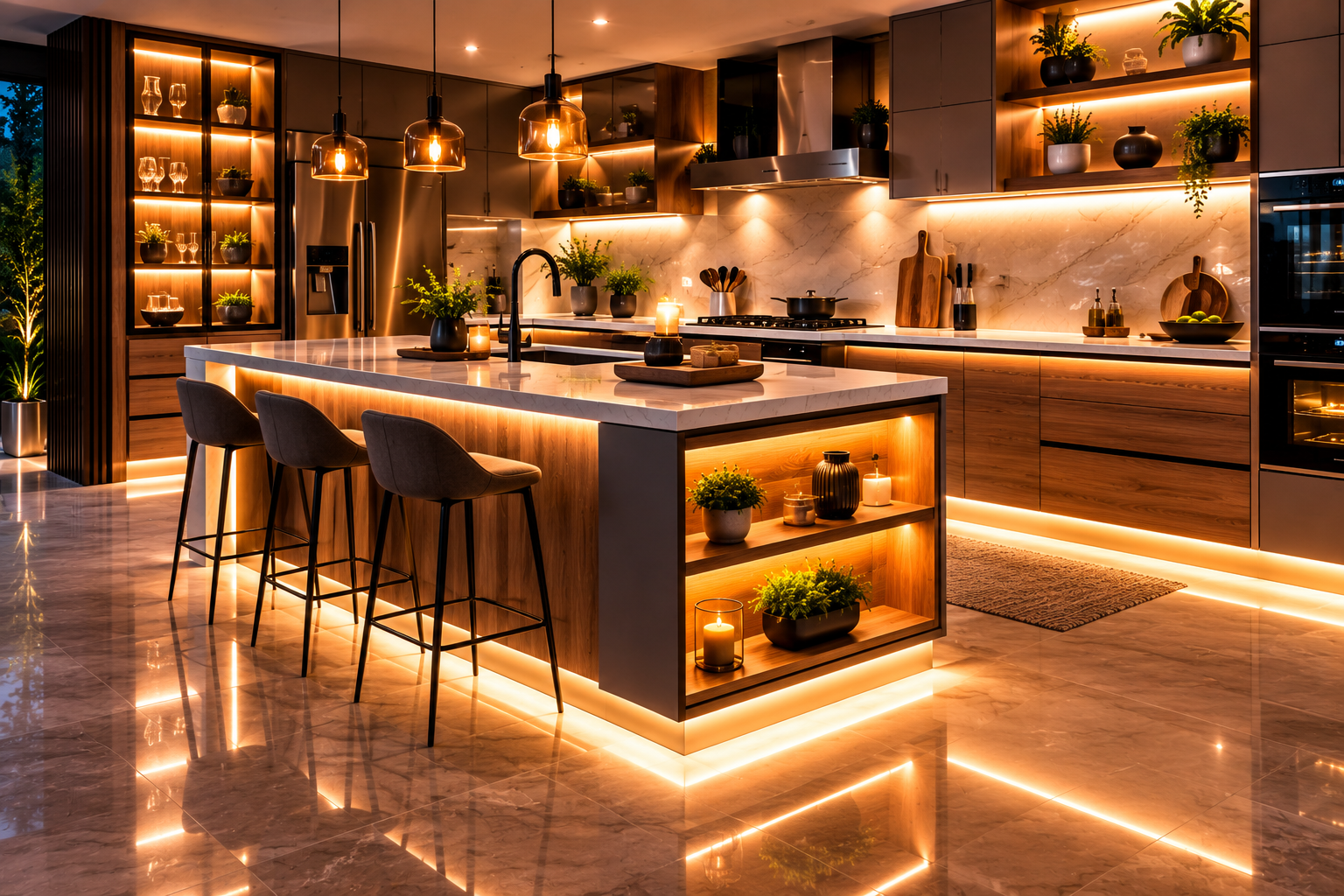
Toe-kick lighting is a subtle feature that adds remarkable visual impact.
Adding Depth and Luxury to the Kitchen
LED strips installed beneath cabinets create the illusion that cabinetry is floating above the floor.
This effect introduces sophistication and depth.
Practical Benefits for Nighttime Navigation
Low-level illumination also provides safe navigation during nighttime hours without requiring bright overhead lighting.
#10: Designer and Sculptural Lighting Fixtures
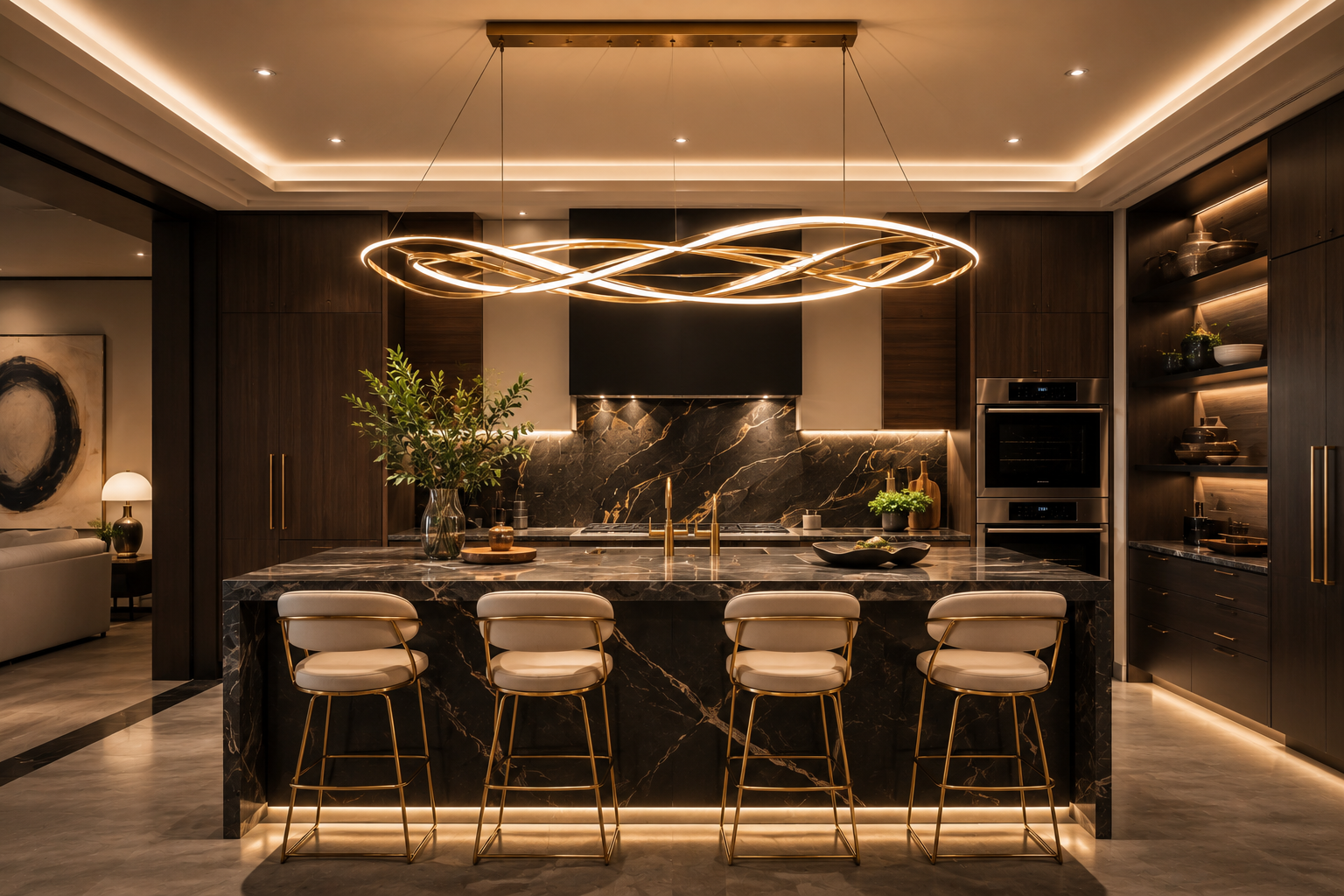
Lighting can function as both illumination and artwork.
Turning Lighting Into Functional Art
Designer fixtures often feature:
- Abstract forms
- Unique materials
- Artistic craftsmanship
- Innovative lighting technology
Creating Stunning Kitchen Focal Points
A sculptural lighting fixture can become the centerpiece around which the entire kitchen design revolves.
These statement pieces help define the room’s personality and style.
Choosing the Best Light Bulbs for Your Kitchen
Even the most beautiful fixture depends on selecting the right bulbs.
Understanding Color Temperature and Brightness
Color temperature influences how light appears within the space.
Common options include:
- Warm white (2700K–3000K)
- Neutral white (3500K–4100K)
- Cool white (5000K+)
Warm White vs. Cool White Kitchen Lighting
Warm white lighting creates a cozy and inviting atmosphere.
Cool white lighting improves visibility and supports task-oriented activities.
Many homeowners choose neutral white lighting to achieve a balanced effect.
Why LED Bulbs Are the Preferred Choice
LED technology offers:
- Long lifespan
- Reduced energy consumption
- Minimal heat production
- Excellent brightness control
These advantages make LEDs the preferred option for modern kitchens.
Kitchen Lighting Ideas for Different Kitchen Styles
Modern and Minimalist Kitchens
Minimalist kitchens benefit from:
- Recessed lighting
- Linear pendants
- Hidden LED strips
- Clean fixture designs
Farmhouse and Rustic Kitchens
Popular farmhouse lighting choices include:
- Lantern-style pendants
- Wood-accent fixtures
- Vintage-inspired bulbs
- Iron chandeliers
Contemporary Luxury Kitchens
Luxury kitchens often incorporate:
- Crystal chandeliers
- Oversized pendants
- Cove lighting
- Integrated LED systems
Industrial and Urban Kitchen Designs
Industrial spaces pair well with:
- Black metal fixtures
- Edison bulbs
- Track lighting
- Exposed hardware
How Natural Light Enhances Kitchen Design
Artificial lighting should complement natural daylight whenever possible.
Maximizing Windows and Skylights
Large windows and skylights help:
- Reduce energy usage
- Improve mood
- Enhance visual spaciousness
- Showcase interior finishes
Using Reflective Surfaces to Amplify Daylight
Glossy cabinetry, polished countertops, and glass surfaces help distribute natural light throughout the kitchen.
Common Kitchen Lighting Mistakes to Avoid
Relying on a Single Ceiling Fixture
A single overhead light rarely provides adequate illumination for all kitchen activities.
Layering multiple light sources produces better results.
Ignoring Task Lighting Needs
Insufficient lighting near work surfaces can create safety hazards and reduce functionality.
Choosing Fixtures That Are Out of Scale
Fixtures that are too large or too small can disrupt visual balance.
Proper sizing is essential for a cohesive design.
Overlooking Dimmers and Lighting Controls
Dimmers provide flexibility and improve energy efficiency while allowing homeowners to adjust lighting levels for different occasions.
Kitchen Lighting Trends Shaping Modern Homes
Several trends continue to influence contemporary kitchen design.
Oversized Pendant Fixtures
Large statement pendants remain highly popular for kitchen islands and dining areas.
Sustainable and Energy-Efficient Lighting
LED technology and smart controls support environmentally responsible living.
Hidden and Integrated LED Solutions
Concealed lighting creates clean lines and modern sophistication.
Mixed Metal Lighting Finishes
Combining brass, black, chrome, and bronze finishes adds visual depth and designer appeal.
Final Thoughts: Creating a Beautiful and Well-Lit Kitchen
Kitchen lighting is one of the most important investments homeowners can make when designing or renovating their space. The best lighting plans combine functionality, aesthetics, and flexibility to support a wide variety of activities while enhancing the overall atmosphere.
By incorporating pendant lights, under-cabinet LEDs, recessed fixtures, chandeliers, smart controls, and layered lighting strategies, you can create a kitchen that feels welcoming, efficient, and visually stunning. Thoughtful lighting not only improves daily life but also adds lasting value to your home.
Whether your style is modern, rustic, industrial, or luxurious, the right kitchen lighting design can transform your cooking space into a bright, beautiful, and highly functional centerpiece of the home.