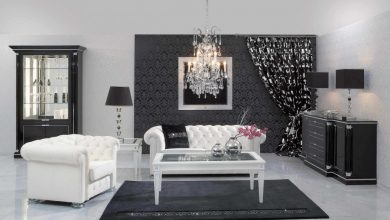
There is a room in our homes that is specified for our children. When it comes to be one child in the room, you will find it easy to furnish it without caring about the space in your child’s bedroom because all what you need is just one bed, desk and other small items that your child may need. But what is going to happen when you have two children or more? how are you going to prepare your children’s bedroom?
Why Bunk Beds Are the Ultimate Solution for Small Children’s Bedrooms
Bunk beds offer a brilliant solution for optimizing space in compact children’s bedrooms, providing both comfort and utility.
The Growing Challenge of Limited Bedroom Space
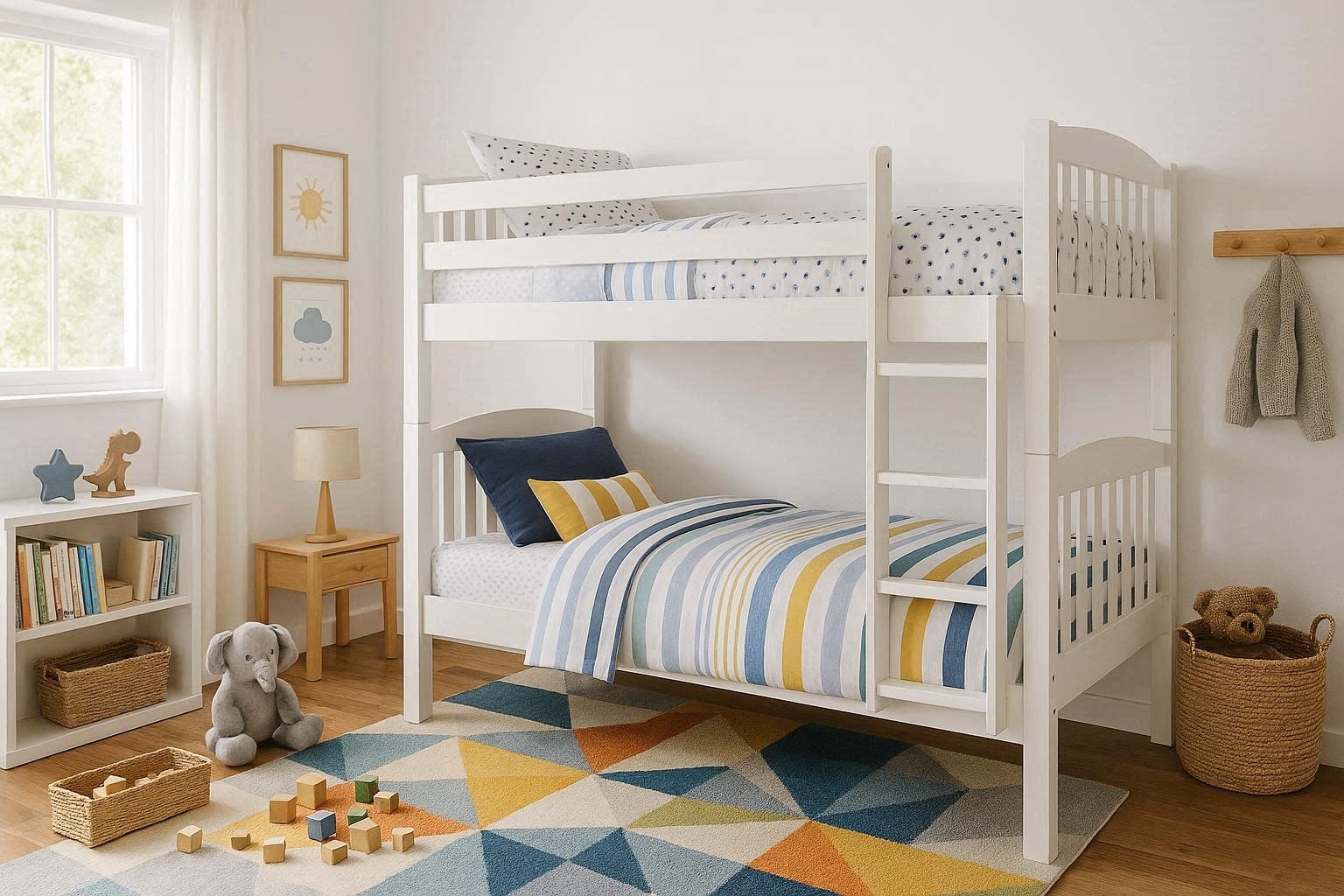
In many modern households, the challenge of limited bedroom space for children is becoming increasingly prevalent, often leading to cluttered and uninspiring environments. Parents frequently struggle to fit essential furniture like separate beds, desks, and storage solutions into one room, particularly when multiple children share a room. This common predicament calls for creative and efficient bed options that can transform a small room into a highly functional and organized shared kids’ bedroom without compromising comfort or play areas.
How Bunk Beds Maximize Vertical Space
Bunk beds excel at maximizing vertical space, which is often an underutilized asset in a child’s room. By stacking beds vertically, a bunk bed allows for two or even three kids to have a dedicated sleeping space within the footprint of what would ordinarily be a single twin bed. This intelligent use of the room’s height effectively doubles or triples the available floor space, making the child’s bedroom feel significantly larger and providing enough space for other activities, even in a small room with limited square footage.
Understanding the Different Types of Bunk Beds
Exploring the various types of bunk beds available helps in selecting the perfect configuration for your children’s needs.
Traditional Twin-Over-Twin Bunk Beds
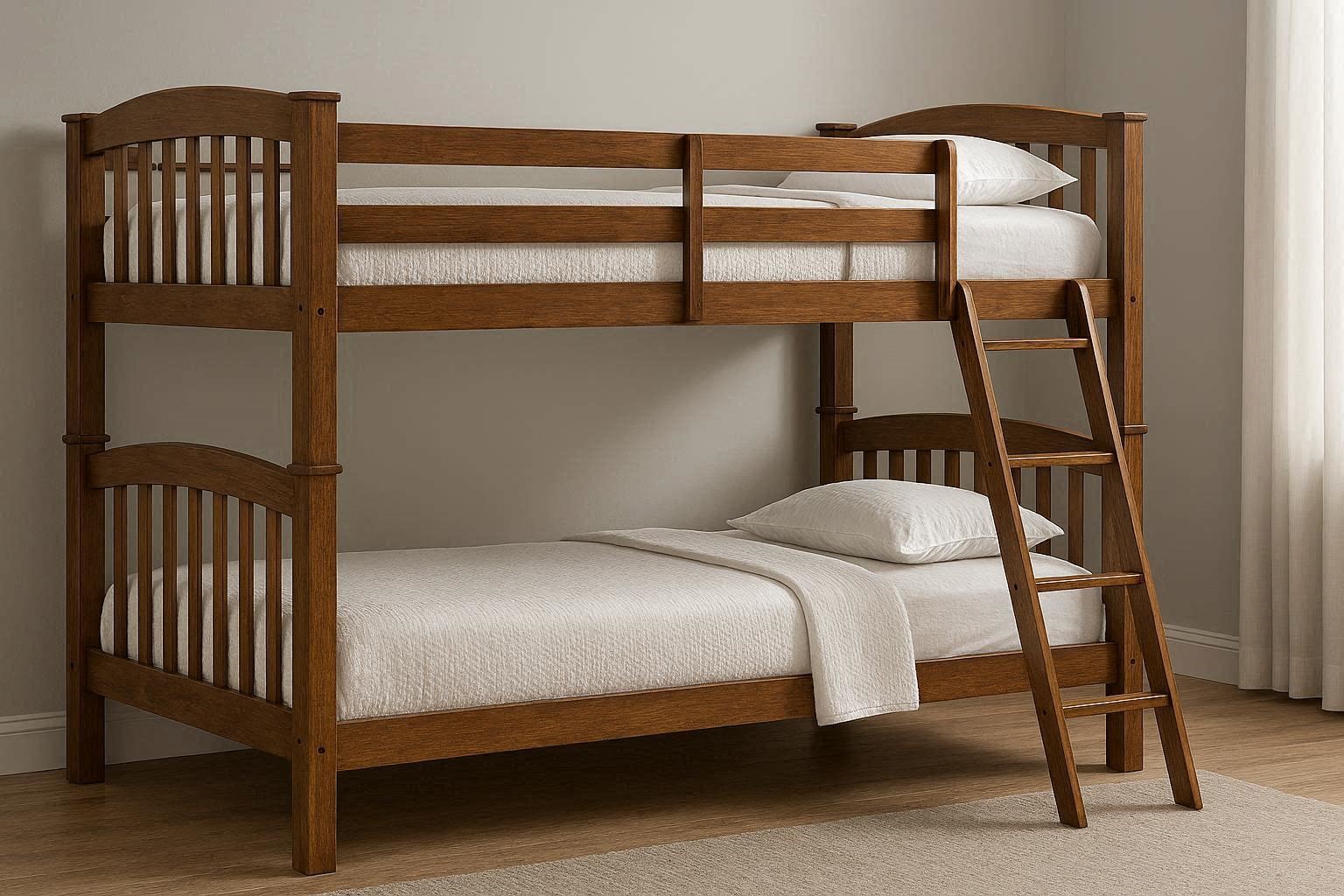
The traditional twin-over-twin bunk bed is a timeless and popular bed configuration, featuring two twin beds stacked directly one above the other. This classic design is ideal for a shared bedroom where two children need separate sleeping arrangements but space is at a premium. It’s a straightforward and efficient solution for saving space, making it one of the best bunk bed options for families looking to maximize floor space without elaborate features, suitable for various kids’ bedroom themes and ceiling height limitations.
Twin-Over-Full Bunk Beds for Growing Families
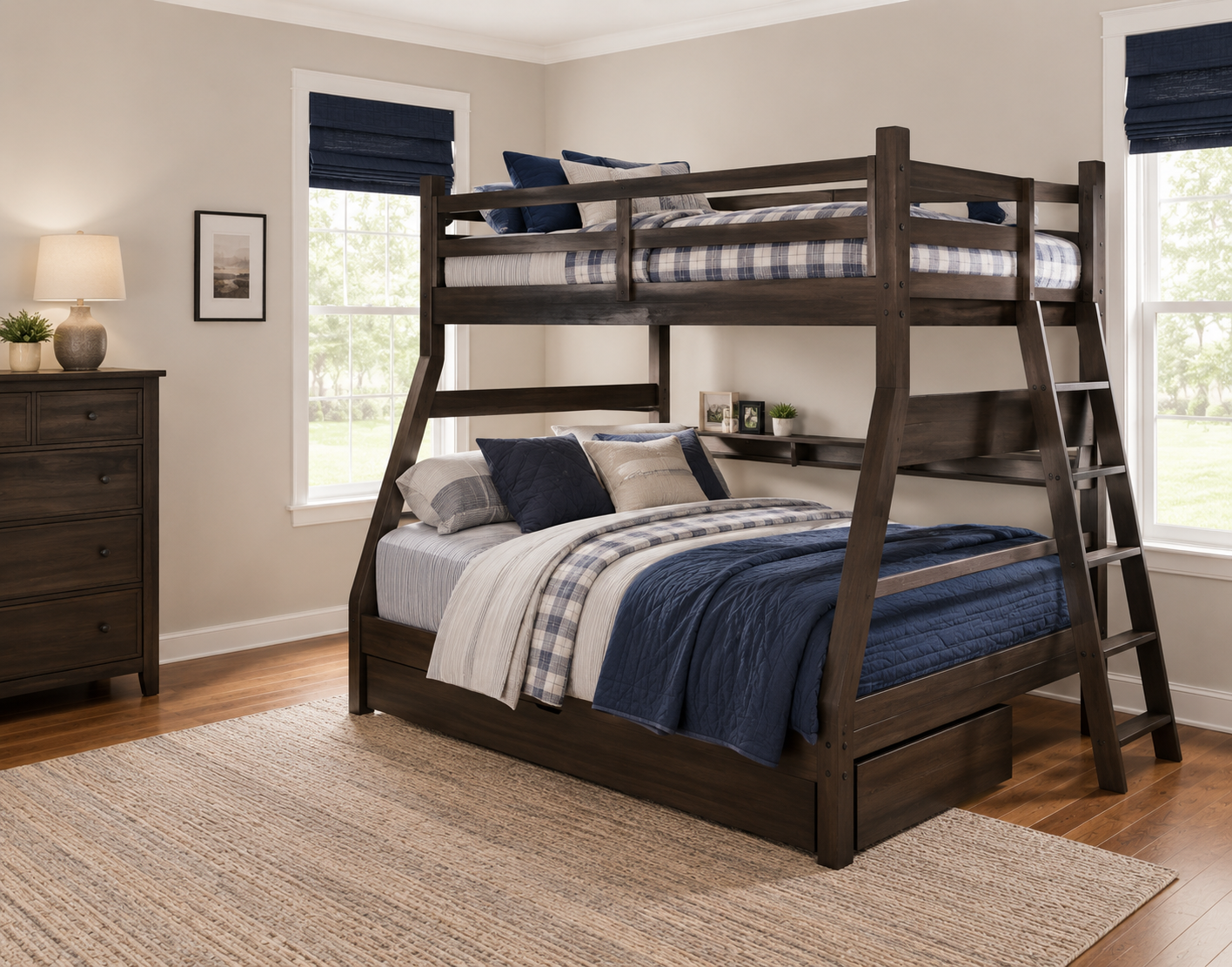
For growing families or children who appreciate extra sleeping space, the twin-over-full bunk bed offers a practical compromise. This bed design features a standard twin bed as the top bunk and a larger full-sized bed as the bottom bunk. It’s an excellent choice for a shared room where one child might be older or simply prefers more room to stretch out, or even for accommodating overnight guests. This configuration provides versatility and comfort, proving that even a small room can offer luxurious sleeping space.
Loft Beds with Open Space Underneath
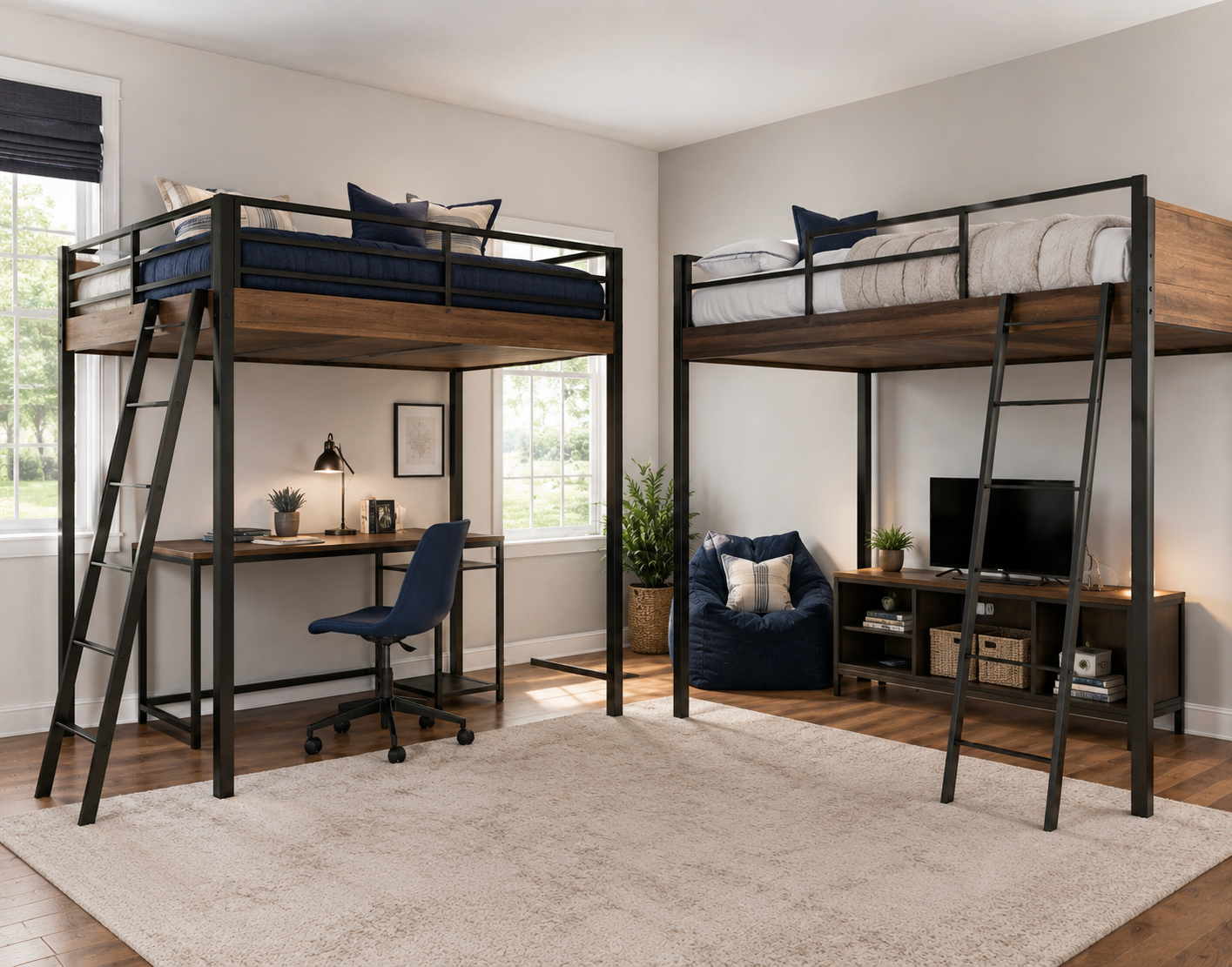
Loft beds are a fantastic solution for maximizing floor space in a child’s bedroom, as they feature a single bed raised high, leaving the entire area underneath open and versatile. This design creates invaluable space that can be transformed into a desk for a homework and study station, a cozy reading nook, an indoor play area, or even an integrated wardrobe and clothing storage. A loft bed is particularly effective in a kid’s room where only one child needs an elevated sleeping space, but the room needs to serve multiple functions, offering incredible flexibility.
L-Shaped and Corner Bunk Beds
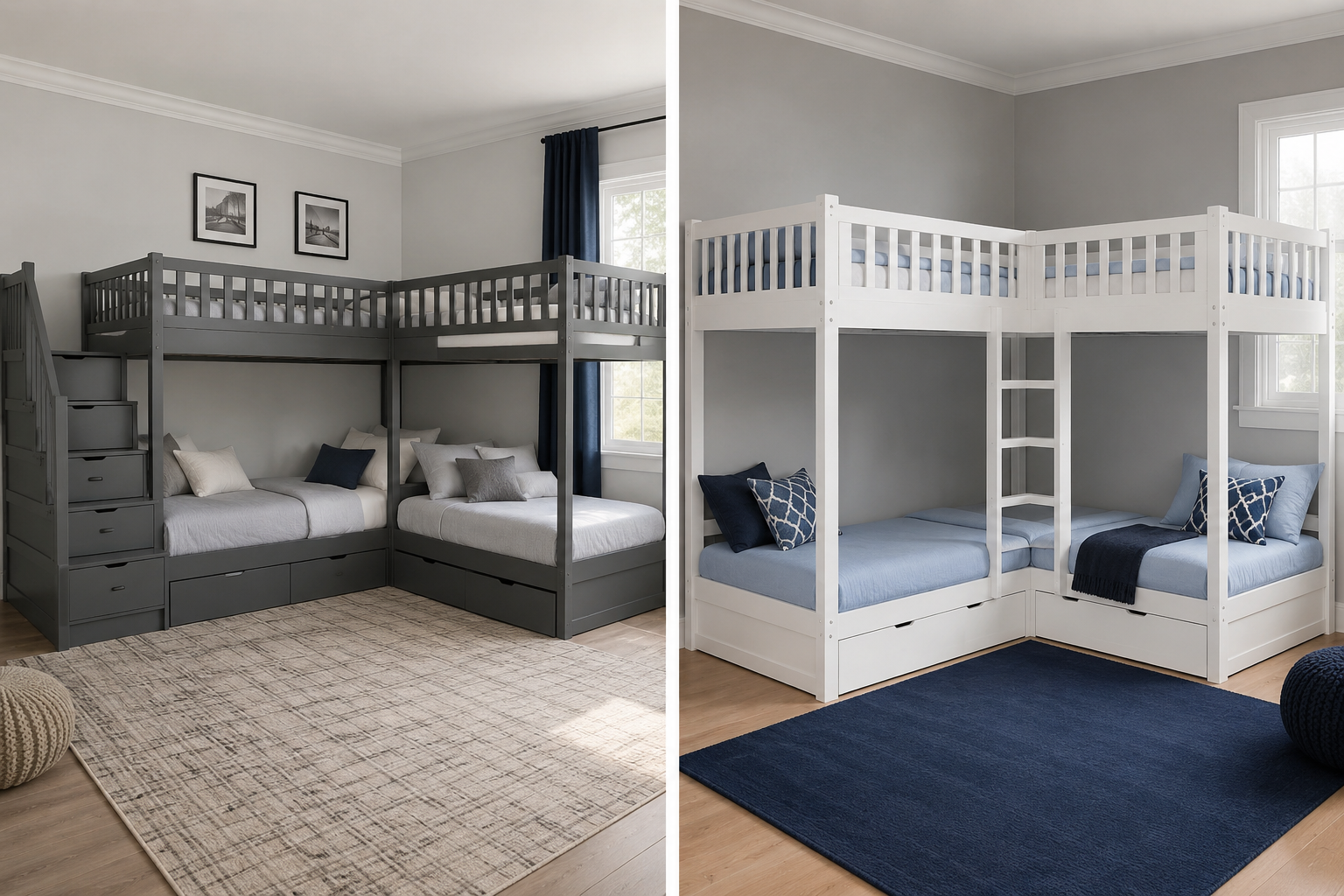
L-shaped and corner bunk beds are innovative bed designs that optimize challenging room layouts by positioning the beds at a 90-degree angle to each other. This unique bed configuration not only adds a visually interesting element to the shared bedroom but also creates a more distinct sense of personal space for each child compared to traditional stacked bunks. The L-shaped design can often incorporate a built-in desk or storage shelves in the corner area, making it a highly efficient and aesthetically pleasing choice for a child’s room with specific dimensions or a desire for defined zones.
Triple Bunk Beds for Large Families
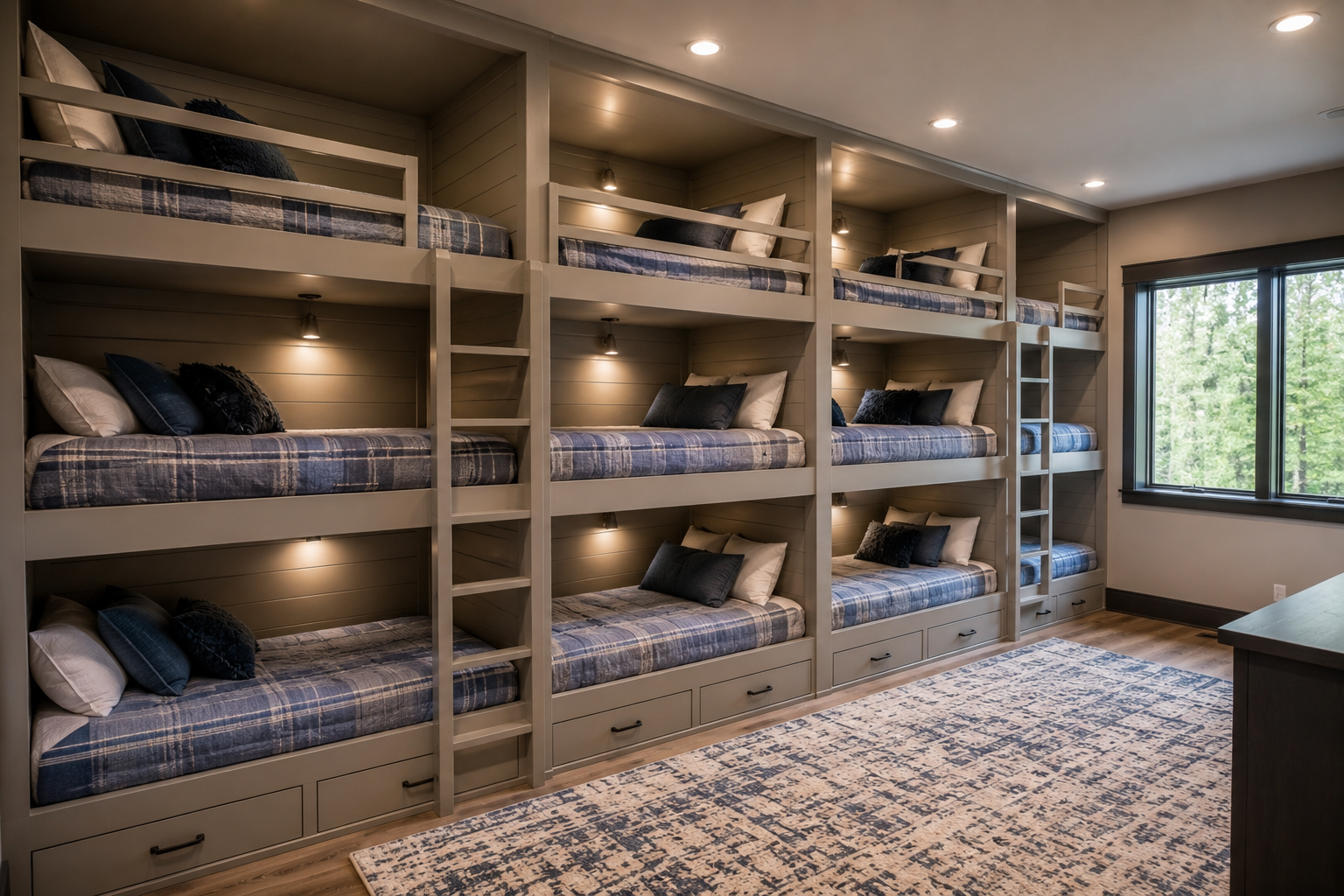
When three kids share a room, or space is exceptionally tight, triple bunk beds offer an unparalleled space-saving solution. These impressive bunk beds for kids can come in various bed configurations, such as three twin beds stacked vertically, an L-shaped arrangement with a third bed, or a twin over full with a trundle bed underneath. A triple bunk maximizes the sleeping space within a single footprint, allowing all three children to have their own bed without sacrificing the entire floor space, making it an essential consideration for larger families in a limited child’s bedroom.
How Bunk Beds Instantly Make a Children’s Bedroom Feel Larger
Bunk beds are masters of illusion, making even the coziest children’s bedrooms appear more spacious and inviting.
Freeing Up Valuable Floor Space
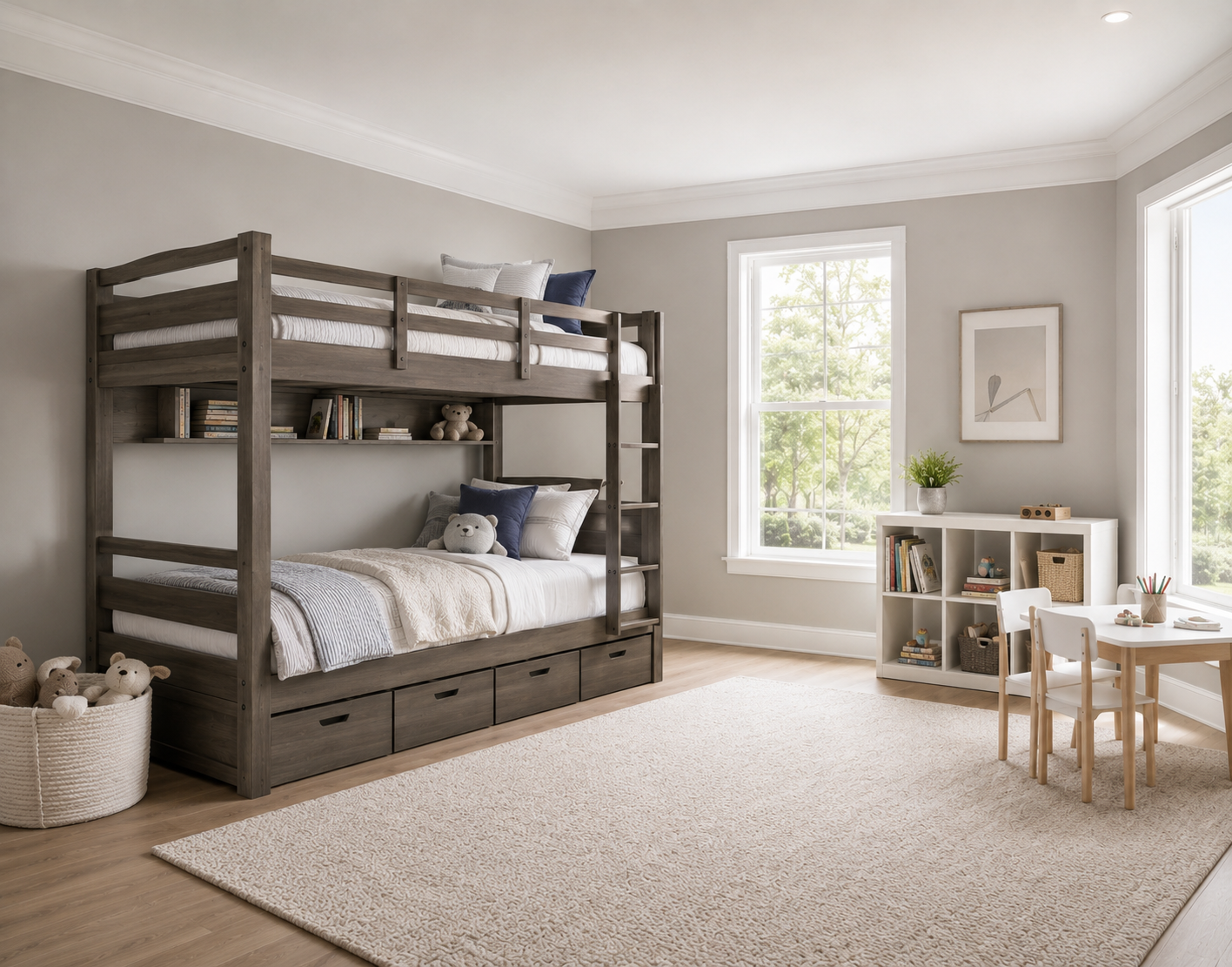
One of the most immediate and impactful benefits of using bunk beds is their ability to free up valuable floor space in a child’s room. By elevating one or two beds, the footprint that would typically be consumed by separate beds is dramatically reduced, creating expansive open areas. This newly available floor space can then be utilized for essential elements such as a play area, a study desk, or additional storage, making the shared bedroom feel significantly larger and more accommodating for activities beyond just sleeping.
Creating Dedicated Play Areas
With the considerable amount of floor space liberated by using bunk beds, it becomes much easier to create dedicated play areas within the child’s room. Instead of toys being scattered around beds, children can have a designated zone for imaginative games, building blocks, or arts and crafts. This separation of sleeping space from active play zones not only enhances the feeling of spaciousness but also encourages better organization and allows kids to engage in their activities without constantly moving furniture or feeling cramped.
Improving Room Traffic Flow
By consolidating sleeping arrangements vertically, bunk beds significantly improve room traffic flow in a children’s bedroom. With more open floor space, children can move around their shared room much more freely without bumping into furniture or navigating tight pathways between separate beds. This enhanced flow makes the entire child’s bedroom feel less cluttered and more accessible, contributing to a sense of openness and making daily routines, from getting dressed to playing, much smoother and more enjoyable for everyone sharing the space.
Reducing Visual Clutter Through Better Organization
Bunk beds inherently help in reducing visual clutter, contributing to a cleaner and more expansive feel in a child’s room, especially when paired with smart organization strategies. When beds are stacked, the eye perceives a more streamlined setup compared to two separate beds taking up more horizontal space. Furthermore, many bunk bed designs integrate storage options like drawers or shelves, which help in neatly stowing away toys, books, and clothes, thus maintaining an organized environment and visually decluttering the shared bedroom, making it appear larger and more serene.
Choose Bunk Beds with Built-In Storage for Maximum Space Efficiency
Maximize your children’s bedroom potential by selecting bunk beds that cleverly incorporate storage solutions directly into their design.
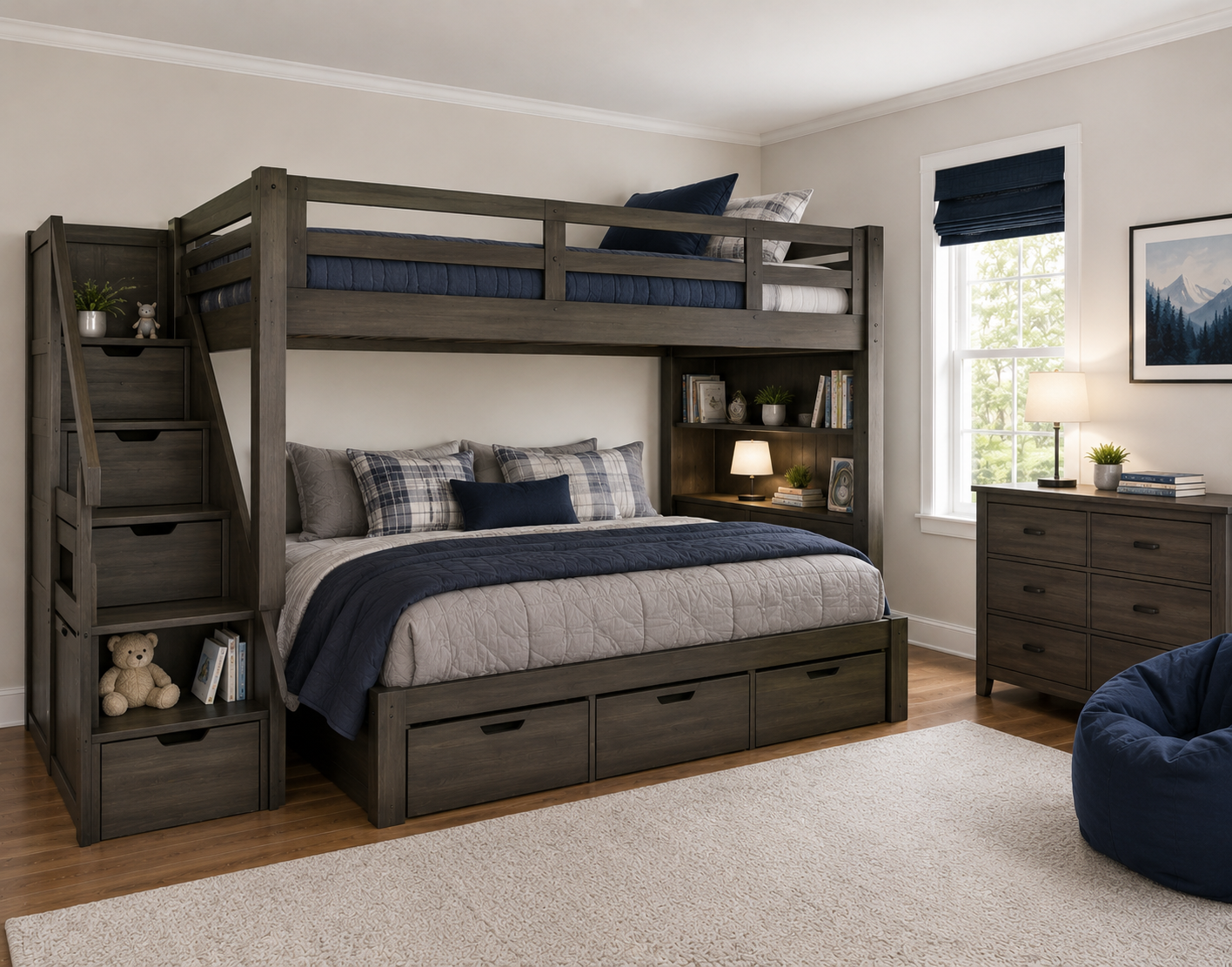
Under-Bed Storage Drawers
Bunk beds equipped with under-bed storage drawers are a fantastic feature for maximizing space efficiency in a child’s room. These built-in drawers, often found beneath the bottom bunk or even as part of a trundle bed unit, provide discrete and easily accessible compartments for storing clothes, toys, or extra bedding. By utilizing this often-overlooked space, parents can effectively organize the shared bedroom and keep clutter at bay, ensuring that every inch of the small room serves a functional purpose and contributes to a tidy appearance.
Staircase Storage Compartments
For an even more innovative approach to storage, bunk beds featuring staircase storage compartments are an excellent choice. Rather than a traditional ladder, these bunk beds incorporate a set of stairs leading to the upper bunk, with each step concealing a pull-out drawer or a hinged compartment. This design not only offers safer access to the top bunk for younger children but also provides a significant amount of extra storage for books, games, or clothes, making it an incredibly efficient and integrated storage solution for any kid’s room.
Built-In Bookshelves and Display Niches
Bunk beds that come with built-in bookshelves and display niches are ideal for avid readers or children who love to showcase their treasures. These integrated features, often found along the side of the bunk, at the head of the bed, or even underneath a loft bed, offer convenient spots for organizing books, displaying toys, or keeping night-time essentials within easy reach. This clever use of vertical space helps to reduce the need for additional freestanding furniture like dressers or bookshelves, further freeing up valuable floor space in a shared bedroom.
Integrated Wardrobes and Clothing Storage
For ultimate space efficiency in a child’s room, some bunk beds are designed with integrated wardrobes and clothing storage solutions. These comprehensive units can include small closets, hanging rails, and multiple drawers built directly into the bunk bed structure, often as part of a larger built-in bunk system or beneath a loft bed.
This innovative bed design eliminates the need for a separate dresser or standalone closet, making it an exceptional choice for very small rooms or shared bedrooms where maximizing every bit of space for clothing organization is paramount, creating a streamlined and highly functional sleeping space.
Transform the Space Under a Loft Bed into a Functional Zone
A loft bed offers an incredible opportunity to reimagine the area beneath the upper bunk, transforming it from unused space into a highly functional zone that enhances the child’s room.
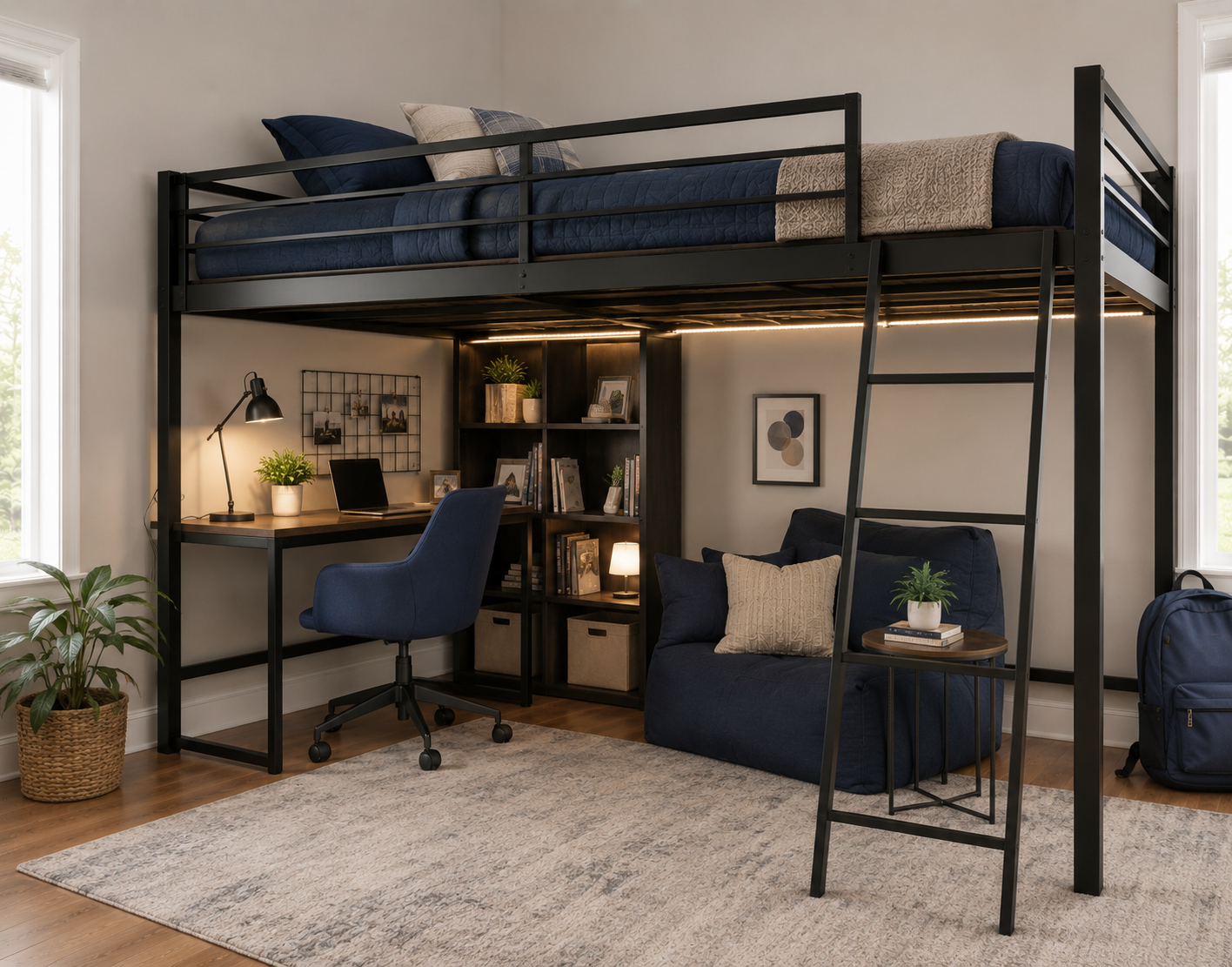
Creating a Homework and Study Station
One of the most effective ways to utilize the open space beneath a loft bed is by creating a dedicated homework and study station. A built-in desk or a compact, freestanding desk can fit perfectly here, providing a quiet and personalized area for schoolwork, reading, and creative projects. Adding wall-mounted shelves above the desk for books and supplies further maximizes the vertical space, ensuring that even in a small room, your child has an organized and inspiring environment to focus, without encroaching on the main floor space of the shared bedroom.
Designing a Cozy Reading Nook
For children who love to read, the space under a loft bed can be transformed into a cozy reading nook. By adding a comfortable bean bag chair, some soft cushions, and a warm rug, you create an inviting retreat. Wall-mounted bookshelves can hold their favorite stories, and a small, dimmable reading light ensures they have adequate illumination. This dedicated spot provides a sense of privacy and comfort, making the most of the available floor space and fostering a love for reading within their kid’s room.
Building an Indoor Play Area
The ample open space beneath a loft bed is ideal for building an indoor play area, especially beneficial in a small room where floor space is precious. This area can become a child’s imaginative world, whether it’s a puppet theater, a mini fort with curtains, or a dedicated zone for building blocks and train sets. By clearly defining this play space, you encourage organization and keep toys contained, ensuring the rest of the child’s bedroom remains uncluttered and functional, enhancing the overall spaciousness of the shared kids’ bedroom.
Adding Toy Storage and Organization Systems
To keep the play area or any functional zone beneath a loft bed tidy, adding toy storage and organization systems is crucial. Cube organizers, rolling storage bins, or even a modular closet system can fit perfectly, providing easily accessible compartments for toys, games, and art supplies. This strategic use of the under-bunk space ensures that clutter is minimized, and everything has its place, contributing to a more organized and visually expansive child’s bedroom, making it easier for kids to share a room and maintain order.
Smart Furniture Pairings That Enhance the Spacious Feel
Pairing bunk beds with intelligently designed furniture can dramatically enhance the perceived spaciousness of any child’s bedroom, regardless of its size.
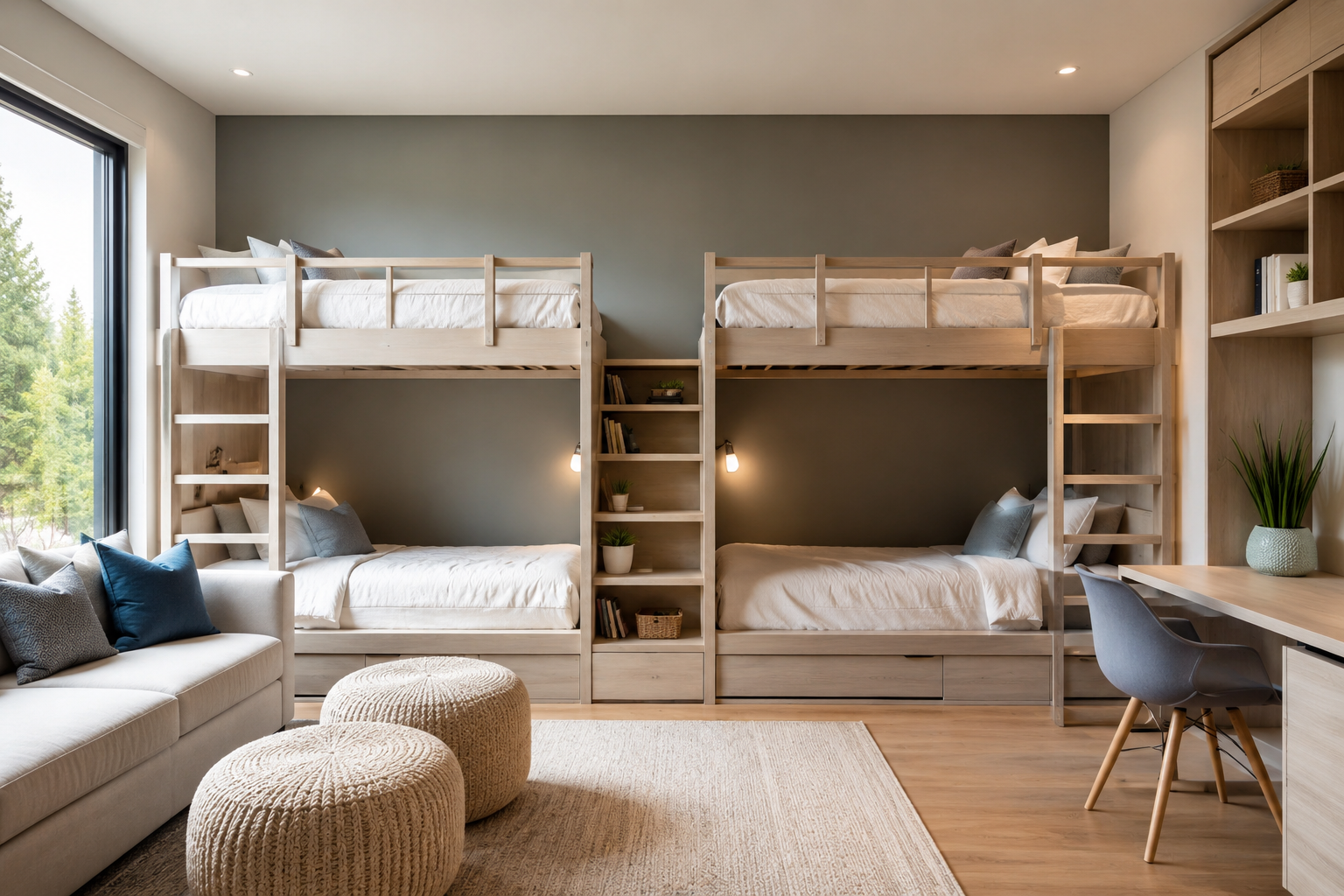
Foldable Desks and Compact Workstations
To further maximize the floor space in a small room, especially one with a bunk bed, incorporating foldable desks and compact workstations is an excellent strategy. These innovative bed options can be easily folded away when not in use, instantly freeing up valuable play area. A wall-mounted desk or a slim, pull-out workstation beneath the bottom bunk provides a dedicated study spot without permanently consuming precious square footage, making the shared room more versatile and seemingly larger.
Wall-Mounted Shelves Instead of Floor Units
Opting for wall-mounted shelves instead of traditional floor units is a key design trick for enhancing the spacious feel of a child’s bedroom with a bunk bed. By utilizing vertical wall space, you keep the floor clear, which immediately makes the room feel more open and less cluttered. These shelves can hold books, toys, and decorative items, providing storage without adding to the footprint, a crucial consideration when trying to save space in a small room where multiple kids share a room.
Multifunctional Storage Benches
Multifunctional storage benches are a brilliant addition to any shared bedroom, particularly those with bunk beds, as they serve dual purposes: seating and storage. Placed at the foot of a bed or along a wall, these benches offer a spot for kids to sit, read, or play, while also providing hidden compartments for toys, shoes, or extra bedding. This smart furniture pairing helps to reduce visual clutter and maximize storage without taking up additional floor space, making the kid’s room feel more expansive.
Floating Nightstands and Minimal Furniture Designs
To maintain an open and airy feel in a child’s bedroom, choose floating nightstands and other minimal furniture designs to complement the bunk bed. Floating nightstands attach directly to the wall, leaving the floor beneath clear, which enhances the sense of space and improves room traffic flow. Opting for sleek, simple furniture pieces that don’t overcrowd the room contributes to a clean aesthetic, ensuring that even with bunk beds for kids, the room retains a spacious and uncluttered appearance.
Best Room Layout Strategies for Bunk Beds
Strategic placement of your bunk beds is paramount to optimizing space and functionality within a children’s bedroom, making the most of every square foot.
Placing Bunk Beds Along the Longest Wall
One of the most effective room layout strategies for a child’s bedroom featuring a bunk bed is to place the bed configuration along the longest wall. This placement typically leaves the maximum amount of open floor space in the center of the room, creating a clear pathway and a larger play area. By aligning the bunk along an expansive wall, you visually extend the room and prevent it from feeling cramped, ensuring that even with a twin over full or triple bunk bed, there’s enough space for other activities.
Using Corner Placement to Open Up Floor Space
For rooms with challenging dimensions or those that need to accommodate a desk or play area, using corner placement for bunk beds can be highly effective at opening up floor space. An L-shaped bunk bed, for instance, naturally fits into a corner, utilizing often under-optimized areas. This allows the remaining walls to be clear for other furniture, windows, or simply open space, making the kid’s room feel much larger and more functional for kids who share a room.
Creating Separate Zones for Sleeping, Playing, and Studying
Even in a small room, effective layout strategies using bunk beds can help in creating separate zones for sleeping, playing, and studying. By positioning the bunk bed to define one area, the remaining floor space can be intentionally divided. For instance, a desk can be placed under a loft bed for studying, a rug can designate a play area, and a cozy chair can define a reading nook. This intentional zoning helps kids understand different functions of their shared bedroom and makes the entire child’s room feel more organized and expansive.
Avoiding Common Layout Mistakes That Make Rooms Feel Smaller
To maximize the spacious feel in a children’s bedroom with bunk beds, it is crucial to avoid common layout mistakes that can inadvertently make the room feel smaller. Forgetting about ceiling height, obstructing windows with tall furniture, or placing separate beds randomly without considering traffic flow are pitfalls to sidestep. Instead, ensure pathways are clear, utilize vertical space efficiently, and keep the main floor area as open as possible to enhance the sense of spaciousness in a shared kids’ bedroom, providing enough space for everything.
Color and Design Tricks That Make Bedrooms Look Bigger
Beyond furniture placement, strategic color and design choices can visually expand a children’s bedroom, making it appear more open and inviting.
Choosing Light and Airy Wall Colors
Choosing light and airy wall colors is a fundamental design trick to make a child’s bedroom, especially one with a bunk bed, appear significantly larger and more open. Soft pastels, light neutrals, and crisp whites reflect light, making the walls recede and creating an expansive feel. These lighter hues also contribute to a serene sleeping space, making the shared bedroom feel less enclosed and more welcoming, which is particularly beneficial when three kids or more share a room.
Using White and Natural Wood Finishes
Incorporating white and natural wood finishes for bunk beds and other furniture further enhances the spacious feel in a child’s room. White furniture, whether a twin bunk or a loft bed, visually blends into lighter walls, reducing its perceived bulk and making the room feel less crowded. Natural wood finishes, especially lighter tones, add warmth without visual weight, contributing to an airy and organic aesthetic that helps a small room feel bigger and more inviting for kids who share a room.
Coordinating Bedding for a Cleaner Look
Coordinating bedding for a cleaner look is a simple yet effective design trick to make a children’s bedroom with a bunk bed feel more spacious and organized. Choosing bedding in complementary colors, subtle patterns, or solid hues helps to reduce visual clutter that can make a shared room feel chaotic. When the bedding on both the top bunk and bottom bunk is cohesive, the eye perceives a more streamlined and tidy sleeping space, contributing to an overall sense of openness and calm in the kid’s room.
Adding Reflective Surfaces and Mirrors
Adding reflective surfaces and mirrors is an ingenious way to make a child’s bedroom with a bunk bed look bigger. A large mirror strategically placed on a wall can reflect natural light and create the illusion of depth, effectively doubling the perceived size of the shared bedroom. Mirrored closet doors or furniture with shiny finishes also contribute to this effect, bouncing light around the room and making it feel more expansive and brighter, even in a small room where floor space is limited.
Lighting Techniques That Enhance the Feeling of Space
Thoughtful lighting can profoundly influence how large a child’s bedroom with a bunk bed feels, transforming a small room into a bright and airy shared space. By employing various lighting techniques, you can effectively enhance the perception of spaciousness, making the kid’s room more inviting and functional for all the kids who share a room, even if it accommodates a triple bunk bed or twin over full bed configuration.
Maximizing Natural Light
Maximizing natural light is arguably the most impactful lighting technique to make a child’s bedroom with a bunk bed feel significantly larger and more inviting. Keep windows unobstructed by heavy curtains or furniture, allowing sunlight to flood the shared bedroom. Using sheer blinds or light-colored drapes can provide privacy without sacrificing precious natural illumination, making the small room appear brighter and more open throughout the day, ensuring the top bunk and bottom bunk receive ample light.
Layering Ambient, Task, and Accent Lighting
Layering ambient, task, and accent lighting is crucial for creating a versatile and spacious feel in a child’s room that features a bunk bed. Ambient lighting, such as a central ceiling fixture, provides overall illumination. Task lighting, like a desk lamp under a loft bed or a reading light on the bunk, focuses light where needed, while accent lighting can highlight features or add warmth, preventing dark corners that make a small room feel cramped and improving the overall sleeping space for the kids.
Installing Reading Lights on Bunk Beds
Installing individual reading lights on bunk beds is a smart and practical lighting solution for a shared bedroom, especially when kids share a room and need personal illumination without disturbing others. Small, wall-mounted LED lights or clip-on lamps for each top bunk and bottom bunk provide focused task lighting for bedtime reading, without taking up floor space or requiring a bulky nightstand. This ensures each child has their own well-lit sleeping space, enhancing comfort and functionality within the kid’s room.
Choosing Light Fixtures for Small Bedrooms
When choosing light fixtures for small bedrooms with bunk beds, opt for designs that are sleek, unobtrusive, and provide ample light without adding visual clutter. Flush-mount ceiling lights, track lighting with adjustable heads, or wall-mounted sconces are excellent choices that save space compared to large hanging fixtures. Selecting fixtures with light, reflective finishes can also help to bounce light around the room, making the shared kids’ bedroom feel brighter and more expansive, even with a twin over full or triple bunk.
Vertical Storage Ideas That Complement Bunk Beds
Optimizing vertical storage is paramount in a child’s bedroom with a bunk bed, as it leverages wall space to keep the floor clear, creating a more expansive and organized shared room for all kids. Integrating smart vertical solutions ensures that every item has its place, contributing to a tidy and functional kid’s room.
Floating Shelves for Books and Decor
Floating shelves are an ideal vertical storage solution that perfectly complements bunk beds, especially in a small room where floor space is limited. These shelves can be installed at various heights on the wall, providing convenient spots for books, small toys, or decorative items without taking up any actual floor space. They help to keep the area around the top bunk and bottom bunk tidy, contributing to an organized shared bedroom and a visually uncluttered child’s room.
Wall-Mounted Toy Organizers
Wall-mounted toy organizers are ingenious for keeping a child’s bedroom with a bunk bed tidy and maximizing vertical space. Instead of bulky toy chests that consume precious floor space, these organizers can include canvas pockets, clear bins, or wire baskets attached directly to the wall. This not only keeps toys off the floor, improving room traffic flow and safety, but also makes it easier for kids to access and put away their belongings, fostering organization in a shared kids’ bedroom.
Pegboards for Flexible Storage
Pegboards offer incredibly flexible vertical storage solutions for a kid’s room, adapting to changing needs and complementing bunk beds beautifully. Mounted on a wall, a pegboard can hold hooks, small shelves, or bins, allowing for customized arrangements to store art supplies, small toys, headphones, or even clothes. This versatile system helps to keep the shared bedroom organized, utilizing unused wall space efficiently and ensuring enough space for play and movement in a small room.
Hanging Closet Organizers for Extra Capacity
Hanging closet organizers are an invaluable addition for maximizing storage capacity in a child’s room, especially when bunk beds for kids are present and traditional dresser space is limited. These fabric or wire systems hang inside a closet, providing additional shelves, drawers, or shoe pockets, effectively using the vertical space within the closet. This helps to keep clothes, accessories, and even school supplies neatly tucked away, reducing visual clutter and contributing to a more organized and spacious shared room.
Organizing Shared Bedrooms with Bunk Beds
Effectively organizing a shared bedroom with bunk beds is essential for maintaining harmony and functionality among kids, ensuring each child has enough space and a sense of personal ownership. Thoughtful organization strategies can transform a potentially chaotic small room into an orderly and enjoyable shared kids’ bedroom.
Giving Each Child Personal Space
In a shared bedroom with a bunk bed, it’s vital to give each child personal space, fostering individuality and reducing conflict. Even if three kids share a room, allocating a specific drawer, a shelf on a built-in bunk, or a designated area on their top bunk or bottom bunk for their prized possessions helps create a sense of ownership. This recognition of personal space is crucial for making the shared room feel comfortable and equitable for everyone.
Creating Individual Storage Areas
Creating individual storage areas is a cornerstone of organizing a shared bedroom with a bunk bed effectively. Assigning dedicated drawers, a personal closet section, or individual bins ensures that each child has their own place for clothes, toys, and school supplies. Whether it’s under-bed storage drawers, staircase storage, or a small dresser for each, having clear boundaries for belongings helps to keep the shared room tidy and minimizes arguments over misplaced items, especially in a small room.
Managing Toys, Clothes, and School Supplies Efficiently
Efficiently managing toys, clothes, and school supplies is key to maintaining an organized shared bedroom, particularly when using bunk beds for kids. Implement clear storage systems, such as labeled bins for toys, categorized drawers for clothes, and a specific spot for school books and stationery, perhaps under a loft bed desk. Regular decluttering, involving the kids, prevents accumulation and ensures that the shared room remains functional and spacious, even with a twin over full or triple bunk.
Encouraging Kids to Stay Organized
Encouraging kids to stay organized in their bunk bed equipped shared bedroom is crucial for long-term tidiness. Involve them in the organization process, teach them the “one-in, one-out” rule for toys, and make clean-up a regular, fun activity. When children understand the system and feel responsible for their belongings and their part of the kid’s room, the shared bedroom remains more organized and functional, reducing parental stress and enhancing the overall living space for all kids.
Safety Features Every Parent Should Consider
When selecting bunk beds for kids, prioritizing safety features is paramount to ensure peace of mind for parents and a secure sleeping space for children. Understanding key safety standards and design elements is crucial for choosing the best bunk bed options.
When choosing bunk beds for kids, parents must meticulously consider essential safety features to prevent accidents and ensure a secure sleeping space for their children. Look for sturdy construction made from durable materials, ensuring the bed frame is robust enough to withstand active play and daily use. High guardrails on the top bunk are non-negotiable, extending well above the mattress to prevent falls, and they should be continuous without large gaps that could trap a child.
The ladder or staircase of the bunk bed is another critical safety component; it should be securely attached, have wide, non-slip steps or rungs, and be easy for children to climb both up and down, especially for younger kids. For bunk bed safety, ensure there are no sharp edges or protruding hardware that could cause injury. Additionally, check that the bunk bed configuration meets all current safety standards and certifications, guaranteeing a reliable and safe bed option for your child’s room, whether it’s a twin over twin or a more elaborate triple bunk bed.
Creative Bunk Bed Design Ideas for Different Bedroom Themes
Bunk beds offer a fantastic canvas for integrating creative designs that enhance specific bedroom themes, transforming a functional sleeping space into an imaginative retreat. Beyond practical space-saving, these bed designs can elevate the entire aesthetic of a child’s room.
Bunk beds are not merely functional space-savers; they can also be a central design element for creative bedroom themes, transforming a child’s room into an imaginative haven. For adventurous spirits, a bunk bed can be designed to resemble a treehouse or a fort, complete with rope ladders and secret nooks, making bedtime an exciting adventure. For a nautical theme, a twin bunk can be crafted to look like a ship’s cabin with porthole windows, while a castle-themed bed configuration can feature turrets and drawbridges.
Incorporating custom elements like built-in desks that mimic command centers or storage drawers disguised as treasure chests can further enhance the chosen theme. Even a simple twin over full bunk or loft bed can be adorned with themed bedding, wall decals, and complementary furniture to create a cohesive and immersive environment. These creative bed designs not only provide a sleeping space but also double as a play area, sparking imagination and making the kids’ bedroom a truly personalized and inspiring shared room for all children.
Conclusion: Transform a Small Children’s Bedroom into a Spacious, Functional, and Organized Space with Bunk Beds
Bunk beds are undeniably one of the best bunk bed options for parents looking to transform a small children’s bedroom into a spacious, functional, and organized shared room. By maximizing vertical space, these bed designs free up valuable floor space, allowing for dedicated play areas, study stations, and improved room traffic flow, even when three kids or more share a room. From traditional twin over twin bunk beds to innovative triple bunk beds or a twin over full with a trundle bed, there’s a bed configuration to suit every family’s needs and ceiling height.
Beyond their inherent space-saving capabilities, bunk beds offer creative opportunities for integrated storage, such as under-bed storage drawers, staircase compartments, and built-in bookshelves, significantly reducing visual clutter. When combined with smart furniture pairings like foldable desks and wall-mounted shelves, and thoughtful layout strategies like placing bunk beds along the longest wall, the perceived size and functionality of the kid’s room are dramatically enhanced. Employing light colors, reflective surfaces, and layered lighting techniques further amplifies the feeling of openness and ensures enough space for comfortable living and play. Prioritizing bunk bed safety features, like sturdy guardrails and secure ladders, ensures that these versatile bed options are not only stylish but also secure for all kids, making a shared kids’ bedroom a delightful and organized space where children can thrive.