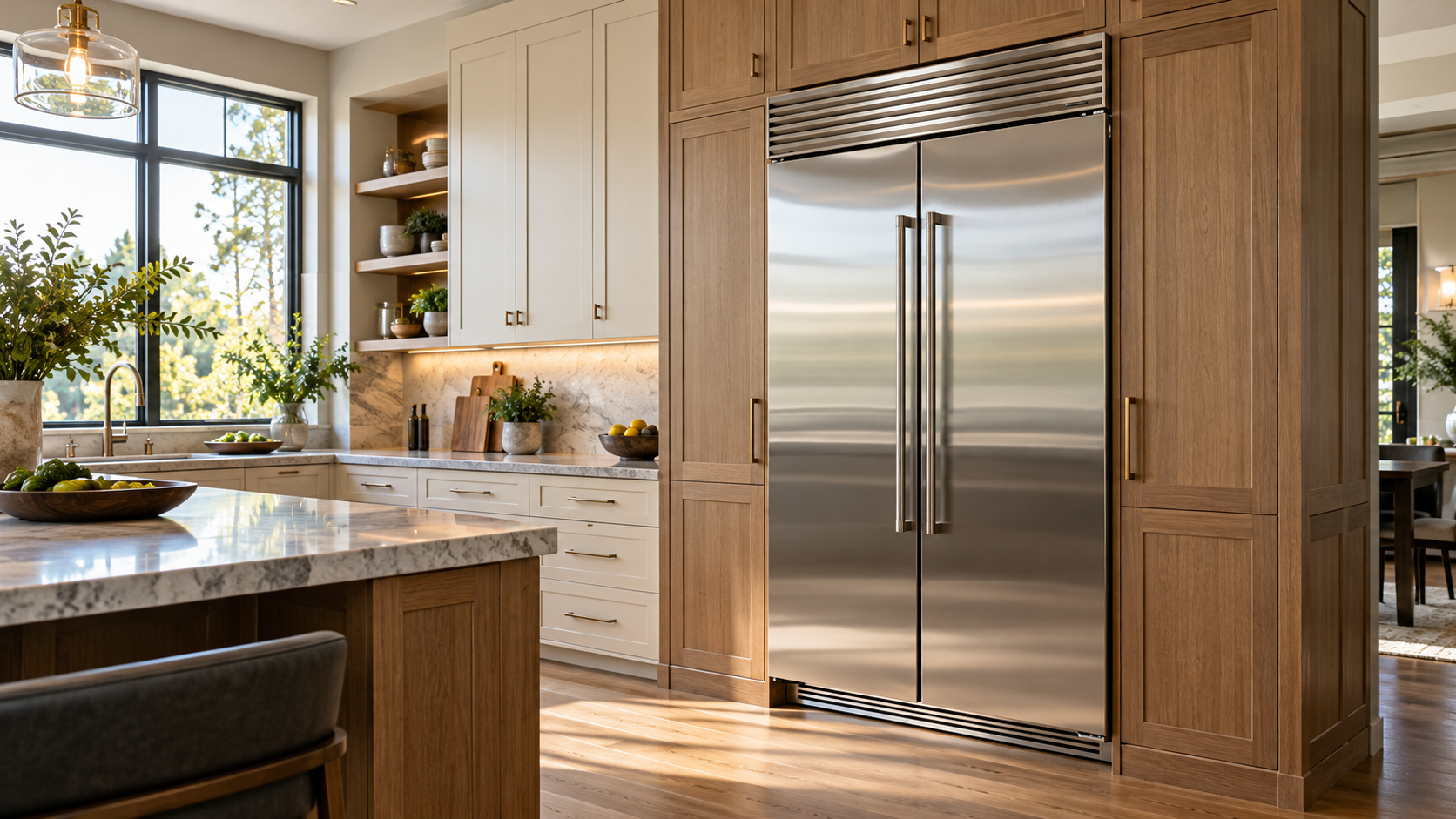
A built-in refrigerator is the one appliance in a kitchen that is never supposed to leave. It is framed into the cabinetry, matched to the panels, and often sized to a cutout that nothing else on the market fits. So when a Sub-Zero that has run quietly for fifteen years starts running warm, the question is not really “repair or replace?” It is “repair, or remodel the kitchen?”
That framing changes the math, and it is why most owners of older Sub-Zero units end up repairing them. Here is how to think it through without guesswork.
What makes a Sub-Zero different inside
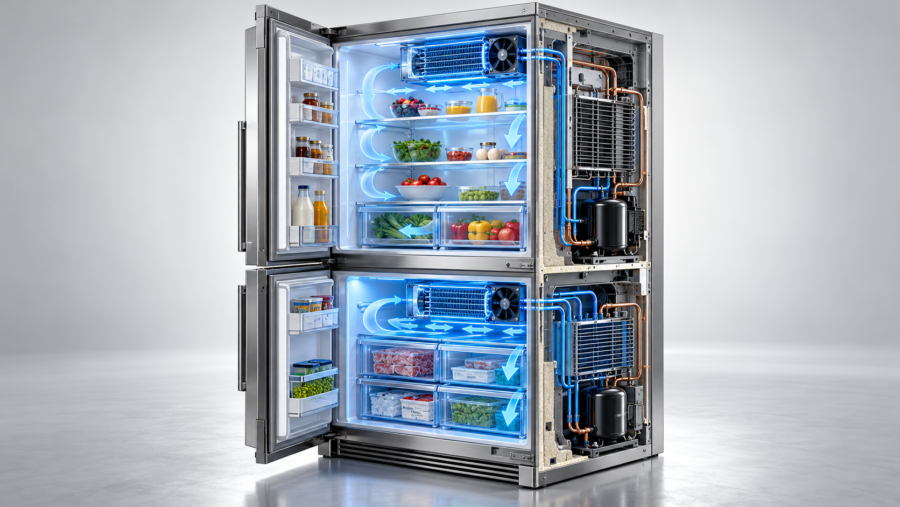
Mass-market refrigerators share one compressor and one evaporator between the fresh-food and freezer sections. Sub-Zero’s signature is dual refrigeration: two separate sealed systems, each with its own compressor, so freezer air never circulates through the fresh-food side. That is why produce lasts longer and ice doesn’t taste like last week’s leftovers.
The design has a practical consequence for repairs. A failure on one side rarely affects the other, and the components are serviceable: condenser fans, evaporator fans, defrost heaters, thermistors, door gaskets, control boards and even compressors are all replaceable parts, not a sealed module you throw away. The cabinet itself, with its foam insulation and heavy magnetic door seals, is built to outlast two or three sets of those parts.
Sub-Zero has long said its units are engineered for a twenty-year service life. Field experience is kinder than that: well-maintained columns from the early 2000s are still running in kitchens across the country.
The repairs that are almost always worth it
A warm fresh-food section with a cold freezer. On a dual-refrigeration unit this points to one side only, usually the condenser fan, a thermistor or a defrost problem. Parts are modest, the job is a single visit.
Frost building up in the freezer. A failed defrost heater, defrost terminator or a torn door gasket. Gaskets on these doors are a known wear item at the ten-to-fifteen-year mark and are a straightforward replacement.
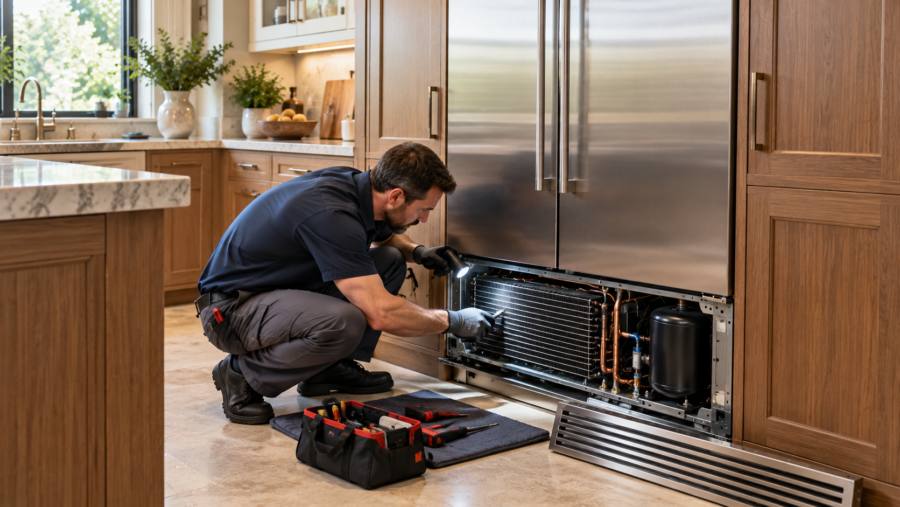
Loud or constant running. Dirty condenser coils are the number-one cause and the cheapest fix there is. Pull the kick grille, vacuum the coils, and many “dying” units are simply overheating. If the noise persists, a condenser fan motor is the next suspect.
Ice maker stopped or producing hollow cubes. Water-inlet valves and ice-maker modules are standard swaps. They have nothing to do with the sealed system.
Each of these runs a few hundred dollars installed. Against a replacement that typically starts above ten thousand dollars before installation and panel matching, the decision is not close.
The repairs that deserve a harder look
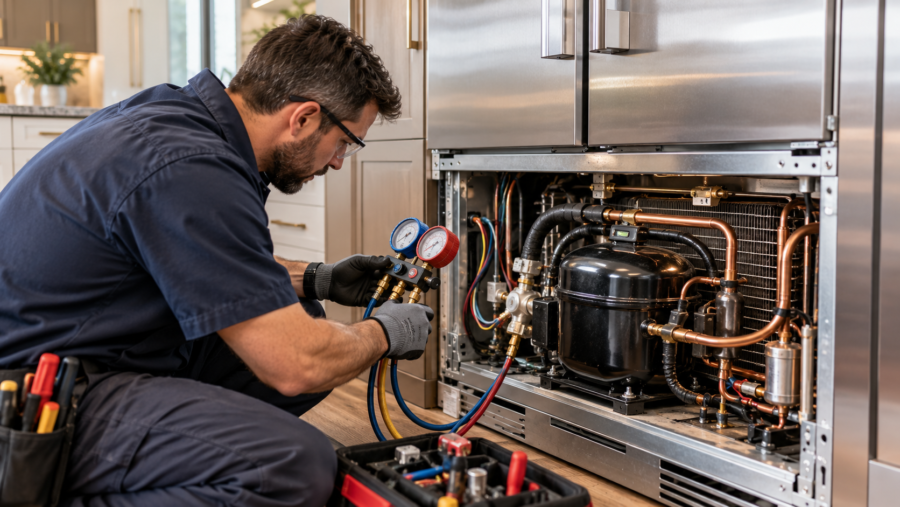
A sealed-system leak or a failed compressor on a unit past fifteen years. This is the one repair that can approach a four-figure bill, because it involves recovering refrigerant, replacing a compressor or evaporator, and recharging the system. It is still often cheaper than replacement, but it is the point where you should ask two questions: has the other side of the unit had a sealed-system repair already, and is the cabinet in good shape? If the answer to both is yes, replacement starts to make sense. If this is the first major repair on an otherwise sound unit, repair usually wins.
Control-board failures on very early electronic models. Boards for a few early-2000s series are scarce. A good technician will tell you up front whether a board is available before scheduling the work.
Cosmetic cabinet damage or a cutout you want to change anyway. If the kitchen is being redone, the refrigerator’s age is a reason to replace it as part of the project, not on its own.
Warranty, and what happens after it ends
Sub-Zero’s factory warranty covers the sealed system for twelve years and most other parts for two. Inside that window, the manufacturer’s authorized service network handles the work, and you should use it. The interesting period is the one after: the unit is paid for, out of warranty, and still has years of life left. That is when owners start comparing independent specialists, and when it pays to find a shop that works from Sub-Zero’s own service documentation rather than guessing.
In the Denver area, for example, homeowners in Cherry Hills, Boulder or Highlands Ranch with an out-of-warranty column often turn to an independent shop for Sub-Zero refrigerator repair once the twelve-year sealed-system coverage runs out. The pattern is the same in any metro: the authorized network for in-warranty work, an experienced independent for the decade after.
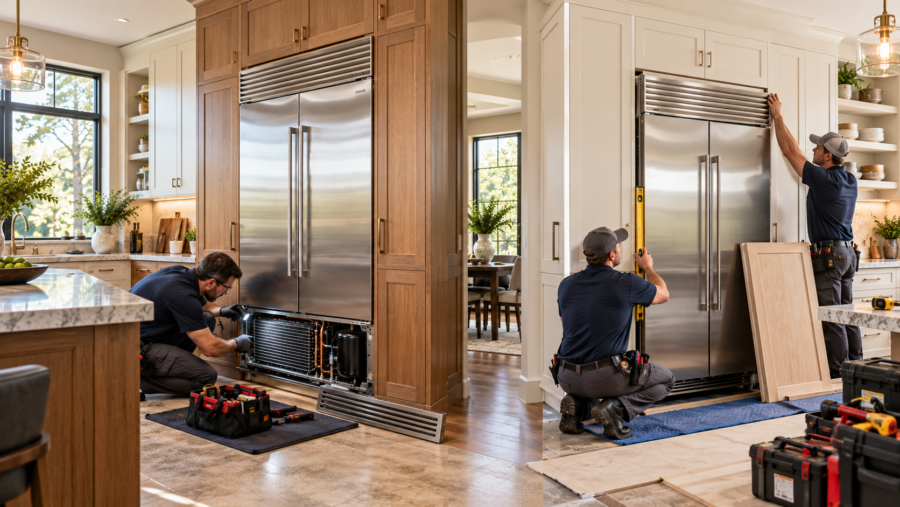
Three habits that push a Sub-Zero past twenty years
- Clean the condenser twice a year. It takes ten minutes and prevents the overheating that kills fan motors and compressors early.
- Check the door seals with a sheet of paper. Close the door on it; if it slides out without resistance, the gasket is done. A new gasket costs a fraction of the energy and spoilage a leaking one causes.
- Don’t ignore a change in sound. A new hum, click or rattle is the cheapest warning you will ever get. Caught early, it is a fan or a relay. Ignored for a season, it can take the compressor with it.
The short version
If the cabinet is sound and the problem is a fan, a gasket, a heater, a sensor or the ice maker, repair it without hesitation. If it is a sealed-system failure on a unit past fifteen years that has already had one, get a written quote and weigh it against the real cost of replacement, panels and installation included. For almost everyone, a Sub-Zero earns its second decade.