Choosing an engagement ring can feel like one enormous choice, but it is really a series of smaller ones stacked together. When the center stone is morganite, that soft peach-to-pink beryl prized for its romantic glow, the decisions become a little clearer because the stone has such a defined personality.
Thinking in terms of distinct decisions rather than a single leap makes the whole process calmer and more deliberate. This guide walks through the choices that shape a morganite engagement ring, so that by the end you understand not just what looks pretty, but why each element works the way it does.
Decision One: Reading the Color and Tone
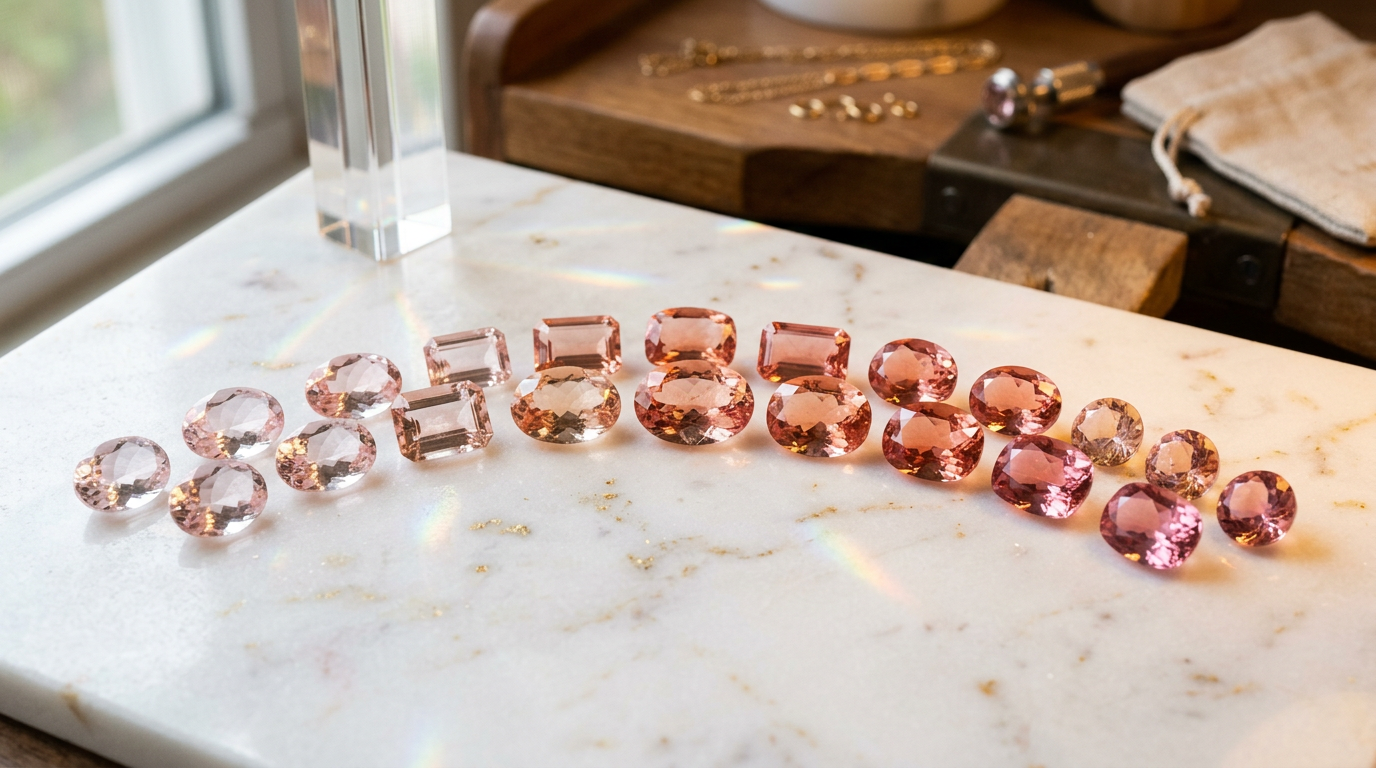
Morganite is defined by its color, so this is the natural place to begin. The stone ranges from a barely-there blush to a warmer salmon or peachy-rose, and the tone you prefer will quietly influence everything that follows. Lighter morganite reads delicate and airy, catching a cool wash of light, while a deeper, more saturated tone feels richer and more vintage in mood. Neither is better; they simply suit different people.
If you want a broader primer before you commit, this section pairs well with a complete morganite engagement ring guide that expands on how color grades translate into the look on your hand. As you compare stones, view them under a few different light sources, because morganite can shift subtly between daylight and warm indoor lighting. The goal is to find a tone that feels like it belongs to the person who will wear it every day.
Decision Two: Choosing the Cut
Once the color speaks to you, the cut decides how that color is presented. Morganite is a relatively clear, luminous stone, which means faceting has a strong effect on its brightness. An oval or round brilliant cut scatters light and makes the stone feel lively and sparkling, ideal for someone who wants a classic, radiant center.
An emerald or cushion cut, by contrast, produces broad flashes and a more architectural, understated elegance that lets the body color take center stage. Elongated shapes such as ovals and pears can also make the finger appear longer and more graceful. Think about the personality you are trying to capture: a brilliant cut leans playful and sparkling, while a step cut leans composed and timeless. The cut is where a stone’s color turns into character.
Decision Three: The Setting Metal
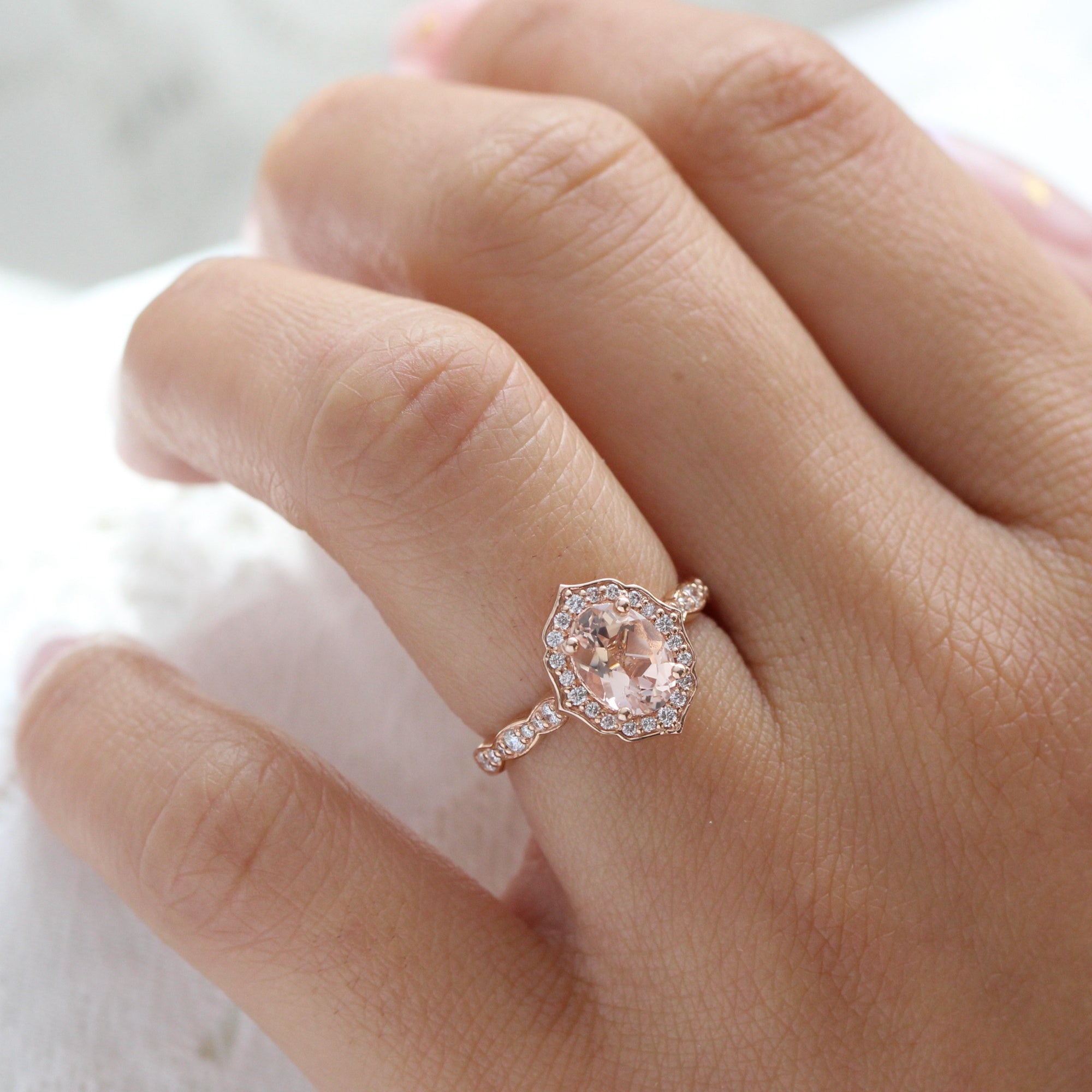
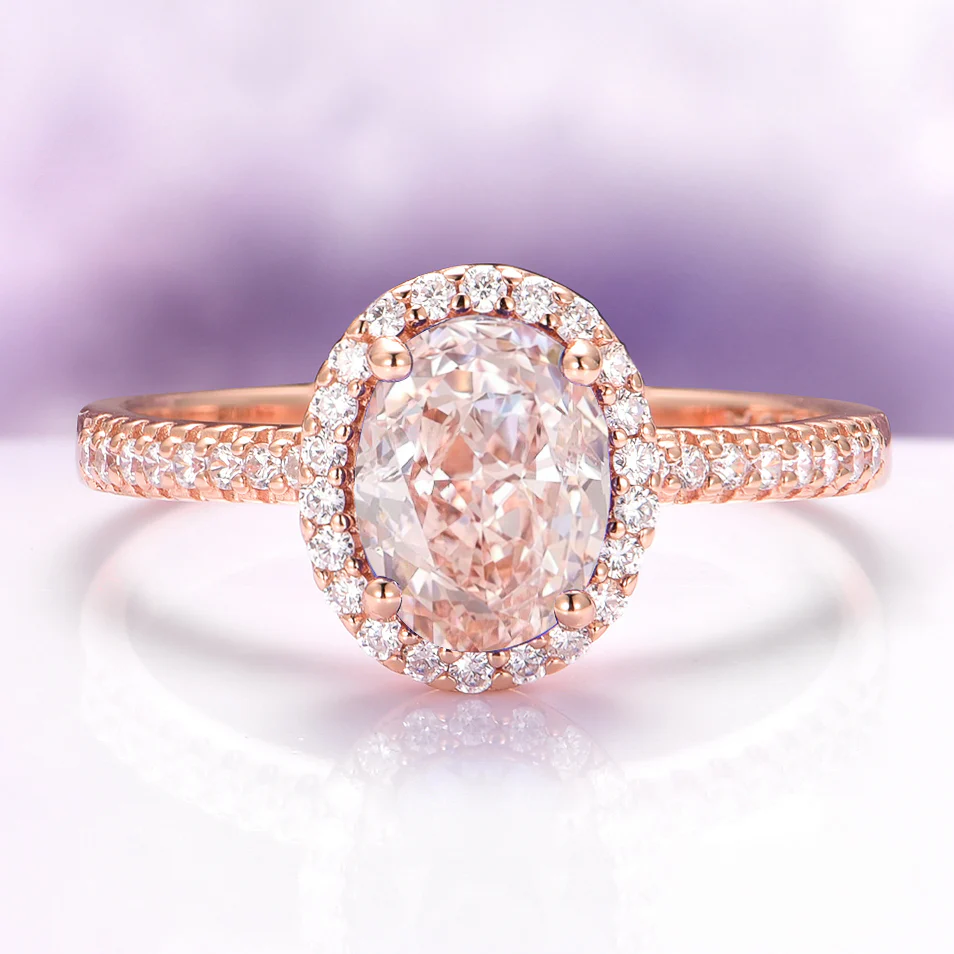
Morganite’s warm undertone gives it a special relationship with metal color, and this is where many people find the decision most enjoyable. A rosy metal amplifies the stone’s peach warmth and creates a soft, harmonious, monochromatic effect that has become closely associated with the stone. A yellow-toned metal brings a sunnier, vintage warmth, while a white or neutral metal creates contrast that can make the pink read cooler and more modern.
Because the metal frames the stone throughout its life, it is worth holding candidate settings against the actual morganite rather than judging them separately. Consider your everyday palette too: the metal you already wear in other pieces often hints at what will feel most natural. This is a decision about harmony, choosing a frame that flatters the picture inside it.
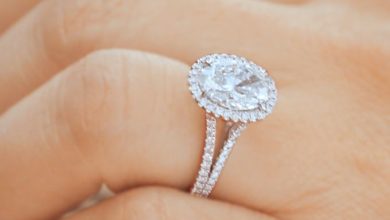
An oval morganite center in a warm rose setting.
Decision Four: Symbolism for the Proposal
An engagement ring is a symbol first and an object second, and morganite carries meaning that many couples find fitting for the moment of a proposal. Its gentle pink is often read as a stone of tender affection, compassion, and the quiet, steady kind of love that grows over time rather than burning out quickly. For a proposal, that symbolism can feel more personal than the traditional expectation of a colorless stone, offering a way to say something specific about the relationship. Some people choose it precisely because it stands slightly apart from convention while still feeling romantic and soft.
If you are drawn to that meaning and want to explore how it takes shape in real designs, a morganite engagement ring gathers the qualities discussed here into a single piece meant to mark a beginning. The symbolism is not just decoration; it is part of the story the ring will tell for decades.
How the Ring Wears Day to Day
A proposal is a single moment, but the ring lives an ordinary life afterward, so it is wise to think about how it wears. Morganite is durable enough for daily wear, sitting comfortably within the range suited to a piece worn constantly, though like any treasured stone it appreciates being kept clean so its clarity keeps showing.
Consider how the setting protects the stone: lower, more secure settings tuck the morganite closer to the hand and suit an active routine, while higher settings lift it toward the light for maximum presence. Prong count, the smoothness of the band, and how the stone sits relative to the finger all affect how the ring feels during typing, cooking, and everything else a day contains. A ring that is comfortable is a ring that gets worn and loved rather than set aside.
Balancing Proportion and Presence
The final consideration ties the others together: proportion. A morganite center should feel balanced against the band, the accent details, and the hand it rests on. A large stone on a very thin band can look dramatic but delicate, while a more substantial band grounds a bigger center and reads as confident.
Halo details and side accents can make a modest stone appear larger and add sparkle around the softer body color, but too much surrounding detail can also overwhelm morganite’s gentle character. The aim is a sense of rightness, where nothing competes and every element supports the stone at the heart of the design. Step back and view the whole ring as a composition, not a collection of parts, and let proportion be the quiet judge.
Bringing the Four Decisions Together
A morganite engagement ring is not chosen in one stroke; it is assembled from clear, connected decisions about color, cut, metal, and meaning, then checked against daily wear and overall proportion. When you approach it this way, the process stops feeling overwhelming and starts feeling like a series of small, confident yeses.
Read the tone that suits the wearer, let the cut express their personality, choose a metal that harmonizes with the stone’s warmth, and lean into the symbolism that makes the moment yours. Do that, and the finished ring will feel less like a purchase and more like a portrait of a relationship, ready to be worn for a very long time.