
Running content across Instagram, TikTok, YouTube, LinkedIn, and X used to mean one of two things: either you posted the same thing everywhere and hoped for the best, or you hired separate specialists for each channel. The first approach wastes the potential of each platform. The second costs more than most growing brands can afford.
A third option has started to take shape over the past year. Instead of relying on a single all-purpose tool or a patchwork of disconnected apps, some teams are building their content workflows around modular AI systems where individual capabilities can be mixed, matched, and recombined depending on the platform and format they are targeting.

Why One-Size-Fits-All Content Fails
Each social platform has its own grammar. TikTok rewards fast hooks, raw energy, and trending sounds. LinkedIn favors longer-form thought leadership with a professional tone. Instagram cares about visual polish and concise captions. YouTube Shorts wants entertainment value packed into under 60 seconds. A single piece of content rarely works across all of these without significant adaptation.
The brands that perform best on social understand this intuitively. They do not just resize a video and repost it. They rethink the hook, adjust the pacing, swap out the music, and rewrite the caption for each destination. That level of customization is what separates accounts that grow from accounts that stagnate.
But customization at that level is time-intensive. A content marketer who spends 45 minutes adapting a single video for four platforms has just burned three hours on distribution alone, before even starting on the next piece of content. Multiply that across a weekly posting schedule and the math gets brutal fast.
The Skills-Based Approach to Content Production
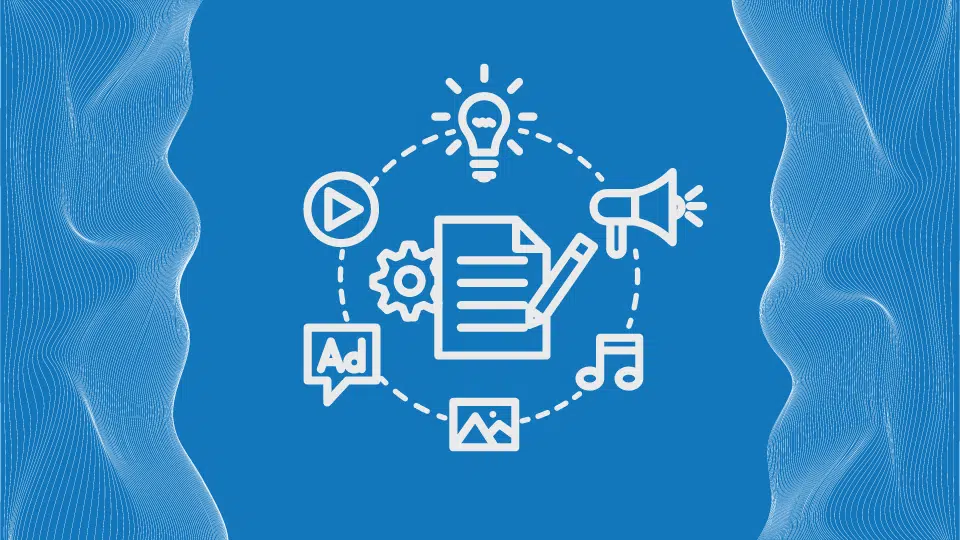
This is where modular AI systems offer a genuine advantage. Rather than a single monolithic tool that tries to handle every step of content creation, a skills-based architecture breaks the process into discrete, specialized capabilities. One skill handles script generation. Another handles visual asset selection. A third manages caption writing. A fourth formats output for specific platform dimensions and requirements.
Socialaf built their platform around exactly this kind of architecture. Their skills system lets users chain together individual capabilities into custom workflows. Need a TikTok video with a punchy hook, auto-generated captions, and trending background music? That is one combination of skills. Need a polished LinkedIn carousel with data visualizations and a professional voiceover? That is a different combination using some of the same building blocks plus a few specialized ones.
The advantage of this approach is flexibility. As platforms change their algorithms, add new features, or shift what kind of content they promote, you can swap out individual skills rather than waiting for a monolithic tool to ship an update. It also means you are not locked into a rigid workflow that works great for one format but poorly for others.
Mapping Skills to Platforms
In practice, a multi-platform strategy built on modular skills might look something like this. For TikTok, you prioritize the hook generation skill, the trending audio matching skill, and the vertical video formatting skill. For LinkedIn, you lean on the long-form script skill, the professional tone adjustment skill, and the static image or carousel generation skill. For Instagram Reels, you might use many of the same skills as TikTok but swap in a different visual style skill that matches your brand’s Instagram aesthetic.
The key insight is that roughly 60 to 70 percent of the underlying work is shared across platforms. The script research, the brand voice matching, the asset organization. It is the final 30 to 40 percent, the platform-specific formatting and optimization, where the real differentiation happens. A modular system lets you reuse the shared work and only customize the last mile.
What This Looks Like Day to Day
A typical workflow starts with a content brief. Maybe it is a product launch, a trending topic, or a recurring content series. The marketer feeds the brief into the system and selects which platforms they want to target. The AI handles the first draft across all formats simultaneously, applying the appropriate skills for each destination.
The marketer then reviews the outputs, makes adjustments where the AI missed the mark, and queues everything for publishing. What used to be a full day of work compresses into a couple of hours. More importantly, the output is genuinely adapted for each platform rather than being a lazy cross-post.
Teams that adopt this workflow consistently report two things. First, their posting frequency increases because the bottleneck of manual adaptation disappears. Second, their per-post engagement improves because each piece of content actually fits the platform it lands on. Both of those metrics feed directly into algorithmic distribution, creating a compounding advantage over time.
Avoiding the Common Pitfalls
The biggest risk with any AI-assisted content workflow is losing your brand’s distinctive voice. When every piece of content runs through the same system, there is a natural tendency toward homogeneity. The way to counter this is to invest time upfront in training the system on your specific brand guidelines, tone of voice, visual preferences, and content principles. The more specific your inputs, the more distinctive the outputs.
Another pitfall is over-relying on the AI for creative direction. These tools are excellent at execution, at taking a clear brief and producing polished output quickly. They are much less reliable at generating genuinely original creative concepts. The best results come from human strategists who set the creative direction and let the AI handle the production and adaptation work.
Finally, do not ignore analytics. A multi-platform strategy generates a lot of data about what works where. Use that data to refine your skill configurations over time. If your TikTok hooks consistently outperform your LinkedIn openings, dig into why and adjust the relevant skills accordingly. The system should get smarter as you use it, but only if you are feeding performance data back into your workflow.
Getting Started Without Overhauling Everything
You do not need to rebuild your entire content operation overnight. Start with one content series or one product line and run it through a skills-based workflow for a month. Compare the output volume, quality, and engagement metrics against your previous approach. If the numbers improve, expand gradually. If they do not, adjust your skill configurations before scaling.
The tools in this space are maturing quickly, and the teams that learn to use them effectively now will have a significant advantage as the expectations around content volume and platform-specific quality continue to rise. The question is not whether AI will play a role in multi-platform content strategy. It is whether you will figure out the right workflow before your competitors do.