
In today’s hyper-connected world, the concept of dopamine detox has taken center stage as a potential solution for those seeking enhanced focus and mental clarity. But is it truly the answer, or just another fleeting wellness trend? Let’s find out the truth about dopamine.
Why Everyone Is Talking About Dopamine Detox

The Rise of Dopamine Fasting on Social Media
The rise of “dopamine detox” and “dopamine fast” on social media reflects a growing desire to manage the constant stimulus bombarding our brains. Influencers and self-proclaimed gurus promote these methods as a quick reset to address overstimulation and regain control.
Why People Are Desperate for Better Focus and Mental Clarity
The modern lifestyle, filled with endless notifications and instant gratification, has left many feeling mentally scattered. People are desperately seeking ways to improve their attention spans, boost productivity, and achieve a sense of mental clarity amidst the digital chaos.
What Is Dopamine? (Understanding the Basics Most Blogs Skip)
The Real Role of Dopamine in Motivation and Reward
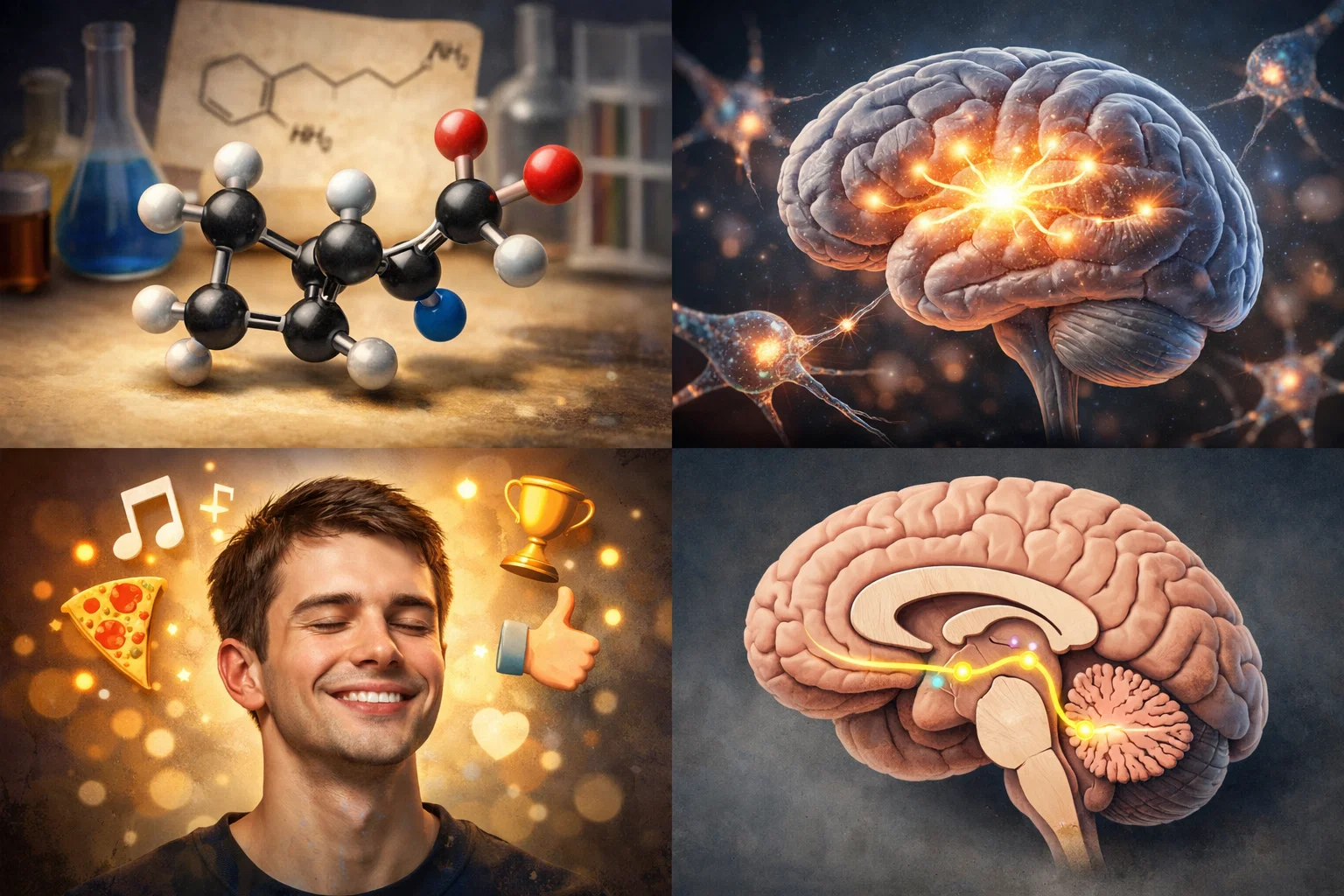
Dopamine is a neurotransmitter critically involved in motivation, reward, and learning. It plays a significant role in reinforcing behaviors that lead to positive outcomes, driving us to seek out experiences that activate the brain’s reward system. It regulates brain function.
Dopamine vs Pleasure: The Biggest Misconception
A common misconception is equating dopamine solely with pleasure. While dopamine is released during pleasurable activities, its primary role is in anticipating and motivating us to pursue rewards, not just experiencing the reward itself. It controls the amount of dopamine in the brain.
How Dopamine Actually Works in the Brain (Simple Explanation)
Dopamine works in the brain by transmitting signals between neurons. When we anticipate a reward, dopamine is released, prompting us to take action. After the reward is received, dopamine levels adjust, influencing future behavior through reinforcement learning.
What Is Dopamine Detox Supposed to Do?
The Original Concept Behind Dopamine Fasting
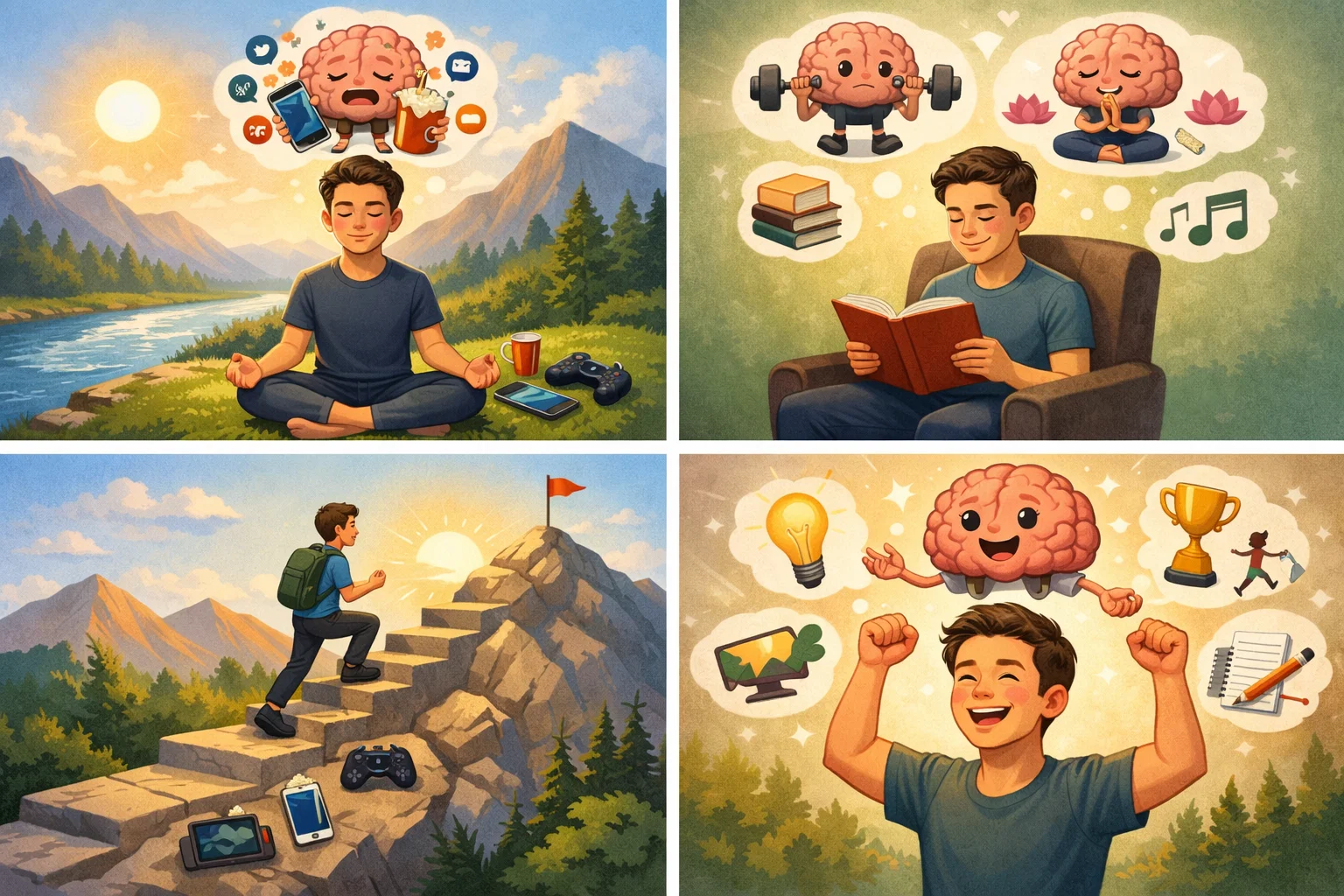
The original concept behind dopamine fasting, influenced by Cameron Sepah, aimed to reduce impulsive behaviors by limiting exposure to highly pleasurable activities. The goal was not to eliminate dopamine but to regain control over one’s actions and responses to external stimuli.
Common Rules People Follow (No Phone, No Music, No Fun)
Here’s what people often do to reduce dopamine stimulation:
- Abstain from phone use and social media.
- Avoid music and other forms of entertainment.
The goal is to minimize dopamine stimulation from activities like scrolling, binge-watching, or excessive online interactions.
Promised Benefits vs Reality
The promised benefits of a “dopamine fast” include increased focus, enhanced productivity, and a greater sense of well-being. However, the reality often falls short of these expectations, as true dopamine regulation is more complex than simply eliminating pleasurable activities.
Dopamine Detox Is a Lie? Breaking Down the Myth
Why You Can’t “Reset” Dopamine Levels
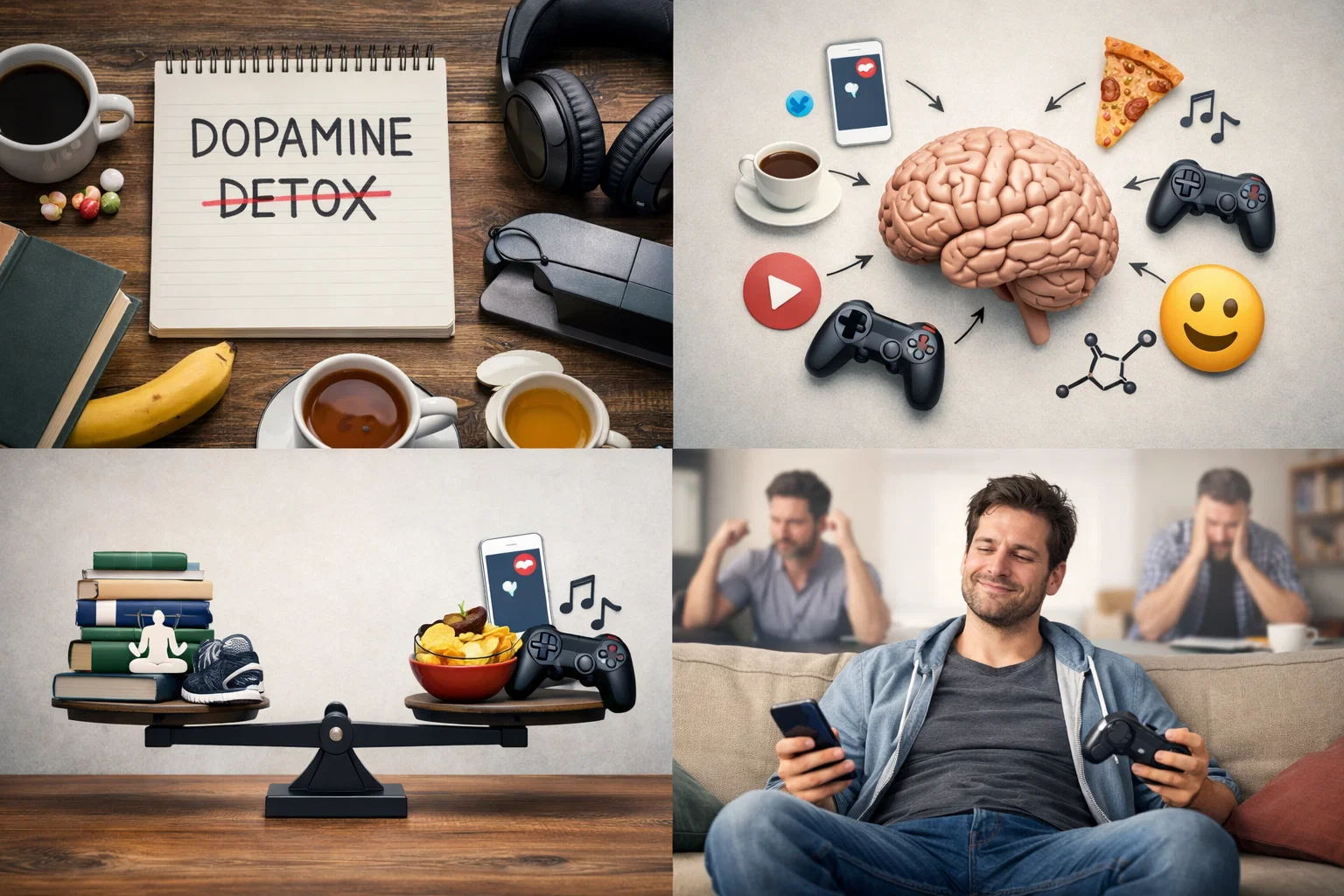
The notion that you can completely “reset your brain” or dopamine levels through extreme restriction is a myth. Dopamine is a neurotransmitter essential for various brain functions, and abruptly depriving yourself of all rewarding experiences is neither sustainable nor scientifically sound.
What Science and Neuroscience Actually Say
Science and neuroscience reveal that dopamine regulation is a dynamic process influenced by various factors, including genetics, environment, and behavior. There’s no evidence to suggest that a short-term “dopamine detox” can fundamentally alter the brain’s reward system or dopamine levels.
Misinterpretation of Psychology vs Biology
Misinterpretations arise when applying psychological concepts without a solid understanding of the underlying biology. While cognitive behavioral therapy (CBT) techniques can help manage impulsive behaviors, the idea of a complete “dopamine reset” oversimplifies the intricate workings of the brain.
Why Dopamine Detox Feels Like It Works

The Hidden Power of Reducing Distractions
One of the main reasons why a “dopamine detox” might feel effective is the simple act of reducing distractions. By limiting exposure to constant notifications and excessive dopamine stimulation from activities like social media or gaming, individuals experience a sense of calm and improved focus.
Breaking the Cycle of Instant Gratification
Another aspect behind dopamine fasting is breaking the cycle of instant gratification. Modern life is filled with readily available rewards that constantly trigger the brain’s reward system. By intentionally abstaining from these immediate pleasures, one can regain control over impulsive behaviors.
The Role of Attention Span Recovery
Engaging in a “dopamine detox” can contribute to attention span recovery. By reducing constant stimulation, the brain has an opportunity to rest and recover, leading to improved concentration and cognitive function. This respite allows for the brain to become more receptive to mindful activities.
The Real Problem: Dopamine Overstimulation in Modern Life

Social Media, Notifications, and Digital Addiction
The real issue isn’t a lack of dopamine or dopamine not working correctly, but rather dopamine overstimulation caused by social media, constant notifications, and digital addiction. These platforms are designed to deliver a continuous stream of rewards, potentially rewiring the brain.
How Constant Stimulation Rewires Your Brain
Constant stimulation rewires your brain by reinforcing pathways associated with instant gratification. This can lead to a decreased sensitivity to natural rewards and a heightened craving for the intense dopamine stimulation from activities like scrolling through social media feeds, impacting brain function.
Signs You’re Overstimulated (Most People Miss These)
Here are some signs of overstimulation that are often overlooked. These signs can easily be mistaken for other conditions, but they may indicate overstimulation:
- Difficulty concentrating
- Feeling restless
- Impulsivity
- A constant need for external stimulation
Many people miss these signs, attributing them to stress or fatigue, without realizing the role of excessive dopamine stimulation from activities in their daily lives.
The Dangers of Extreme Dopamine Fasting

Mental Health Risks and Social Isolation
Extreme “dopamine fast” practices can pose mental health risks, leading to social isolation and increased anxiety. Severely restricting all pleasurable activities may deprive individuals of necessary social interactions and emotional support, essential for mental and emotional well-being, mental health professionals say.
Productivity Loss from Over-Restriction
Paradoxically, over-restriction in the name of productivity can lead to actual productivity loss. Completely eliminating enjoyable activities can result in demotivation and burnout, hindering long-term focus and efficiency. Therefore, balance is necessary when talking about dopamine in the brain.
Why Extremes Backfire Long-Term
Extremes backfire long-term because they are unsustainable and can lead to rebound effects. Depriving oneself of all rewards can create a sense of deprivation, eventually leading to a binge-like behavior where one overindulges in pleasurable activities to compensate for the period of restriction.
What Actually Works for Focus and Mental Clarity

Reducing High-Stimulation Activities (Smartly)
Instead of extreme “dopamine detox,” a more sustainable approach involves reducing high-stimulation activities smartly. This means being mindful about screen time, setting limits on social media use, and consciously choosing activities that promote relaxation and mental clarity.
Building Deep Work Habits That Last
Building deep work habits that last involves creating dedicated time blocks for focused tasks and minimizing distractions. By cultivating concentration skills and engaging in meaningful work, individuals can experience a sense of accomplishment and flow that rivals the dopamine rush from instant gratification.
Replacing Dopamine “Spikes” with Sustainable Rewards
The key to long-term focus and well-being is replacing dopamine “spikes” with sustainable rewards. This can involve engaging in activities that provide intrinsic satisfaction, such as exercise, hobbies, creative pursuits, or spending quality time with loved ones, influencing the amount of dopamine.
Science-Based Alternatives to Dopamine Detox

Digital Minimalism: A Better Approach
Digital minimalism offers a balanced approach to managing dopamine stimulation. Instead of a complete dopamine detox, it encourages mindful technology use. By curating your digital environment and intentionally choosing when and how to engage with technology, you can reduce overstimulation and reclaim control.
Time Blocking and Focus Techniques
Time blocking and other focus techniques can help you regulate your focus and reduce impulsivity, which are both things to consider behind dopamine fasting. These methods enable you to allocate specific time slots for particular activities, fostering mental clarity, better productivity and reducing vulnerability to constant notifications and other distractions.
Mindfulness and Attention Training
Mindfulness and attention training, such as meditation, help cultivate awareness of your thoughts and sensations without judgment. Regular practice can improve your ability to focus, manage impulsive behaviors, and regulate the impact of stimulus, reducing the reliance on instant gratification. It can improve brain function.
A Practical Daily Routine to Boost Focus Naturally
Morning Routine for Mental Clarity
Here’s how to begin your day with a mindful morning routine and set a positive tone. Instead of immediately reaching for your phone, consider incorporating activities such as:
- Stretching
- Journaling
- Quiet contemplation
These activities help regulate dopamine and prime your brain for focus, which should be the goal of every dopamine fast.
Midday Focus Reset Strategies
Combat midday slump by incorporating brief focus reset strategies. Step away from your workspace, engage in a short meditation, or take a walk outside. These activities can prevent overstimulation, enhance brain function, restore dopamine levels, boost dopamine regulation, and promote sustained concentration without any dopamine not working correctly.
Evening Habits to Avoid Dopamine Overload
Establish evening habits that reduce dopamine overload. Dim the lights, avoid screens an hour before bed, and engage in relaxing activities like reading or gentle stretching. These practices support healthy sleep patterns, which are essential for overall mental wellness and cognitive function. Dopamine is a neurotransmitter.
Dopamine and Productivity: What High Performers Do Differently
How Successful People Manage Distractions
Successful people manage distractions by creating a conducive environment for focus. This involves minimizing constant notifications, using website blockers, and establishing clear boundaries between work and personal time. They minimize distractions, and the dopamine is not affected. These strategies help maintain concentration and productivity.
The Balance Between Discipline and Enjoyment
High performers understand the importance of balance between discipline and enjoyment. They prioritize focused work periods but also schedule time for relaxation and pleasurable activities. This approach prevents burnout and fosters long-term sustainability, ensuring that high levels of “dopamine fast” are balanced and effective.