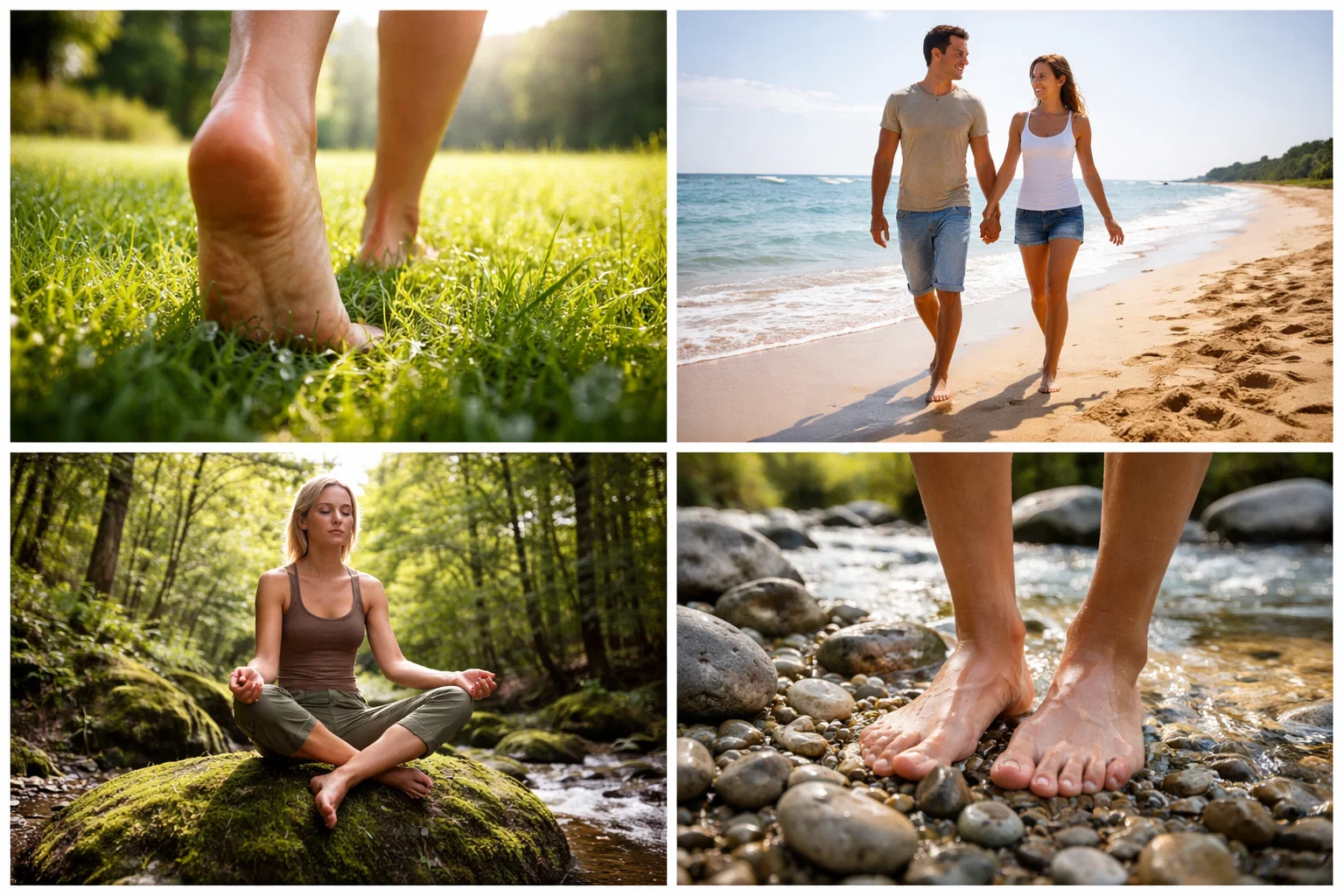
In this comprehensive guide, we will explore the world of barefoot walking and natural movement. Learn about the practice of walking without shoes, its potential health benefits, and how to incorporate it safely into your daily life.
Why Foot Health Is the Foundation of Overall Wellness
How modern footwear may be weakening natural foot function
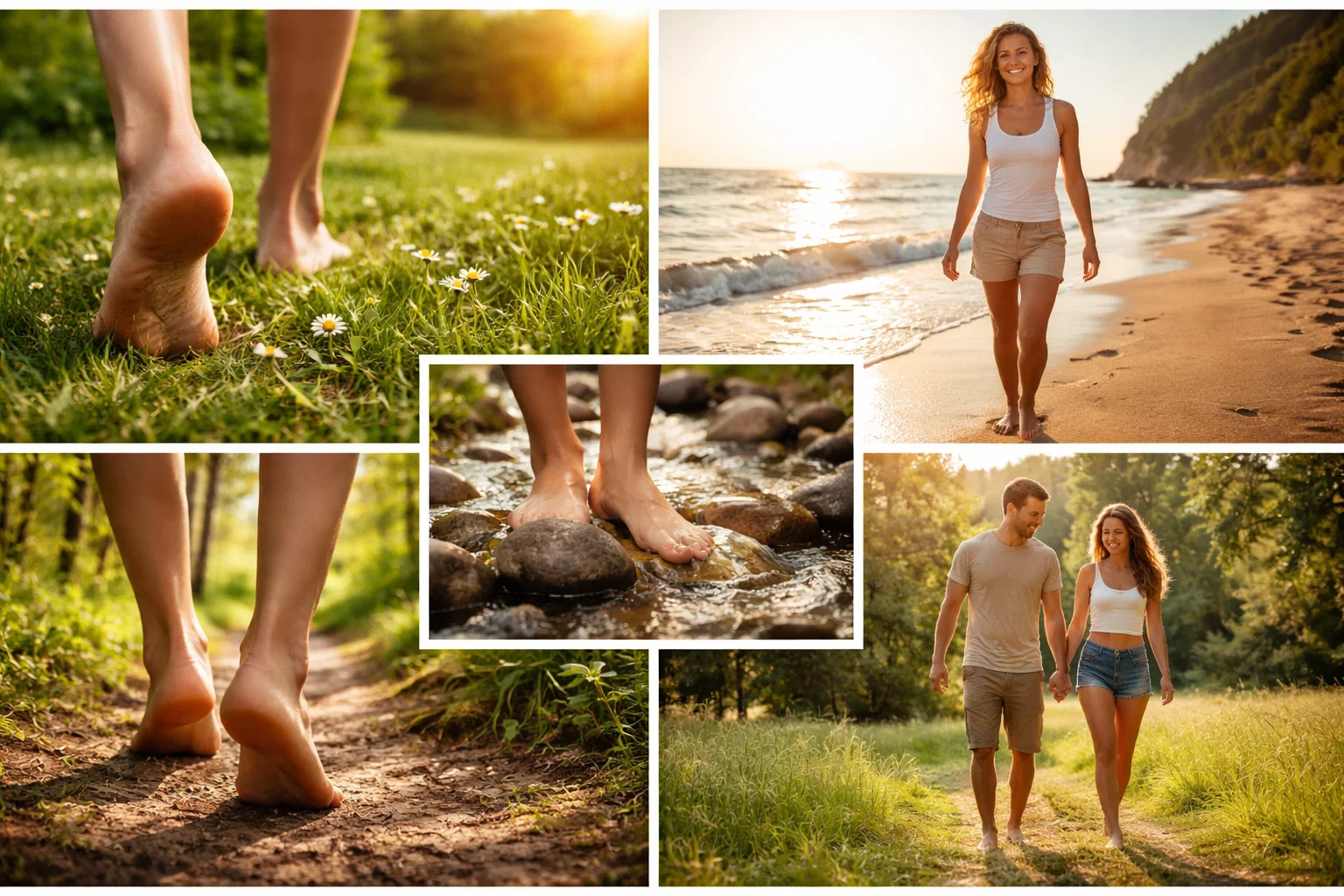
Modern footwear, with its excessive cushion and support, may inadvertently weaken our natural foot function. By constantly supporting our feet, we may be reducing the need for the muscles in our feet to work, potentially leading to atrophy.
The rise of natural movement and barefoot lifestyle trends
The natural movement trend emphasizes reconnecting with our innate physical abilities. The barefoot lifestyle focuses on going without shoes as much as possible to restore foot health and improve overall well-being.
What this guide will cover: benefits, risks, and safe practice
This guide will provide an in-depth look at the benefits of walking barefoot, potential risks, and how to start slow to ensure a safe and enjoyable experience. By the end, you’ll have a solid understanding of whether incorporating barefoot walking is right for you.
What Is Barefoot Walking and Why It Matters
Definition and how barefoot walking differs from minimal footwear
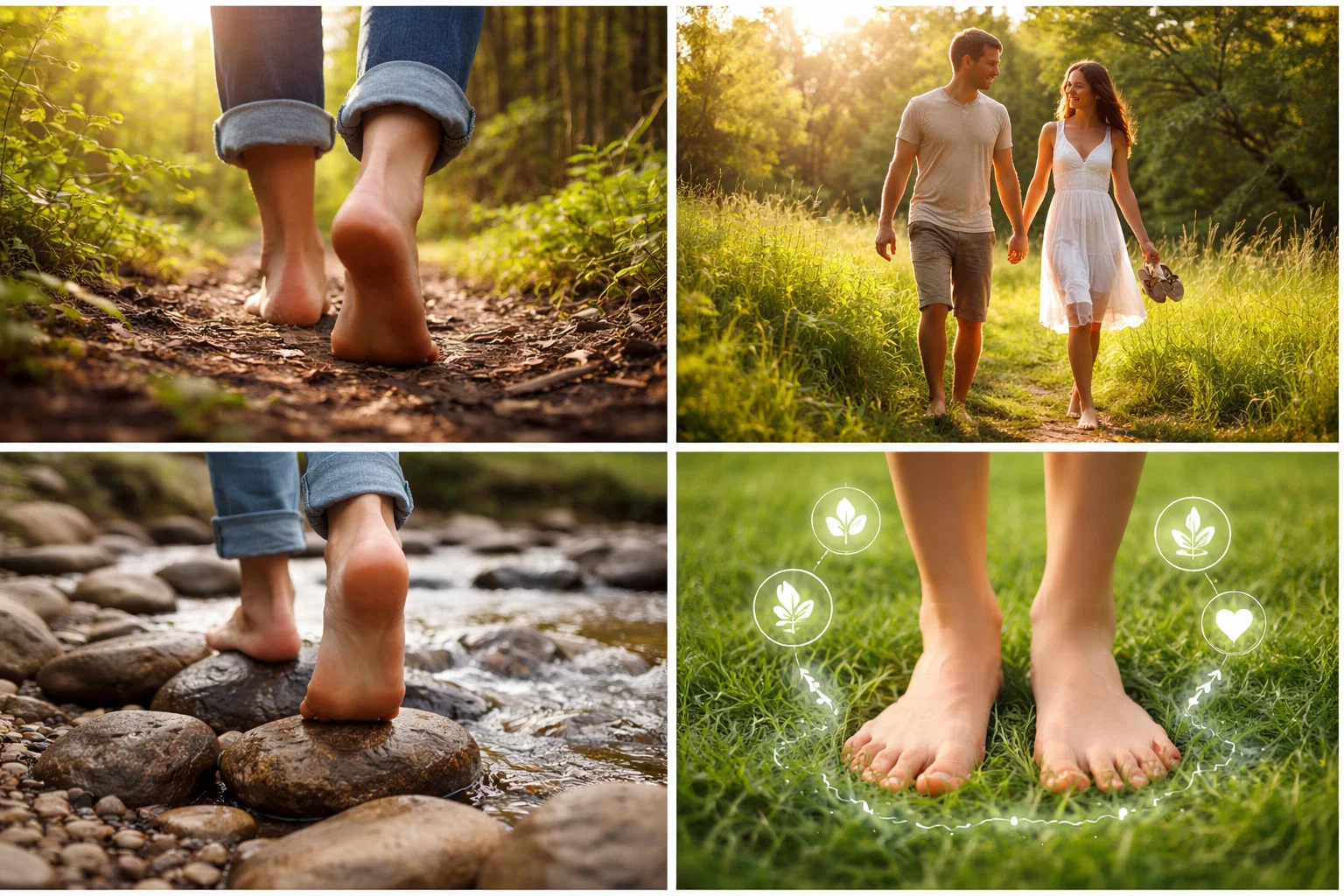
Barefoot walking is simply the practice of walking without shoes or socks, allowing direct contact between your bare feet and the ground. This differs from minimalist shoes, which provide some protection but aim to mimic the feeling of being barefoot.
Historical perspective: humans before modern shoes
For most of human history, our ancestors walked barefoot. Modern shoes are a relatively recent invention. The benefits of barefoot walking may be rooted in our evolutionary history and our body’s natural biomechanics.
Connection between feet, posture, and full-body alignment
Our feet are the foundation of our posture and full-body alignment. Walking barefoot can improve awareness of how we distribute weight and how our feet interact with the ground, which can affect everything from our ankles to our spine.
Key Health Benefits of Walking Barefoot
Strengthening foot muscles and arches naturally
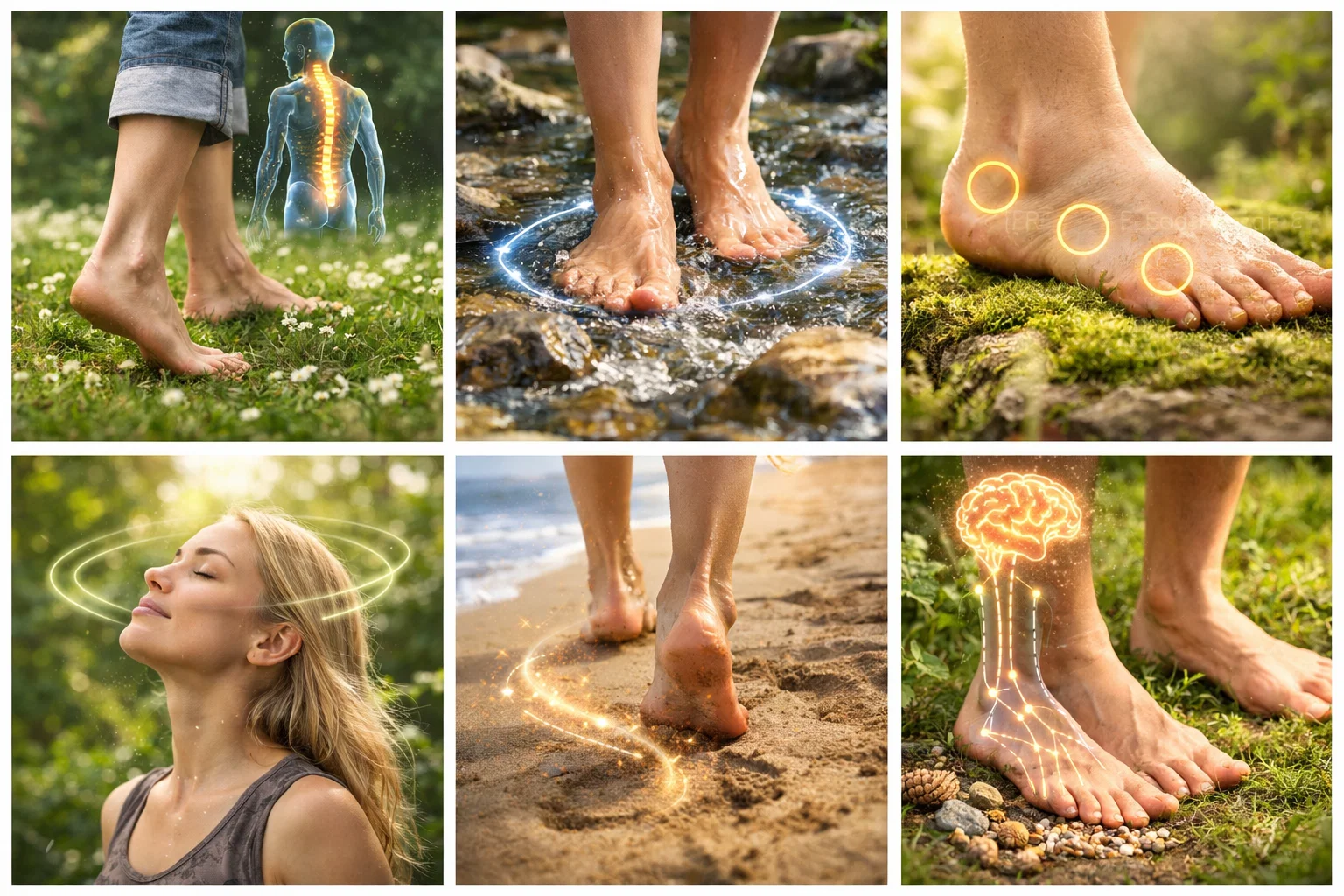
Walking barefoot strengthens your feet by engaging all the small foot muscles and arches that are often underutilized when we wear shoes. This can help reduce the risk of foot problems like plantar fasciitis.
Improving balance, stability, and coordination
Barefoot walking improves balance and coordination by enhancing sensory feedback from the ground. This increased awareness helps your body make subtle adjustments to maintain stability and prevent falls.
Enhancing posture and spinal alignment
By strengthening your feet and improving your body awareness, barefoot walking can improve posture and spinal alignment. When your feet function optimally, it can have a positive impact on your entire body.
Supporting better movement mechanics and gait
Walking barefoot allows for a more natural gait, or walking pattern, which helps support better movement mechanics. Without the restriction of shoes, your feet can move more freely and naturally.
Increasing sensory feedback and brain-body connection
Barefoot walking increases sensory feedback, enhancing the connection between your feet and your brain. This improved proprioception helps your body better understand its position in space, leading to more efficient movement.
The Science Behind Barefoot Walking
Proprioception: how your feet communicate with your brain
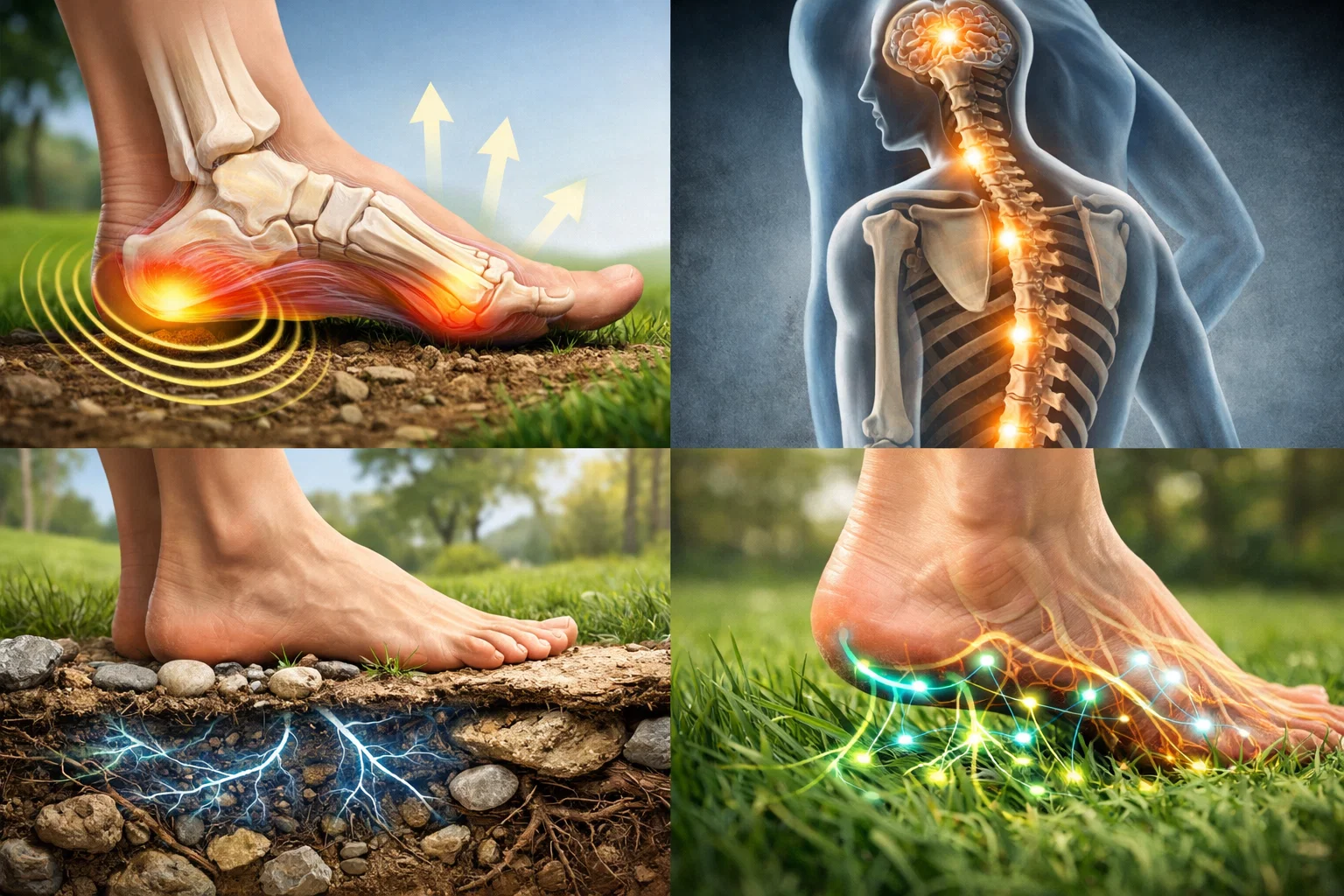
Proprioception is your body’s ability to sense its position and movement in space. Your feet are packed with sensory receptors that communicate with your brain, providing crucial information for balance and coordination.
Impact on nervous system stimulation and reflexes
Walking barefoot stimulates the nervous system and enhances reflexes. The direct contact with the ground activates sensory receptors, leading to improved nerve function and faster reaction times.
Research findings on foot biomechanics and injury prevention
Research on foot biomechanics suggests that barefoot walking can alter foot strike patterns and reduce impact forces. Some studies suggest that this may help in injury prevention, especially for barefoot running and walking.
What science confirms vs. what is still debated
While science confirms the benefits of barefoot walking on foot strength and proprioception, some aspects, like its impact on injury rates, are still debated. It’s important to consult a podiatrist before making drastic changes to your footwear habits.
Grounding (Earthing): Myth, Theory, and Evidence
What grounding (earthing) claims about health benefits
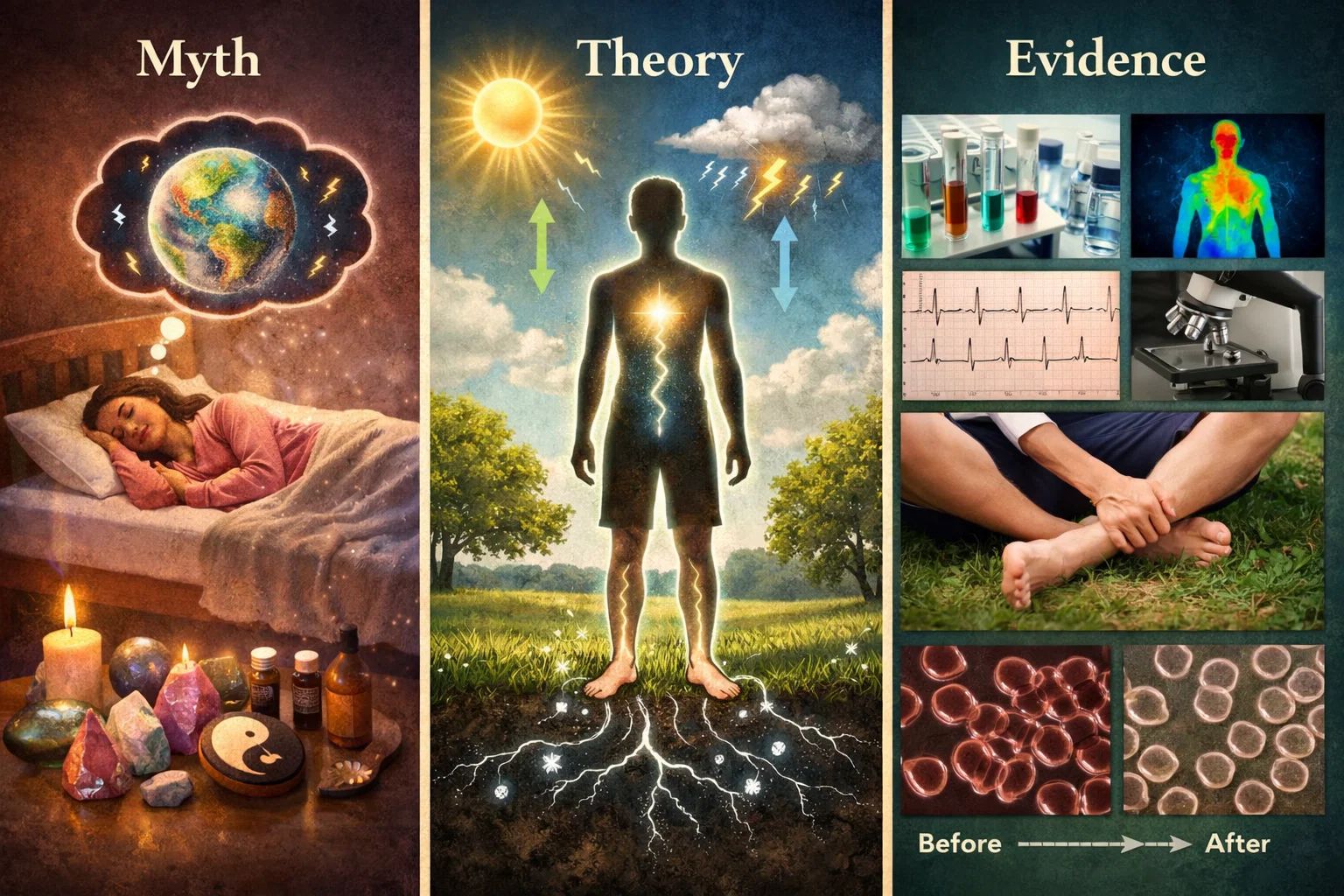
Grounding, also known as earthing, is a practice that involves direct skin contact with the Earth’s surface, such as walking barefoot on natural surfaces like grass or sand. Proponents claim this practice can offer various health benefits.
Possible effects on stress, inflammation, and sleep quality
Some theories suggest that grounding may help reduce stress, lower inflammation, and improve sleep quality. The idea is that direct contact with the Earth allows for the transfer of electrons, which can have a positive impact.
Current scientific limitations and research gaps
While anecdotal evidence and some studies suggest potential benefits, current scientific research on grounding is limited. More rigorous and larger-scale studies are needed to confirm these claims.
Should grounding be considered wellness or science?
Whether grounding should be considered a wellness practice or a scientifically proven method is still debated. As more research emerges, its place in the realm of health and wellness will become clearer.
Hidden Problems Caused by Wearing Shoes Too Often
Weak foot muscles and reduced arch support
Wearing shoes too often can lead to weak foot muscles and reduced arch support. The constant cushion and support provided by shoes may reduce the need for the muscles in your feet to work.
Toe deformities and restricted natural movement
Prolonged use of constricting footwear can contribute to toe deformities and restrict natural movement. Tight shoes can squeeze toes together, leading to conditions like bunions or hammertoes.
Impact on posture, hips, and lower back
Footwear can affect posture, hips, and lower back. Shoes can alter your natural gait and alignment, potentially leading to discomfort or pain in other parts of your body when you wear shoes.
Reduced sensory awareness and stability over time
Wearing shoes constantly can reduce sensory awareness and stability over time. The thick soles of many shoes can diminish the feedback your feet receive from the ground when you wear shoes.
Risks and Safety Concerns of Barefoot Walking
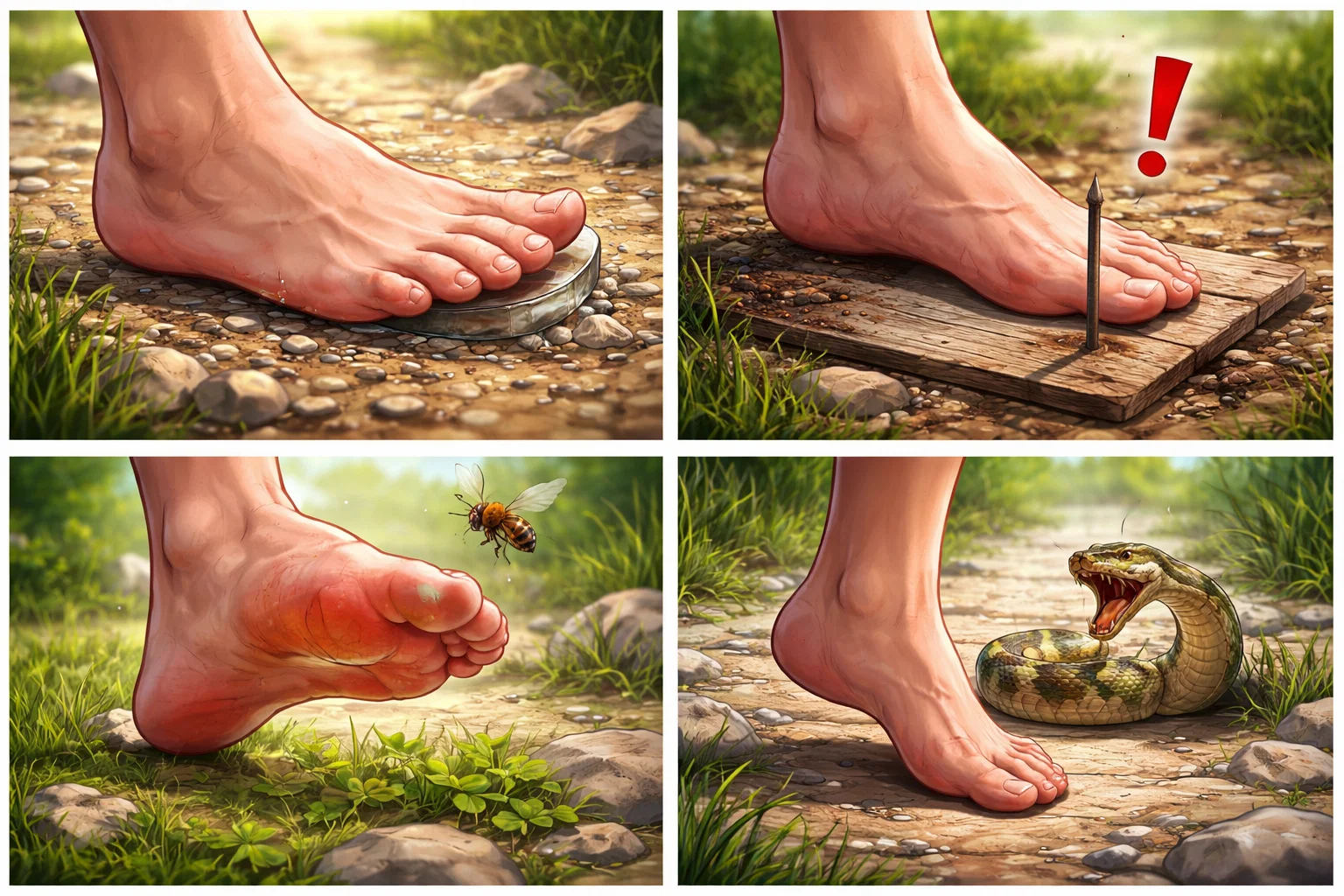
Injuries from sharp objects and uneven surfaces
One of the primary risks of walking barefoot is the potential for injuries from sharp objects and uneven surfaces. Stepping on glass, rocks, or other debris can cause cuts, punctures, or bruises.
Bacterial, fungal, and environmental exposure risks
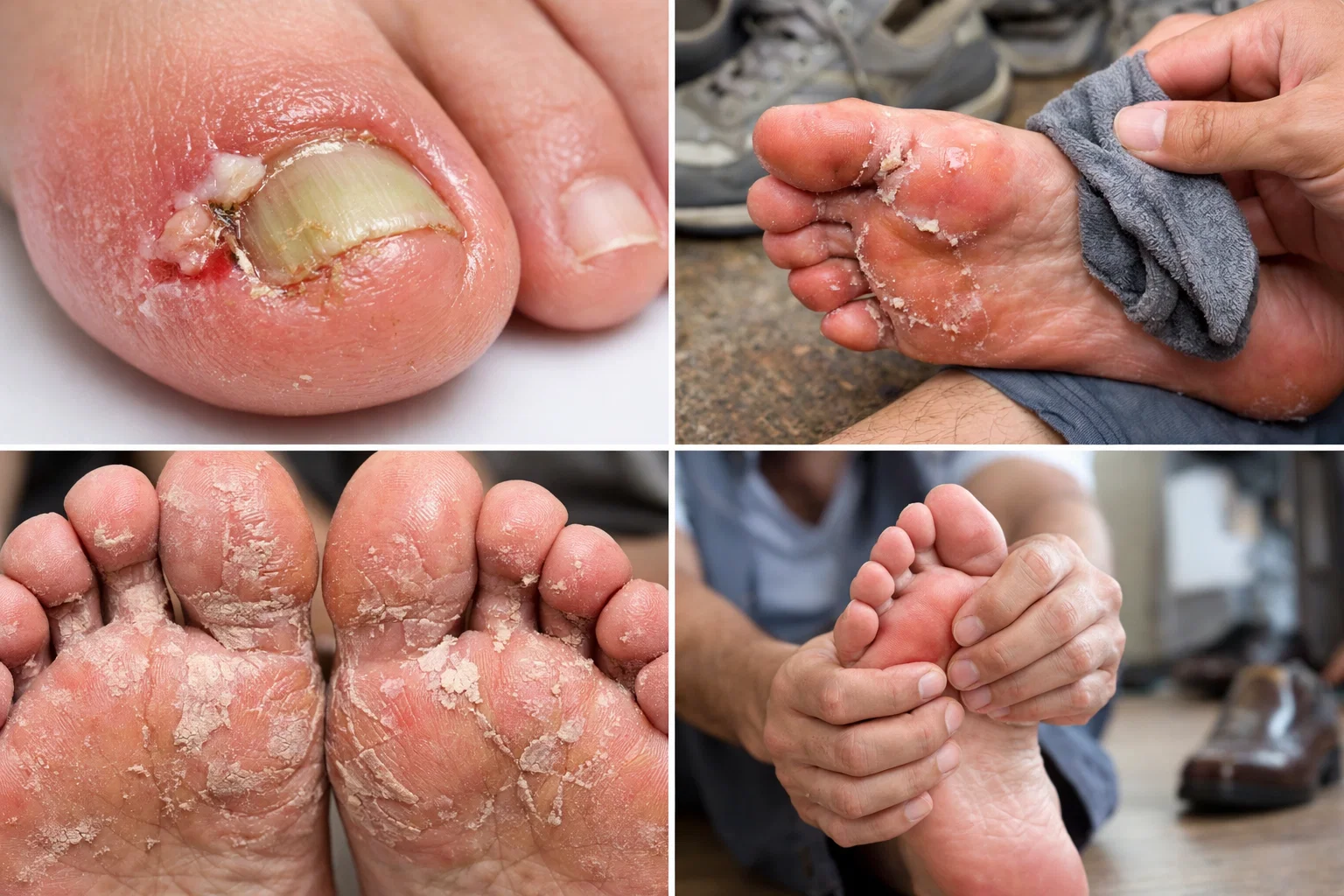
Walking barefoot increases your risk of exposure to bacteria, fungus, and environmental hazards. Athlete’s foot and other infections can be contracted by walking barefoot in contaminated areas. Consider walking barefoot on natural surfaces.
Heat-related injuries (hot sand or pavement)
Walking barefoot on hot sand or pavement can cause heat-related injuries. The skin on your feet can burn quickly on hot surfaces, leading to blisters and discomfort when you wear shoes.
Who should avoid barefoot walking (diabetes, neuropathy, etc.)
Certain individuals should avoid walking barefoot, including those with diabetes, neuropathy, or other conditions that affect foot health. These conditions can impair sensation and increase the risk of injury.
Best Places to Walk Barefoot Safely

Grass, sand, and natural soft surfaces
The best places to walk barefoot safely are typically grass, sand, and other natural soft surfaces. These surfaces are generally free of sharp objects and offer a comfortable, forgiving terrain for your feet. Consider walking barefoot on natural surfaces.
Indoor barefoot practice at home
Practicing going barefoot indoors at home is a safe way to get started. Ensure your floors are clean and free of hazards, providing a controlled environment to strengthen your feet. Think of it as incorporating barefoot walking in your life.
Yoga, stretching, and controlled environments
Yoga, stretching, and other controlled environments offer excellent opportunities for barefoot practice. These activities often involve mindful movement and can help improve foot and ankle strength and flexibility.
Surfaces to strictly avoid in urban areas
Surfaces to strictly avoid in urban areas when walking barefoot include concrete, asphalt, and any area with broken glass or debris. These surfaces pose a high risk of injury and exposure to contaminants while going barefoot.
How to Start Barefoot Walking Safely (Step-by-Step Guide)
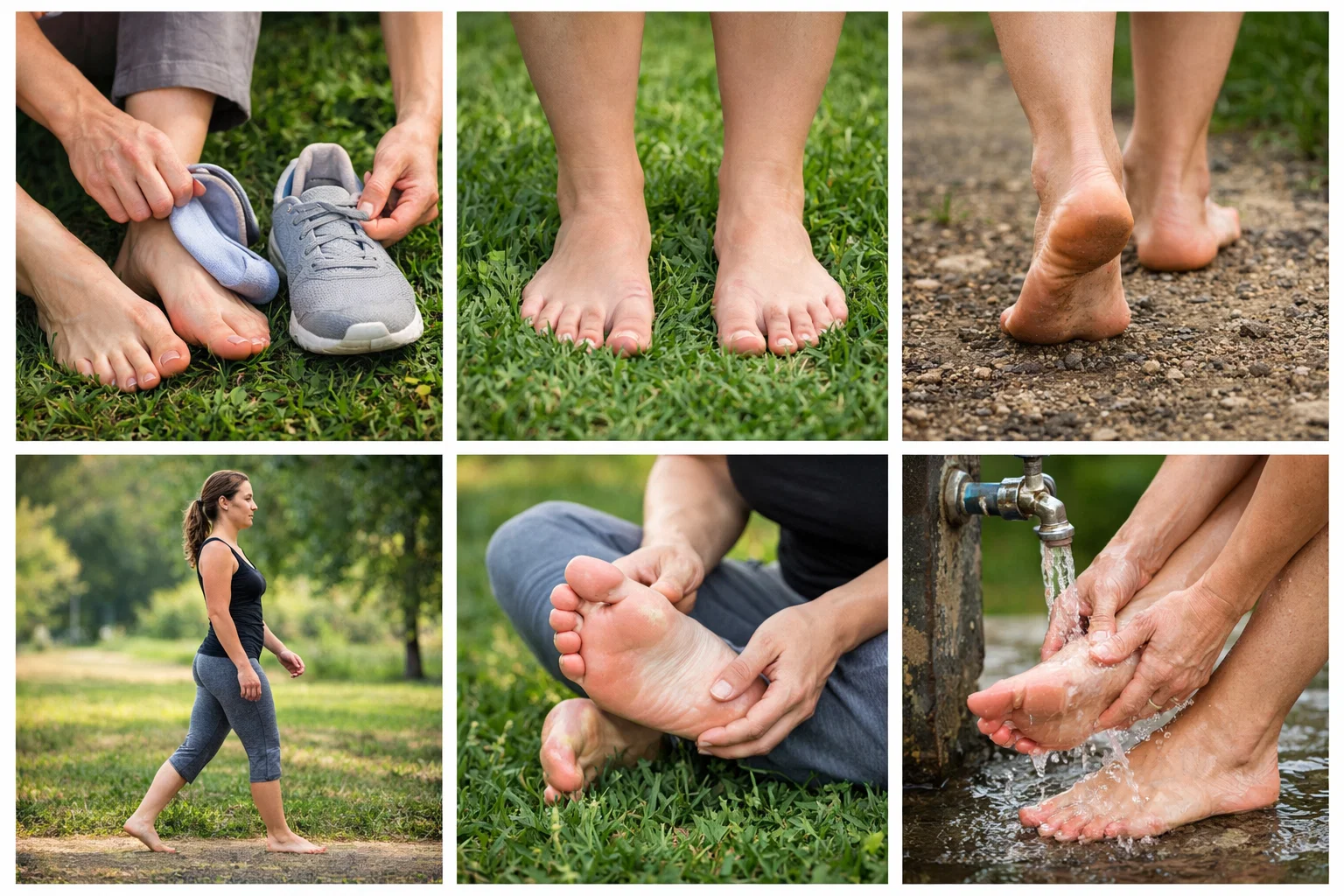
Transitioning slowly: beginner adaptation plan
To safely begin barefoot walking, a gradual adaptation plan is essential. Starting with just a few minutes of barefoot walking on natural surfaces like grass or sand can help your foot and ankle adjust. This approach can help reduce the risk of injury while experiencing the benefits of walking barefoot.
Time duration recommendations for beginners
For beginners, it’s wise to limit the time barefoot to 5-15 minutes per session. As your foot muscles strengthen, you can gradually increase the duration. This will help strengthen your feet and prevent overuse injuries when you go barefoot.
Foot strengthening exercises to prepare
Before fully embracing barefoot walking, incorporating foot strengthening exercises is beneficial. Simple exercises like toe raises, heel raises, and marble pickups can prepare the muscles in your feet for the demands of walking without shoes. The practice of walking barefoot can improve.
Signs you are overdoing it and how to adjust
Signs you are overdoing barefoot walking include foot pain, arch soreness, or blisters. If you experience these, reduce your time barefoot and allow your feet to recover. Listen to your body and adjust your barefoot walking accordingly.
Barefoot Walking vs Minimalist Shoes vs Regular Shoes
Key differences in structure and support
Barefoot walking involves no footwear, minimalist shoes offer minimal cushion and support, while regular shoes provide substantial structure and cushioning. Understanding these differences is crucial when choosing the best option for your foot health and natural movement as you incorporate barefoot walking.
Pros and cons of each approach
Walking barefoot enhances foot strength and sensory feedback, but exposes you to potential injuries. The benefits of walking barefoot are clear. Different footwear options offer varying levels of protection and foot engagement, as summarized below:
| Footwear Type | Protection Level | Potential Impact on Foot Muscles |
|---|---|---|
| Barefoot | Low | Enhances strength |
| Minimalist Shoes | Some | Promotes natural movement |
| Regular Shoes | Maximum | May weaken muscles |
Which option is best for different lifestyles
The best option depends on your lifestyle, environment, and foot health. Those seeking maximum foot strength and sensory input might prefer to walk barefoot. Individuals needing protection may opt for minimalist shoes, while those requiring support might choose regular shoes.
Expert Tips for Maximizing Benefits
Combining barefoot walking with mobility training
To maximize the benefits of walking barefoot, combine it with mobility training. Exercises that improve foot, ankle, and hip flexibility can enhance your gait and reduce the risk of injury. Combining barefoot walking improves the impact of walking.
Pairing with posture correction habits
Pairing barefoot walking with posture correction habits can further enhance its benefits. Consciously maintaining good posture while walking barefoot can improve spinal alignment and reduce strain on your joints. This approach enhances the benefits of barefoot walking.
Incorporating mindfulness and slow walking techniques
Incorporate mindfulness and slow walking techniques to fully engage with the experience of walking barefoot. Pay attention to the sensations in your feet and the way your body moves. It is a practice to experience the many benefits.
Conclusion: Is Barefoot Walking the Missing Link to Better Health?
Walking barefoot, when practiced safely and mindfully, offers numerous potential benefits for foot health, posture, and overall well-being. While not a magic bullet, it can be a valuable addition to a holistic approach to health. Walking barefoot can improve.