
Valentine’s Day, often symbolized by heart-shaped decorations and romantic gestures, is marketed as a day of love. But for many, it stirs up a complex mix of emotions.
This article explores why this day can trigger negative emotions and offers mindful coping strategies for navigating the emotional impact.
More Than Just Roses and Chocolates

The Emotional Weight of a Commercial Holiday
Valentine’s Day, while intended to celebrate love and romance, can inadvertently bring feelings of loneliness and inadequacy. The societal pressure to participate in romantic relationships and showcase affection can impact mental health, especially for those single or facing relationship challenges. The day’s stress can exacerbate existing mental health concerns.
Why Awareness Matters Before You React
Before Valentine’s Day triggers negative emotions, practicing mindfulness is key. Awareness of your emotional vulnerabilities allows you to prepare healthy coping strategies. Understanding the potential emotional impact of the day on mental health can help you prioritize self-care and seek support proactively. This mindful approach promotes emotional well-being, fostering self-compassion and mental wellness.
The Psychology Behind Valentine’s Day Emotions

How Social Pressure Influences Your Feelings
Societal pressure on Valentine’s Day intensifies the focus on romantic love, leading to feelings of inadequacy if unmet expectations arise.
This pressure can amplify negative thoughts, affecting mental health and self-esteem. Recognizing and addressing these external pressures is vital for maintaining emotional balance. It allows individuals to reframe the day’s significance.
The Role of Past Experiences and Memories
Past relationships, especially painful ones, can resurface during Valentine’s Day, triggering feelings of sadness. Memories of past relationships, whether positive or negative, can create an emotional impact that affects present-day feelings. Acknowledging the influence of past relationships and processing associated emotions are important steps in mental health.

Relationship Status and Its Emotional Impact
Relationship status plays a significant role in how Valentine’s Day is experienced; those not in romantic relationships may feel isolated, and the day may bring feelings of loneliness. This can intensify mental health challenges. Those in relationships may face pressure to conform to societal expectations. Therefore, relationship status significantly contributes to the emotional impact.
Hormones, Oxytocin, and Emotional Amplification
Hormones like oxytocin, associated with love and bonding, can amplify emotions on Valentine’s Day. This hormonal surge can intensify both positive and negative emotions, potentially heightening feelings of joy or sadness. Understanding how these hormonal responses impact mental health provides a physiological context for the emotional experience. Seek professional support if needed.
Common Emotional Triggers on Valentine’s Day

Loneliness and Feeling Left Out
The pervasive emphasis on love and romance on Valentine’s Day can intensify feelings of loneliness for those who are single or feel disconnected. This can have a significant impact on mental health, leading to feelings of inadequacy and isolation. Engaging in self-love and acts of kindness can help mitigate these negative emotions and promote emotional well-being.
Anxiety About Meeting Expectations
Valentine’s Day often brings societal pressure to express love in specific ways, leading to anxiety about meeting expectations.
The pressure to engage in romantic relationships and grand romantic gestures can trigger negative thoughts and stress. Prioritizing self-compassion and practicing mindfulness can help individuals navigate these expectations and prioritize their mental wellness.

Comparing Your Life to Social Media Portrayals
Social media amplifies the pressure of Valentine’s Day, with curated portrayals of love and romance. This often leads to comparisons that can trigger feelings of inadequacy and loneliness.
Taking a break from social media and focusing on personal well-being are essential coping strategies. Seek support from mental health professionals if these comparisons negatively affect your mental health.
Resurfacing Heartbreak or Loss
Valentine’s Day can resurface painful memories of past relationships and heartbreak, triggering feelings of sadness and loss. These past relationships can have a lasting emotional impact, affecting mental health. Acknowledging these feelings and seeking support can help individuals process these emotions and promote emotional well-being. Practice self-care and engage in activities that foster self-love.
Mindful Strategies to Handle Valentine’s Day Emotions
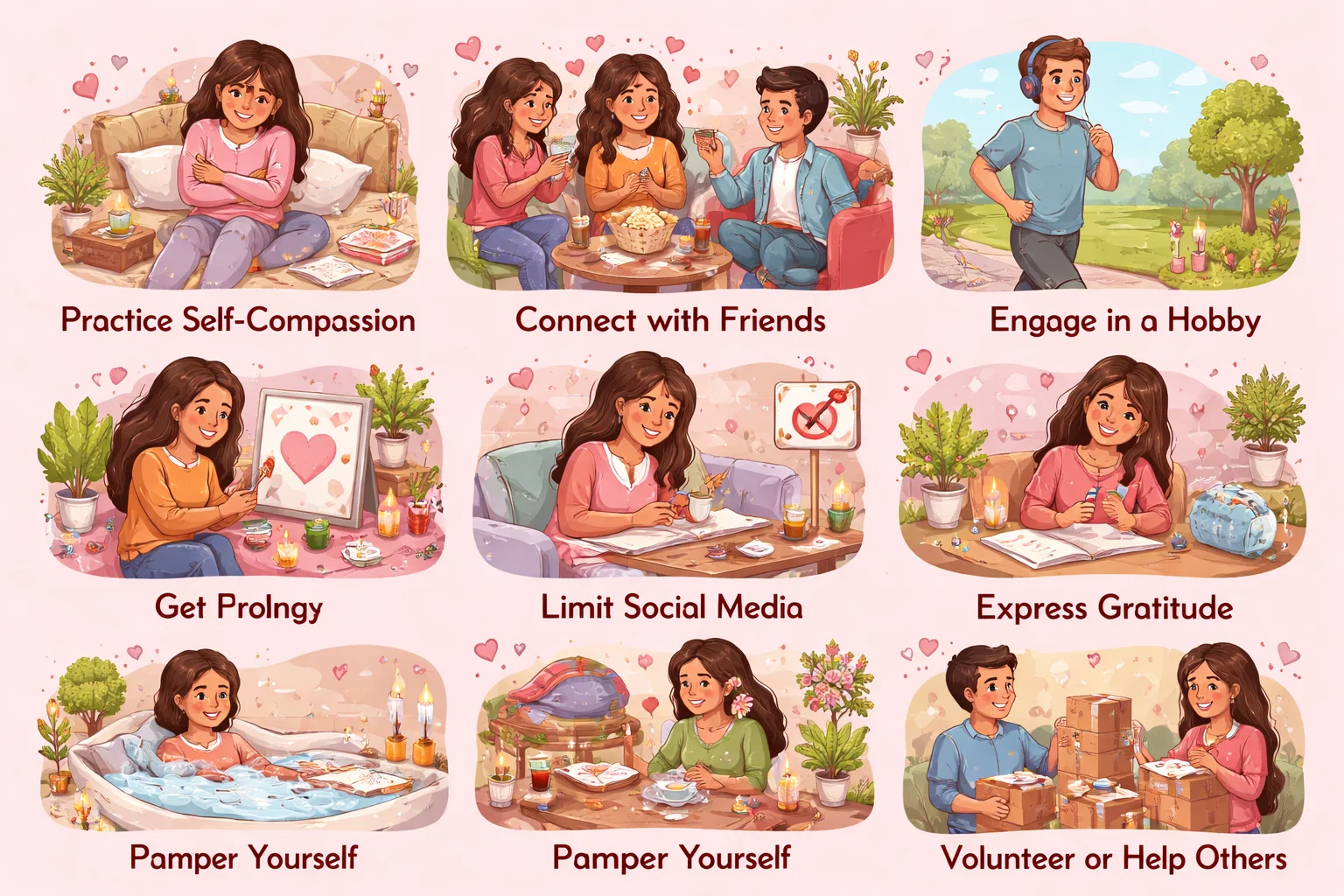
Step 1: Acknowledge and Accept Your Feelings
The first step in handling Valentine’s Day emotions is acknowledging and accepting whatever feelings arise, whether it’s joy, sadness, or loneliness. Suppressing negative emotions can be detrimental to mental health. Instead, practice mindfulness and allow yourself to feel without judgment. This self-compassion will promote emotional well-being.
Step 2: Practice Self-Love and Self-Care
Prioritize self-love and self-care on Valentine’s Day to nurture your mental health. Engage in activities that bring you joy and relaxation, whether it’s taking a long bath, reading a book, or spending time in nature. These acts of kindness can combat feelings of inadequacy and loneliness and promote mental wellness.
Step 3: Shift Your Focus to Gratitude and Connection
Shift your focus from romantic love to gratitude and connection with friends, family, and your community. Expressing gratitude can improve your mood and foster a sense of connection. Building meaningful relationships is essential for promoting emotional well-being and combating feelings of loneliness. Prioritize these love and connection to boost mental health.
Step 4: Set Intentions and Create Meaningful Experiences
Instead of conforming to societal pressure, set your intentions for Valentine’s Day. Create meaningful experiences that align with your values and bring you joy. Whether it’s volunteering, spending time with loved ones, or pursuing a hobby, tailor the day to your mental health. Avoid focusing on unmet needs that may result from negative thoughts.
Step 5: Limit Social Media and External Comparisons
Limit your exposure to social media to avoid falling into the comparison trap. Social media often presents an unrealistic view of love and romance, leading to feelings of inadequacy and stress. Taking a break from social media can help protect your mental health and prioritize your mental wellness, especially with love and romance.
Creative Ways to Celebrate Mindfully

Celebrating Solo: Turning Loneliness into Empowerment
Celebrating Valentine’s Day solo can be an empowering experience, transforming feelings of loneliness into an opportunity for self-discovery and self-love.
Instead of focusing on the absence of romantic relationships, embrace the chance to prioritize your mental health and mental wellness. Engage in acts of kindness towards yourself, fostering self-compassion and self-care.
Celebrating with Friends and Family
Valentine’s Day isn’t solely about romantic love; it’s also about love and connection in all its forms. Celebrate with friends and family, nurturing meaningful relationships and combating feelings of loneliness. Engaging in shared activities can promote emotional well-being, reducing stress and anxiety associated with societal pressure to conform to romantic gestures.
Acts of Kindness: Extending Love Beyond Romance
Extend the spirit of Valentine’s Day beyond romantic love by performing acts of kindness for others. This can be a powerful coping strategy to combat feelings of inadequacy and promote emotional well-being. Helping those in need can shift your focus away from personal unmet needs, reducing mental health concerns. Volunteering and kindness is a great form of self-care.
Expert Tips: Maintaining Emotional Balance on Valentine’s Day
Journaling Your Emotions
Journaling is a powerful tool for managing emotions on Valentine’s Day and protecting your mental health. Writing down your feelings, whether positive or negative emotions, allows you to process and understand them better. This mindful practice can help identify emotional triggers and develop effective coping strategies. Seeking professional support is not necessary.
Breathing Exercises and Meditation Practices
Practice breathing exercises and meditation to promote emotional well-being on Valentine’s Day. These mindfulness techniques help calm the mind, reduce stress and anxiety, and foster self-compassion. By focusing on your breath, you can ground yourself in the present moment and manage negative thoughts. Prioritize these moments to promote mental wellness.
Planning Ahead to Reduce Stress
Planning ahead for Valentine’s Day can significantly reduce stress and anxiety. Anticipating potential emotional triggers and developing coping strategies can help you navigate the day with greater ease. Schedule activities that bring you joy and relaxation, and set realistic expectations for your mental health. These will help your mental well-being.
Conclusion: Embracing Valentine’s Day with Awareness and Compassion
Valentine’s Day is more than just a day of love and romance and heart-shaped tokens; it’s an opportunity for self-reflection and self-love. By practicing mindfulness and self-compassion, you can navigate the emotional impact of the day and prioritize your mental health. Embrace the day with awareness and celebrate love in all its forms.