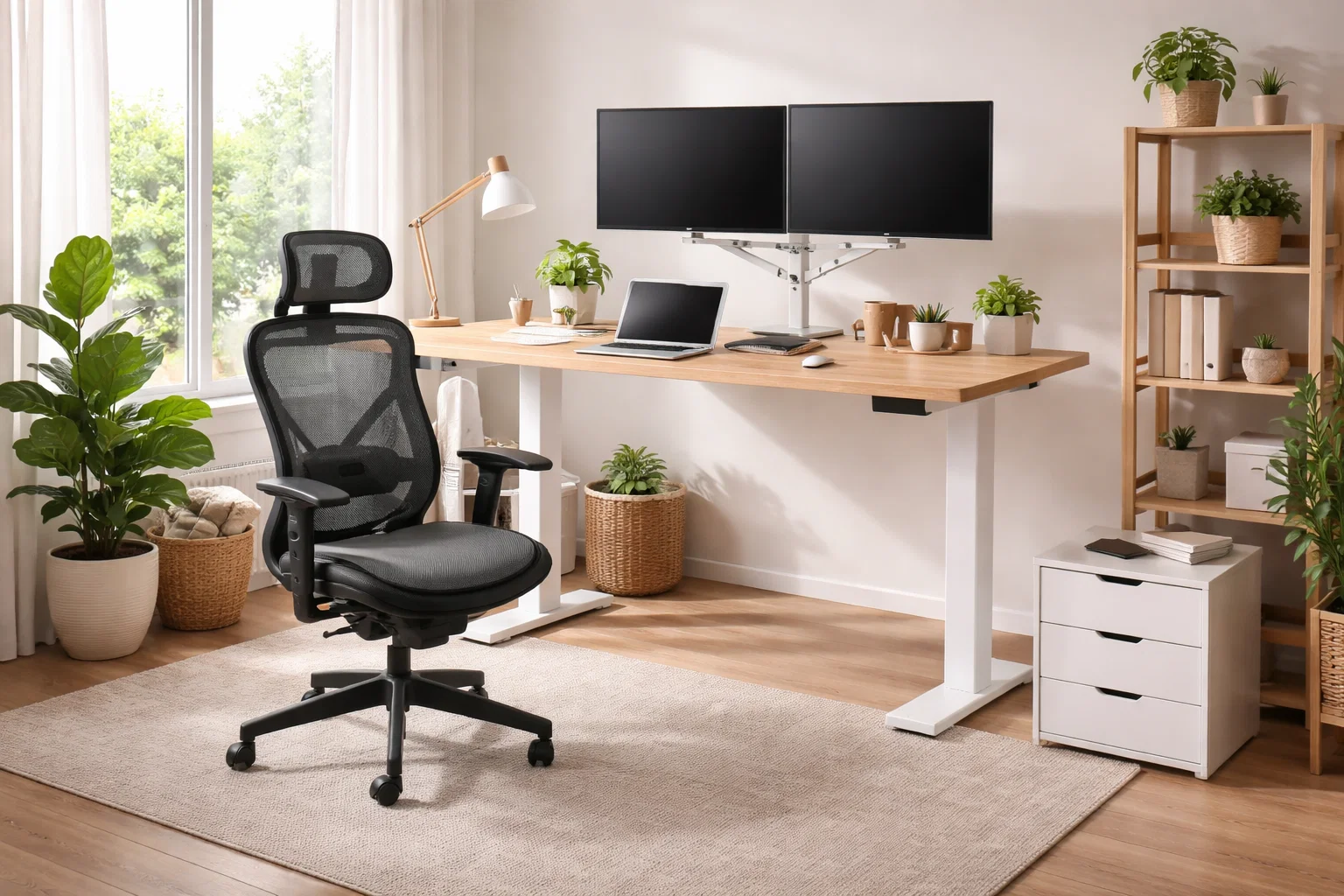
A few years ago, purchasing an ergonomic office chair was often viewed as a discretionary expense. Today, it has become a practical requirement. Remote work is no longer a temporary adjustment. Hybrid schedules continue to define how many people work, and long hours at a desk are now part of everyday life. As a result, more buyers are turning to reliable alternatives such as refurbished office furniture from Logix Shop which offers a thoughtful balance between comfort, build quality, and cost.
The challenge is straightforward. High-quality ergonomic furniture comes with a high price tag. New premium chairs can cost as much as a monthly rent payment in some cities. Meanwhile, lower-priced options often fall short, delivering limited support, reduced durability, and noticeable wear in a short time.
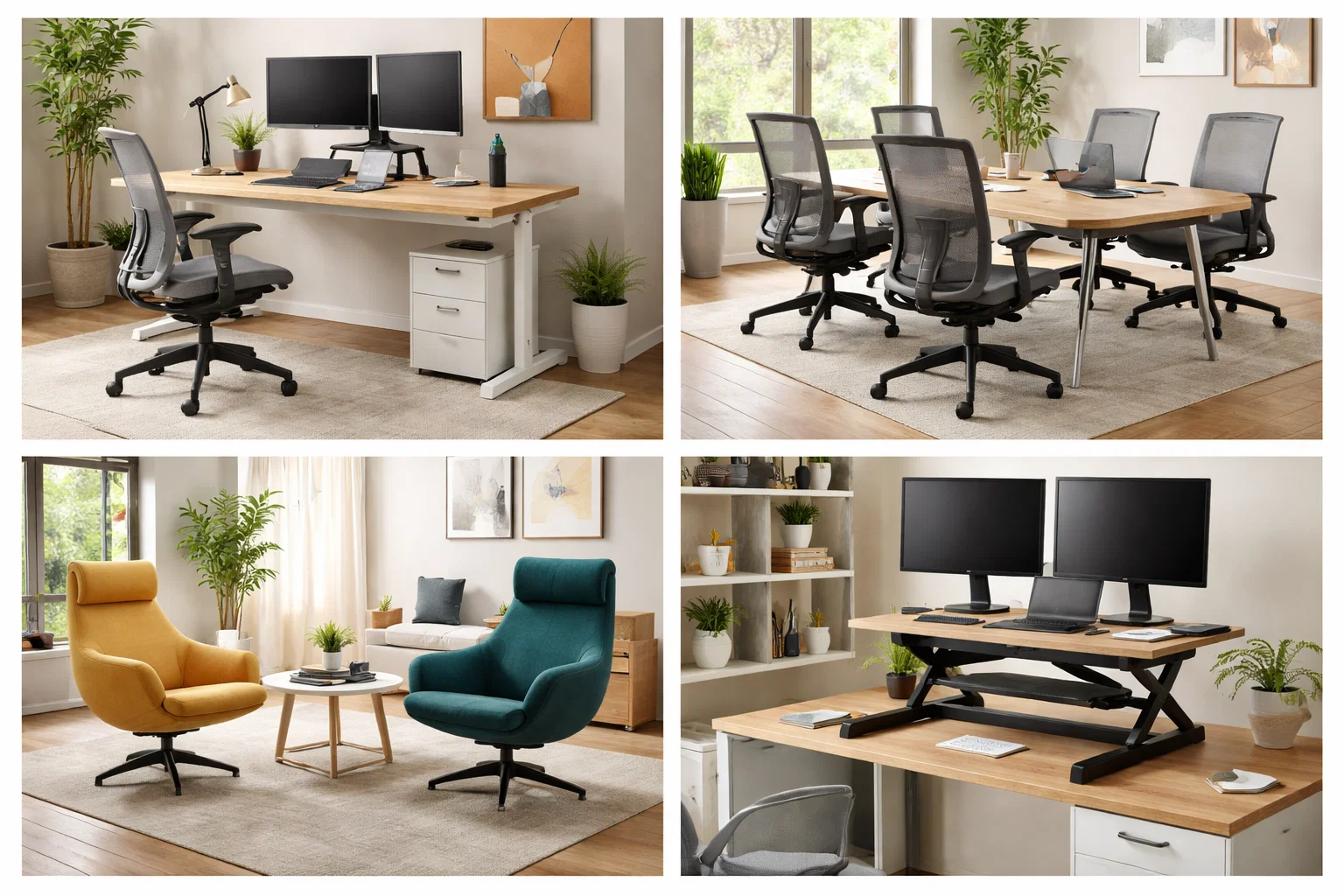
These realities have created a growing gap between what workers need and what many budgets can support—a gap that helps explain why the conversation around ergonomic value has begun to shift.
That tension has pushed many buyers to look for a smarter middle ground. And that’s where refurbished ergonomic furniture enters the picture. Not as a compromise. As a calculated upgrade.
This article explains why refurbished ergonomic furniture stands out as one of the best value decisions you can make in 2026. We’ll look at health, comfort, cost, durability, and sustainability. Along the way, we’ll separate facts from assumptions and show how premium seating can be accessible without premium pricing.
The Cost–Comfort Problem Facing Modern Workspaces

Why ergonomic furniture is no longer optional
Work has changed faster than furniture buying habits. Dining tables turned into desks overnight. Kitchen chairs became office seating. Backs, necks, and shoulders paid the price.
Studies continue to show that ergonomic environments matter. According to research summarized by the Human Factors and Ergonomics Society, workplaces that adopt ergonomic solutions report productivity increases of up to 15% due to reduced discomfort and fatigue.
That number isn’t surprising if you’ve ever tried to concentrate while shifting in a chair that doesn’t support your spine. Comfort isn’t a perk. It’s a performance factor.
The hidden cost of “cheap” office chairs
Low-cost chairs look appealing at first glance. The price is right. The photos are polished. The product description sounds convincing.
Then reality sets in.
- Lumbar support is fixed or nonexistent
- Armrests don’t align with desk height
- Padding compresses after a few months
- Adjustments loosen over time
These issues aren’t just annoying. They add up. One study cited by the American Journal of Public Health reported a 67% reduction in absenteeism related to musculoskeletal disorders after ergonomic improvements were introduced.
Cheap seating often leads to replacement. Replacement leads to more spending. The “deal” quietly becomes a cycle.
What “Refurbished Ergonomic Furniture” Really Means
Refurbished vs used vs new: clearing the confusion
This is where many buyers hesitate. The word “refurbished” gets lumped in with “used.” That assumption stops people from exploring an option that could actually suit them better.
Here’s the difference:
| Category | What It Means |
|---|---|
| Used | Sold as-is, minimal inspection |
| Refurbished | Professionally restored and tested |
| New | Factory-fresh, full retail price |
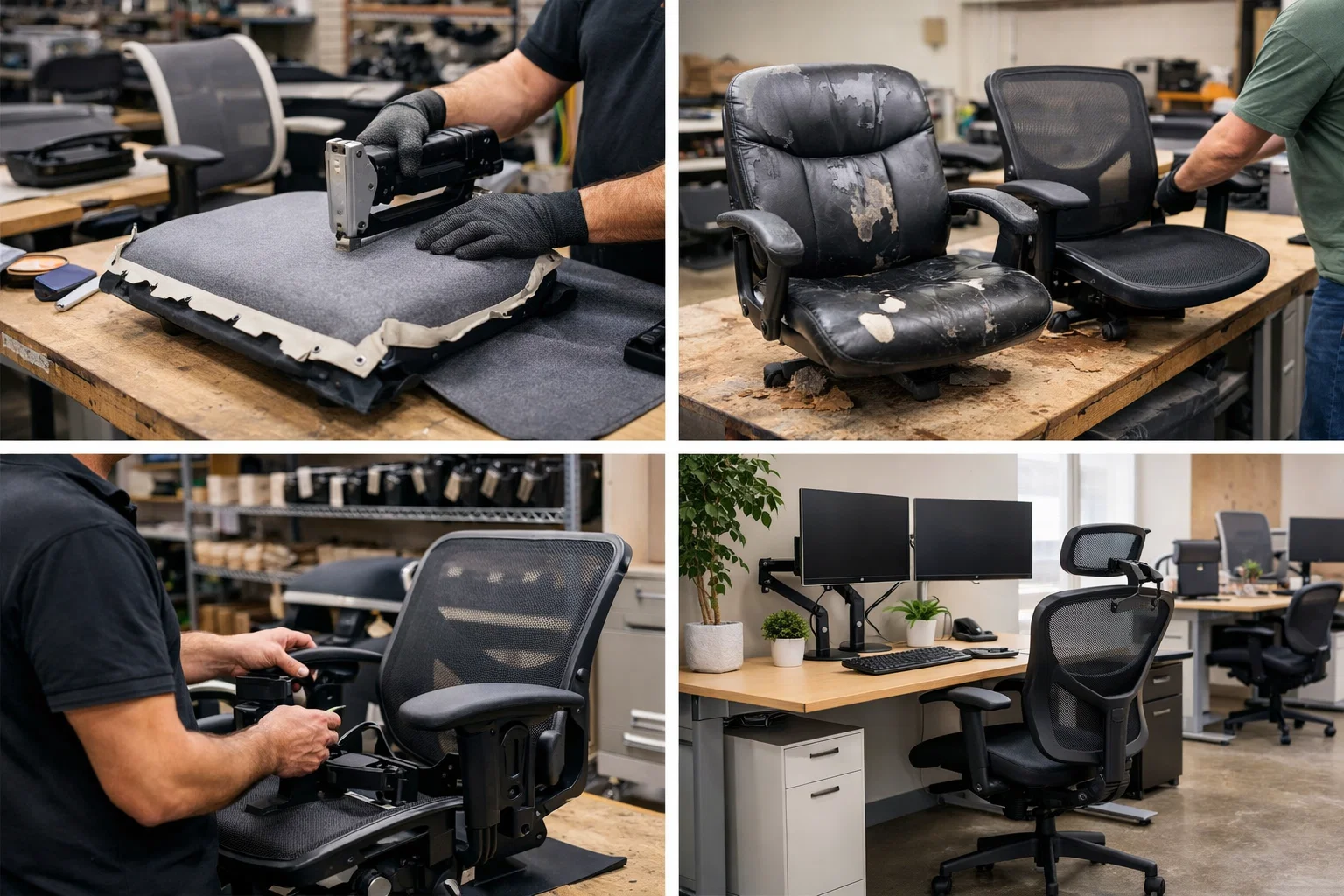
Refurbished ergonomic furniture sits in a distinct category. It’s inspected, repaired, and restored to meet performance standards. It’s not pulled from a garage sale and dusted off.
Inside a professional refurbishment process
A quality refurbishment process typically includes:
- Structural inspection of frames and mechanisms
- Replacement of worn components
- Testing of adjustment systems
- Cleaning and cosmetic restoration
- Final performance checks
This matters because premium ergonomic chairs are built for repair. Their parts are modular. Their mechanisms are designed to be serviced. That’s what allows refurbishment to work so well.
Why Refurbished Ergonomic Furniture Delivers Better Value
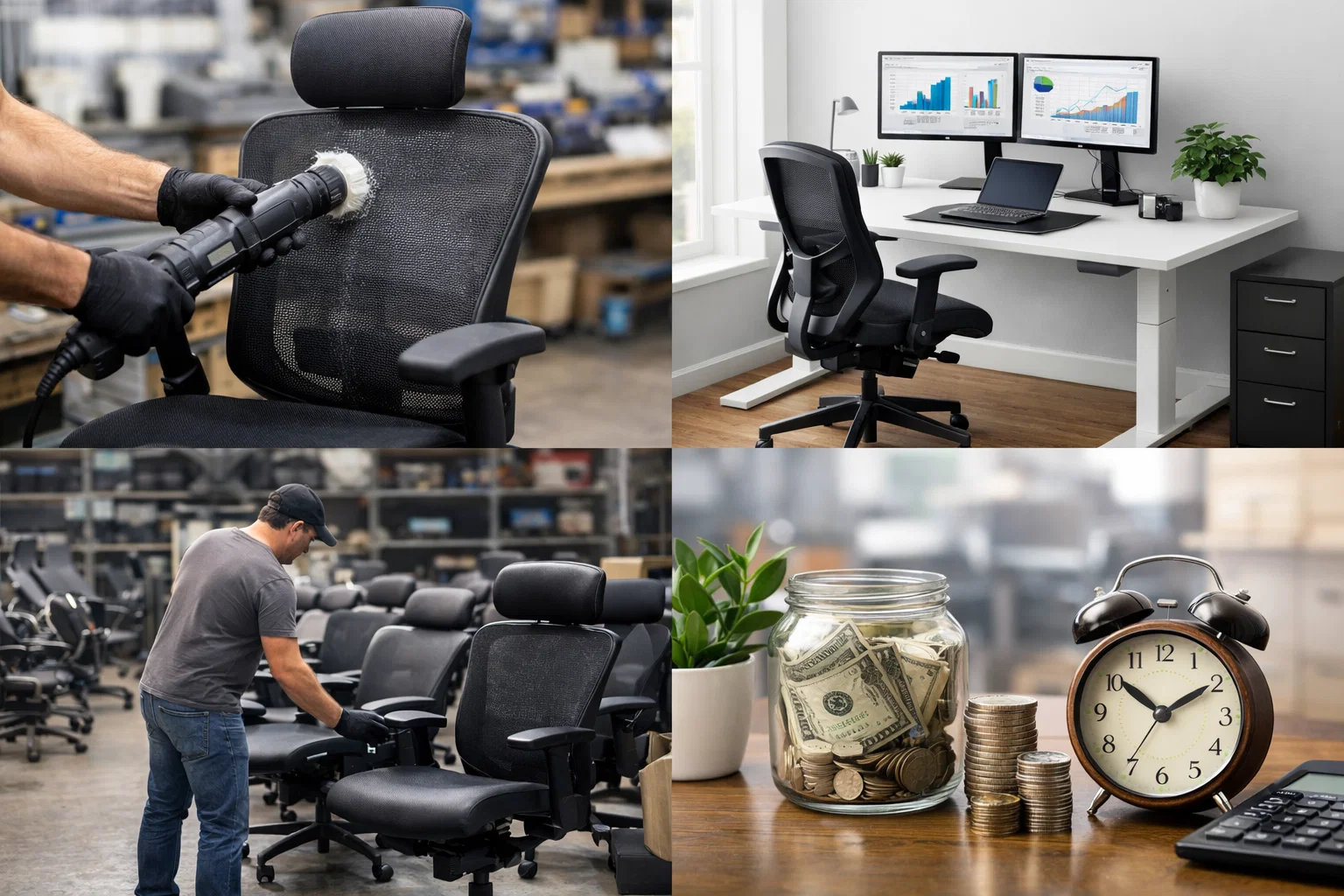
Premium design without the premium markup
High-end ergonomic chairs are expensive for a reason. They’re designed using biomechanical research. They’re tested for long-term use. They’re built with materials that last.
What buyers pay for at retail includes:
- Research and development
- Brand positioning
- Distribution layers
- Showroom overhead
Refurbishment strips away those layers while preserving the engineering.
The global office furniture market reflects this shift in buyer thinking. According to Allied Market Research, the market is projected to grow from $60 billion in 2023 to $117 billion by 2033, driven in part by demand for ergonomic seating.
Value-focused buyers are no longer equating “new” with “better.”
Long-term durability and performance
Premium ergonomic chairs are built for commercial environments. That means:
- Daily use
- Long sitting hours
- Multiple users over time
When refurbished properly, these chairs often outlast new budget models by years.
Seating alone accounted for about 33% of office furniture revenue in 2024, according to Mordor Intelligence.
That dominance exists because seating affects people directly, every single day.
Comfort features that actually matter
Refurbished ergonomic chairs often include:
- Adjustable lumbar support
- Seat depth adjustment
- Multi-directional armrests
- Responsive tilt mechanisms
- Breathable materials
These aren’t extras. They’re essentials for posture and comfort. Studies show ergonomic interventions can prevent physical discomfort for up to 95% of workers.
The Sustainability Advantage More Buyers Are Prioritizing
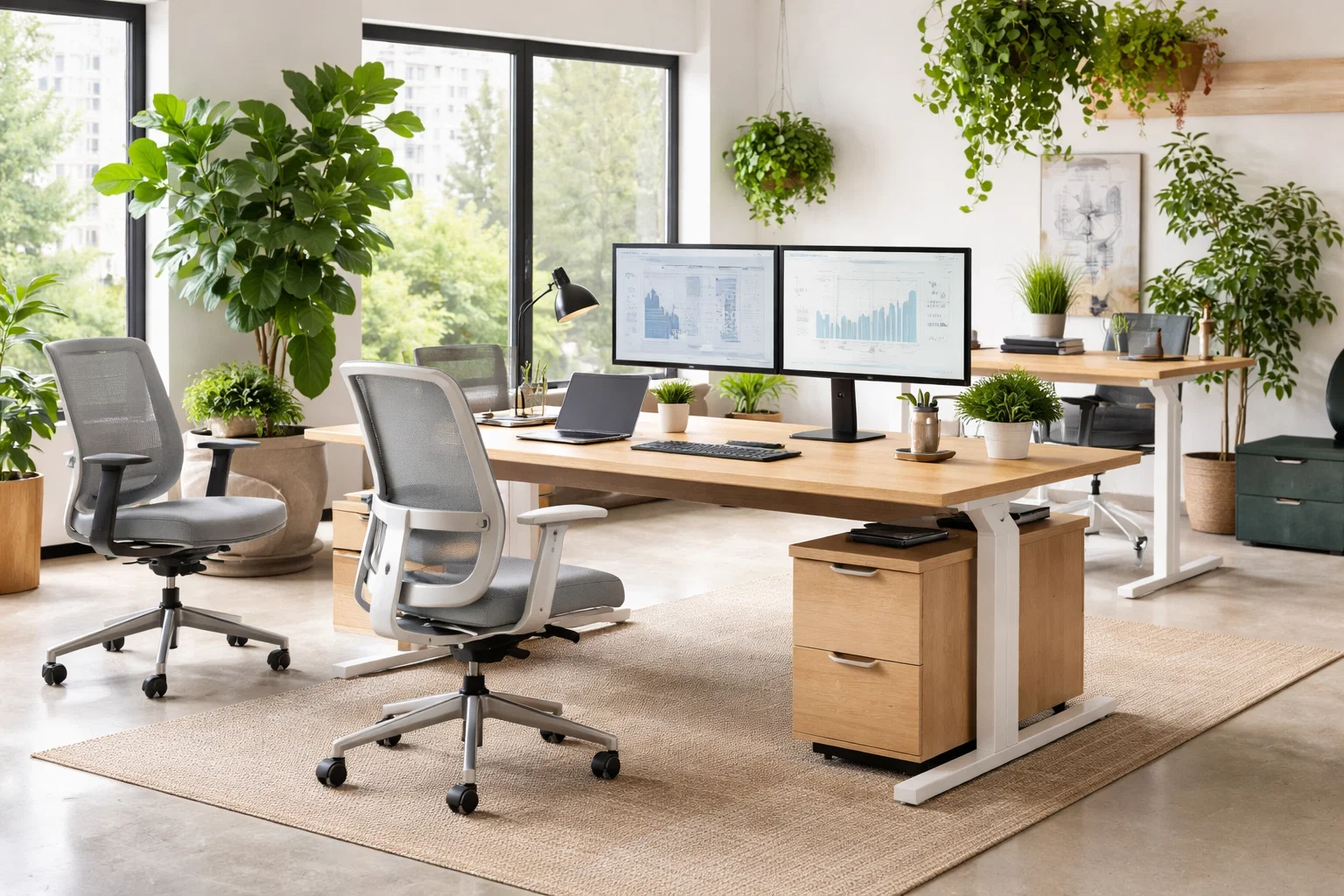
Reducing office furniture waste
Office furniture has a waste problem. Chairs are replaced long before their frames fail. Upholstery wears out. Small parts break. Entire units get discarded.
Refurbishment interrupts that pattern.
Research published in the National Library of Medicine confirms that ergonomic interventions reduce musculoskeletal pain and physical strain.
Extending furniture life doesn’t just help budgets. It reduces landfill impact.
Supporting the circular economy without sacrificing quality
Refurbished ergonomic furniture supports reuse at scale. It keeps valuable materials in circulation. It rewards durable design.
For sustainability-minded buyers, this approach aligns comfort with responsibility. No trade-offs required.
Why High-End Ergonomic Brands Are Ideal for Refurbishment
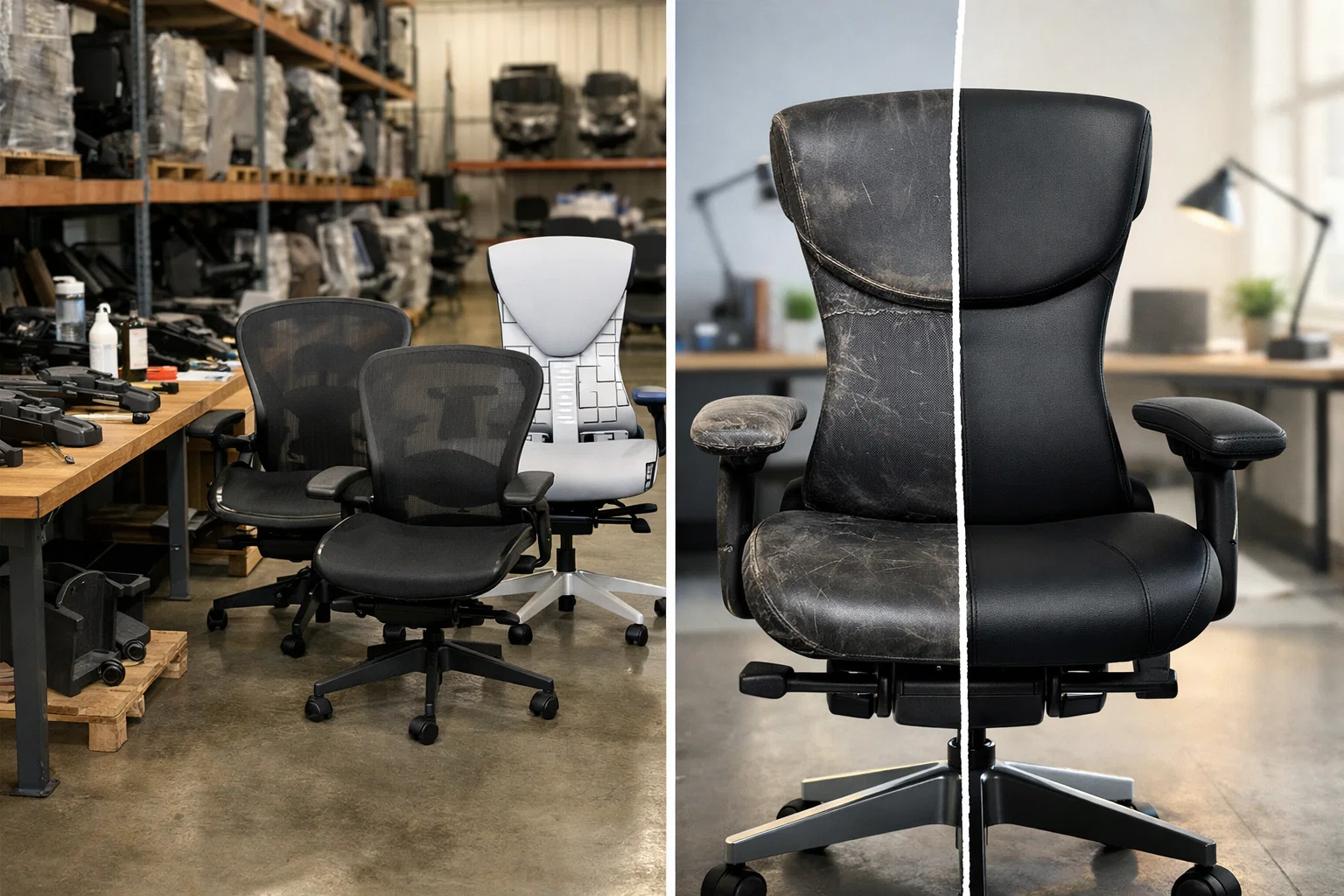
Built to be repaired, upgraded, and reused
Brands like Herman Miller, Steelcase, and Haworth design seating differently. Their chairs use modular components. Parts are replaceable. Mechanisms are serviceable.
That design philosophy makes refurbishment practical.
What makes these chairs different from mass-market alternatives
Key differences include:
- Commercial-grade materials
- Extensive ergonomic research
- Long testing cycles
- Consistent manufacturing standards
This is why refurbished versions maintain performance.
Real-World Example: How Refurbished Ergonomics Is Done Right
Turning premium seating into accessible solutions
This is where Office Logix Shop illustrate the concept clearly. Rather than pushing new luxury pricing, they focus on professionally refurbished ergonomic seating from trusted brands.
Their approach centers on:
- Restored Herman Miller, Steelcase, and Haworth chairs
- Quality checks and functional testing
- Ergonomic upgrades like headrests
- Options that fit both home and office settings
They serve as an example of how refurbished furniture can balance performance and affordability.
What sets a reliable refurbisher apart
When evaluating refurbishers, look for:
- Clear sourcing information
- Transparency about restoration steps
- Functional testing details
- Support after purchase
These signals matter more than marketing language.
Who Benefits Most From Refurbished Ergonomic Furniture
Remote and hybrid professionals
Comfort matters when your commute is a few steps to a desk. Refurbished ergonomic chairs help reduce fatigue during long workdays.
Startups and small businesses
Budgets are real. So are expectations. Refurbished seating allows teams to look professional while controlling costs.
Health-conscious and value-driven buyers
People who understand posture tend to prioritize adjustability and support. Refurbished premium chairs meet those needs without inflated pricing.
How to Evaluate Refurbished Ergonomic Furniture Before Buying
Key questions to ask
- What components were replaced?
- Are all adjustments fully functional?
- Was the chair tested under load?
Red flags to avoid
- Vague descriptions
- No mention of inspection
- Lack of brand clarity
A reliable seller explains the process clearly.
Refurbished vs New in 2026 — Which Makes More Sense?
| Factor | New Budget Chair | Refurbished Premium Chair |
|---|---|---|
| Comfort | Limited | Advanced |
| Lifespan | Short | Long |
| Adjustability | Basic | Extensive |
| Cost Over Time | Higher | Lower |
| Environmental Impact | Higher | Lower |
In many cases, refurbished simply makes more sense.
The Future of Ergonomic Furniture Buying
Why refurbished demand continues to grow
Hybrid work isn’t fading. According to Future Market Insights, ergonomic furniture demand continues to rise alongside home office adoption.
Buyers are learning to question price tags. They’re asking better questions.
What this shift means for modern workspaces
Workspaces are becoming smarter. Value is defined by performance, not shine.
Final Thoughts — Rethinking Value in Ergonomic Furniture
Refurbished ergonomic furniture challenges outdated assumptions. It proves that comfort doesn’t require overspending. It shows that sustainability and quality can align.
In 2026, value isn’t about buying new. It’s about buying well.
And sometimes, the smartest seat in the room already has a story behind it.