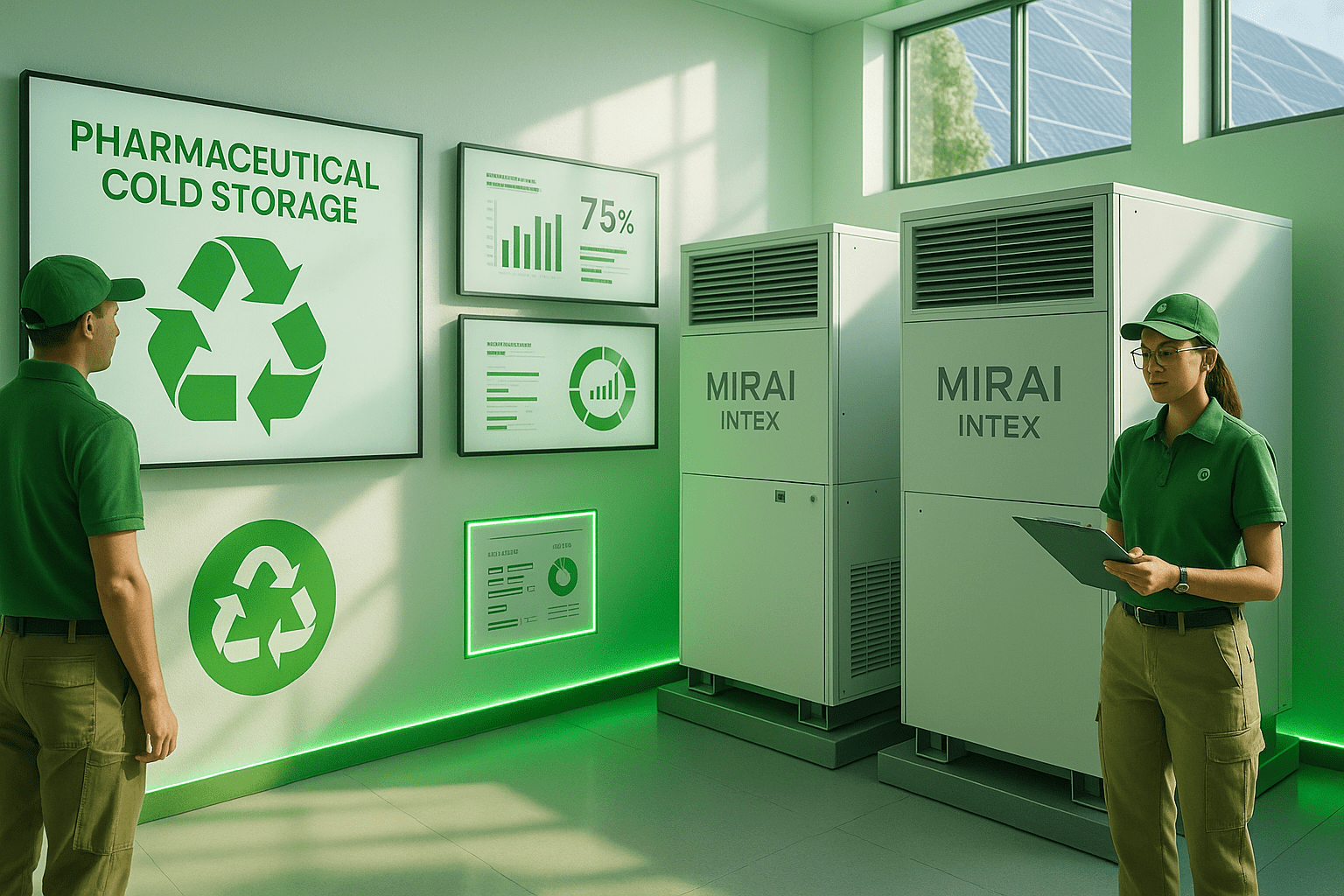
In the industrial cooling space, significant change is underway—quite literally. HFC-based systems, once considered the gold standard, are steadily losing traction. And the reason goes beyond tightening environmental policies. These systems are being outpaced by safer, cleaner, and more reliable technologies that offer both performance and peace of mind. If you’re looking to understand all about HFC refrigerants and how Mirai Intex is offering a fresh alternative that doesn’t compromise on sustainability or functionality, you’re in the right place.
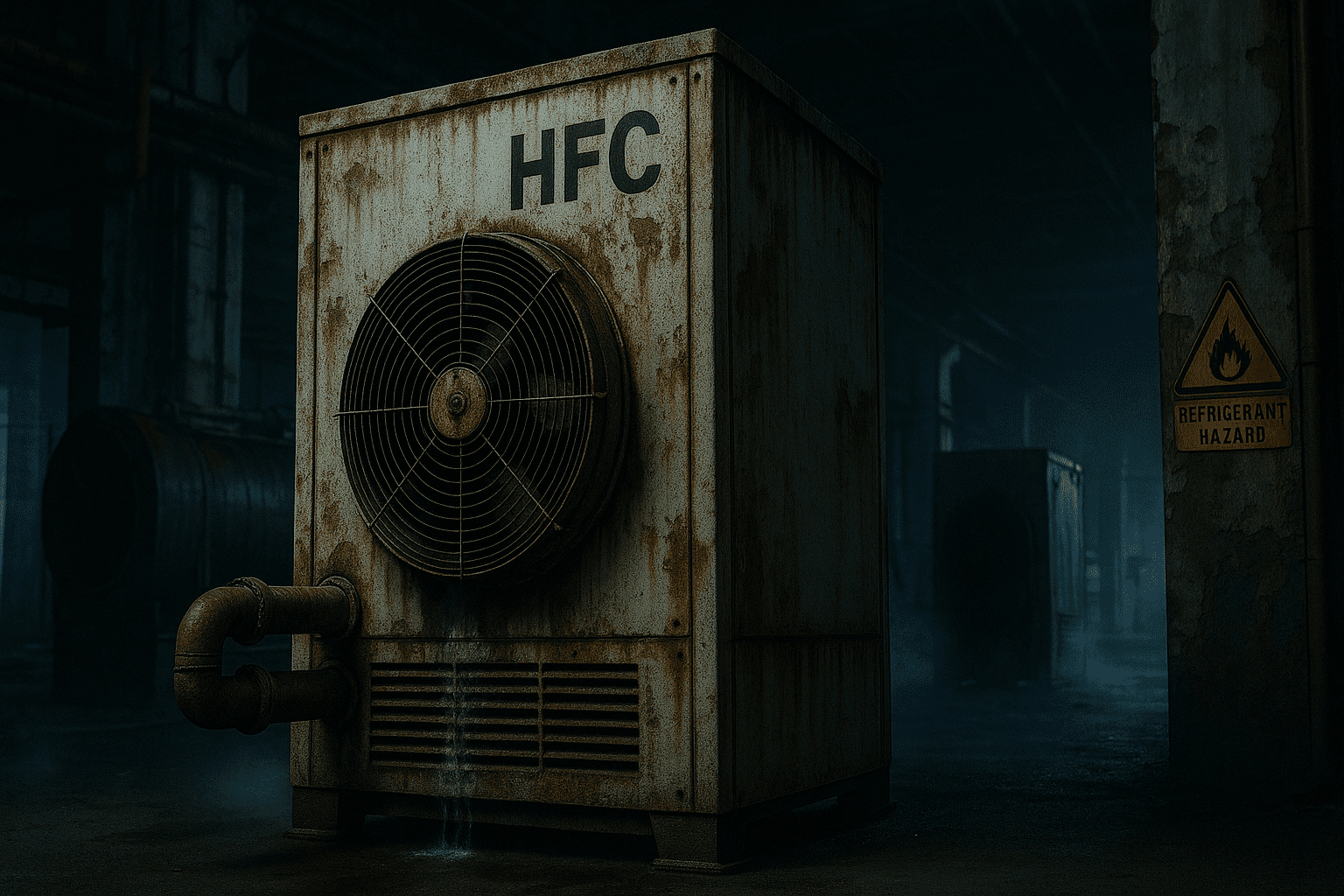
HFC-based systems, once the pride of industrial cooling, are showing their age. And let’s face it—when a solution contributes heavily to climate change and still struggles to perform at extreme lows, maybe it’s time to rethink things.
The shift away from HFCs isn’t just regulatory. It’s practical. It’s cost-driven. It’s about future-proofing operations in an industry where performance and compliance go hand-in-hand. Mirai Intex isn’t just building machines; it’s reshaping what ultra-low temperature (ULT) cooling looks like for industries that can’t afford to cut corners—pharmaceuticals, biotech, cryogenics, and beyond.
So why are HFCs on their way out? What does Mirai Intex offer that no one else does? And how does air—yes, regular atmospheric air—end up as the hero of this story?
Let’s unpack it.
Why HFCs Are Falling Out of Favor Globally
The Environmental Toll of HFC-Based Systems
Hydrofluorocarbons (HFCs) are synthetic refrigerants that were developed to replace ozone-depleting substances like CFCs and HCFCs. While HFCs don’t harm the ozone layer, they’re far from innocent.
In fact, their Global Warming Potential (GWP) is off the charts. Some HFCs trap hundreds to thousands of times more heat than CO2. For example, HFC-134a has a GWP of 1,430, and HFC-23 reaches an astronomical GWP of 14,800.
It gets worse. According to the U.S. Environmental Protection Agency, HFC emissions are expected to rise sharply, potentially making up 9% to 19% of total greenhouse gas emissions by 2050. That’s equivalent to adding more than a decade of current CO2 emissions to the atmosphere.
Legal & Regulatory Pressures
The writing’s on the wall. The Kigali Amendment to the Montreal Protocol has set a global roadmap to reduce HFC production and use by 85% by 2036. Countries like the U.S., Canada, and the EU are on board, rolling out strict regulations to hit those targets.
For example:
- The EU’s F-Gas Regulation includes steep fines and phase-out mandates.
- In the U.S., the American Innovation and Manufacturing Act (AIM Act) mirrors Kigali goals.
- Dozens of major manufacturers are under pressure to adopt low-GWP or natural alternatives.
Companies dragging their feet face not just compliance headaches but potential supply chain disruptions and market losses.

HFCs and Ultra-Low Temperature Limits
Here’s something most brochures don’t mention: HFCs struggle at extremely low temperatures.
At cryogenic levels (−80°C and below), conventional HFC systems:
- Become inefficient and unreliable
- Require complex oil management
- Suffer from refrigerant leaks and component wear
Industries relying on stable, long-term ULT performance—pharma, medical storage, scientific research—can’t afford those risks.
The bottom line? HFCs aren’t just environmentally harmful. They’re outdated technology for a modern, climate-conscious world.
Inside Mirai Intex’s Disruptive Cooling Technology
What Makes Mirai Intex Different
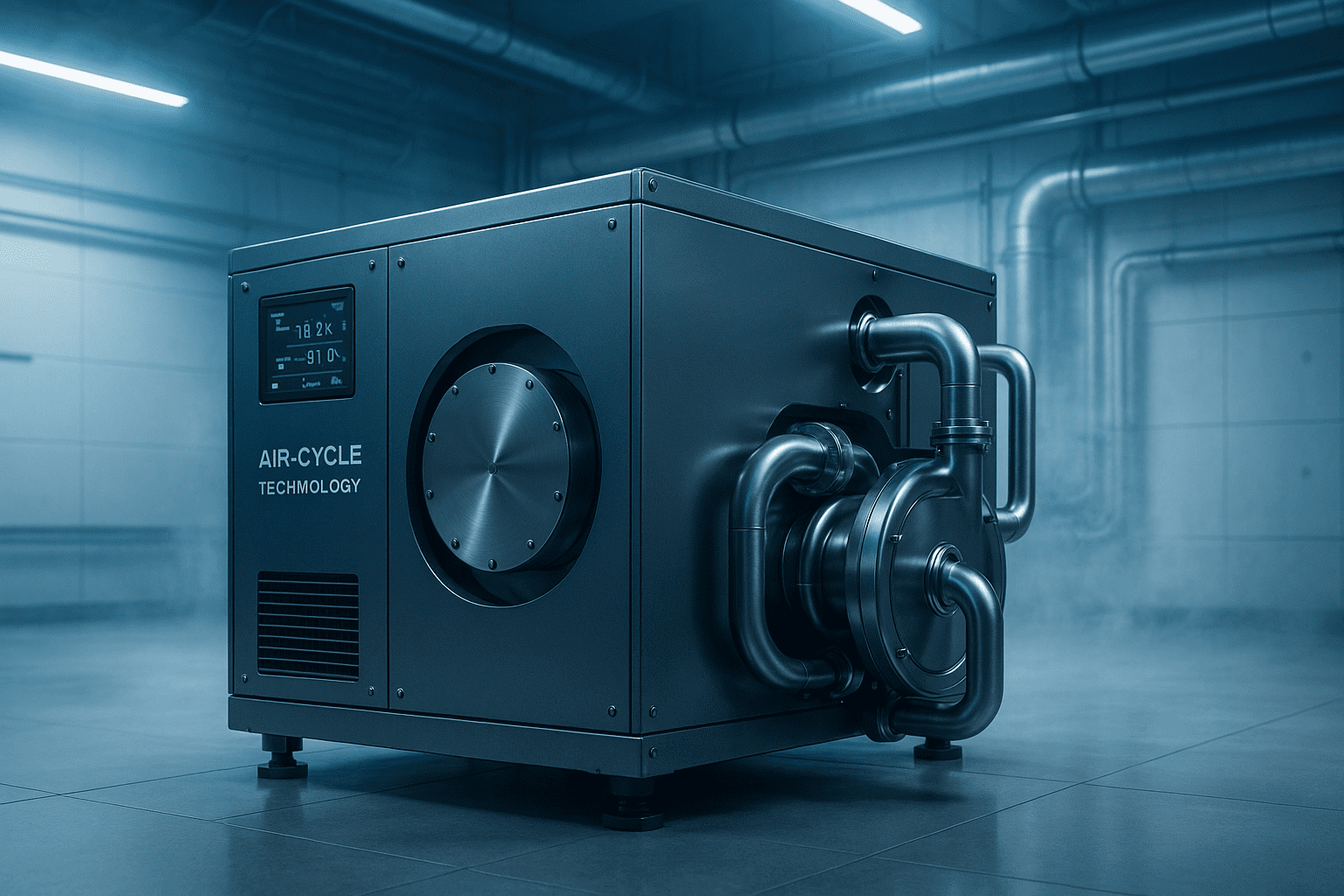
Most cooling systems work by compressing synthetic refrigerants. Mirai Intex flips the script. Their machines run entirely on air.
Here’s what that means:
- No fluorinated gases. Zero GWP. Zero ODP.
- No oils. Their compressors are dry and frictionless.
- No risk of refrigerant leaks, because there’s no synthetic refrigerant to leak.
The secret sauce is an air cycle machine (ACM), the same tech used in aircraft environmental control systems. Instead of vapor-compression, it uses expansion and compression of atmospheric air to achieve cooling.
And the results are eye-opening:
- Temperatures down to −120°C or even −130°C
- Continuous operation without the risk of chemical breakdown
- Compact and scalable modules for diverse industry applications
It’s like replacing a gas-guzzling generator with a wind turbine—same function, wildly different footprint.
Efficiency and Environmental Impact
Let’s get real: Sustainability only matters if it doesn’t kill your margins.
Mirai’s tech isn’t just eco-friendly. It’s cost-effective over the long haul:
- No refrigerant refill or disposal costs
- Fewer maintenance cycles due to oil-free operation
- Lower energy use per cooling cycle in stable operating ranges
Most importantly, it eliminates a major pain point for operators: compliance risk.
Technical Highlights
| Feature | Traditional HFC Cooling | Mirai Intex Air-Cycle |
|---|---|---|
| Refrigerant | HFC-134a, HFC-23, HFO blends | Ambient Air / Nitrogen |
| GWP | High (1000–14,000+) | Zero |
| Maintenance Needs | High (oil, leak checks) | Low (oil-free, sealed units) |
| Operating Temp Range | Limited below -80°C | Stable to -130°C |
| Environmental Regulations Risk | High | None |
It’s not magic. It’s smart engineering.

The Market Demand for Natural Refrigerants Is Rising Fast
Stats That Prove the Shift
The market isn’t waiting around for change. It’s already happening:
- The global natural refrigerants market is projected to grow from \$1.52B in 2024 to \$2.29B by 2029, a CAGR of 8.3%.
- The ULT (Ultra-Low Temperature) refrigeration sector is forecasted to hit \$1.05B by 2025 and continue growing steadily.
- According to Greenpeace, over 60% of HFC emissions come from routine leaks. With no fluorinated gases, Mirai systems sidestep that risk completely.
- 75% of cooling and refrigeration sectors could shift to natural refrigerants with existing technology.
The appetite is real. The technology is ready.
Who’s Making the Switch?
Mirai Intex clients include:
- Pharmaceutical cold chain operators needing “set it and forget it” reliability.
- Biotech labs that can’t risk refrigerant contamination.
- Cryogenic facilities pushing below −120°C.
- Environmental compliance teams building low-carbon supply chains.
Whether you’re storing insulin or preserving tissue samples, stability and cleanliness aren’t negotiable. Mirai’s air-based systems tick both boxes.
Mirai Intex vs Traditional HFC-Based Cooling: A Side-by-Side Snapshot
Let’s lay it all out:
| Key Criteria | HFC-Based Systems | Mirai Intex Solutions |
|---|---|---|
| Cooling Method | Vapor-compression | Air-cycle expansion |
| GWP | 1,000+ to 14,000+ | Zero |
| Compressor Type | Oil-lubricated | Oil-free |
| Risk of Leak | High | None |
| Maintenance Schedule | Frequent (filters, oil, leaks) | Minimal |
| Regulatory Compliance | Tightening | Fully exempt |
| Suitability for ULT | Limited below -80°C | Reliable to -130°C |
| Long-term Costs | Rising | Decreasing (low O\&M) |
The difference isn’t incremental. It’s fundamental.
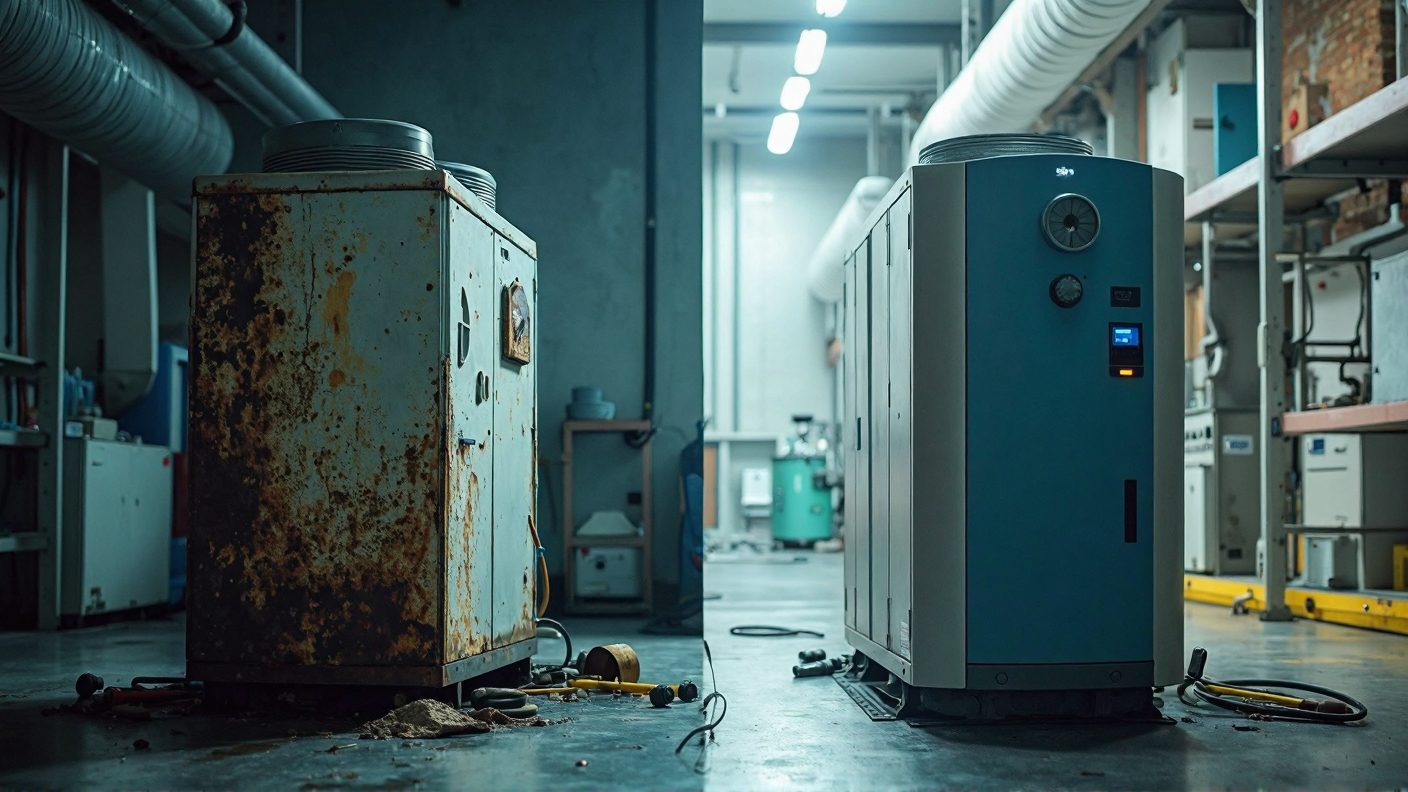
Why Forward-Thinking Companies Are Choosing Mirai Intex
Proof in the Field
A European biotech lab switched to Mirai systems in 2023. Their old HFC-based units were leaking every 18 months. Downtime was crushing. Since the upgrade, zero leak-related service calls. Zero refrigerant costs. And yes—a nice boost to their ESG score.
Another case? A pharma storage facility maintaining -110°C for vaccine production. They ran side-by-side trials of an HFC unit and a Mirai air-cycle machine. Power draw was nearly identical, but the Mirai system required 70% fewer interventions over six months.
Numbers don’t lie.
A Clean Step Toward the Circular Economy
- Fewer replaceable parts = longer equipment lifespan
- Air-based = zero refrigerant disposal or handling
- No chemical storage = safer working environments
It’s not just about the machines. It’s about smarter decisions at every level.
Still Wondering About Refrigerant Options?
If you’re still trying to make sense of the refrigerant alphabet soup—HFCs, HFOs, hydrocarbons—and how each one affects your operations, we’ve broken it down for you. Find out the differences in Mirai’s website covering everything from performance to environmental impact.
And if you’re ready to talk real solutions, check contact us page to explore how Mirai can help you transition to cleaner, future-proof cooling.
Get the facts. See how the technology stacks up.
Cooling the Planet Without Heating It
The cooling industry is facing a pivot moment. What worked in the past—HFCs, complex compressors, chemical-laden systems—no longer works for the planet, or for the companies that rely on stable cooling.
Mirai Intex isn’t just keeping up. It’s pushing ahead. Using air to achieve what synthetic refrigerants can’t. Cutting costs without cutting corners. And giving future-focused companies a way to stay cold while running clean.
The next generation of refrigeration isn’t coming.
It’s already here.
FAQs
What are natural refrigerants?
Natural refrigerants include substances like air, CO2, ammonia, and hydrocarbons. They’re found in nature and have zero or near-zero environmental impact.
How does Mirai’s air-cycle technology work?
It uses compressed air instead of synthetic refrigerants. The air is expanded through a turbine to produce ultra-low temperatures with no chemical phase change.
Is Mirai Intex technology certified?
Yes. Mirai systems meet international standards and are compliant with current and upcoming F-Gas and eco-design directives.
Is this technology suitable for existing infrastructure?
Mirai systems are modular and can often be integrated with existing setups, depending on your application.
Are operating costs higher?
Not at all. Over time, Mirai units typically reduce costs due to minimal maintenance and no refrigerant expenses.