A bathroom rug is more than just a decorative accessory. It adds warmth, comfort, color, and personality while providing a soft surface underfoot after a shower or bath. However, finding a rug that perfectly matches your bathroom’s style, colors, and available space can sometimes be challenging. This is where creative DIY bathroom rugs come in.
Making your own bathroom rug allows you to experiment with different materials, textures, shapes, and patterns while giving old household items a second life. Whether you love minimalist decorations, colorful bohemian designs, natural materials, or charming handmade accessories, there are plenty of exciting projects to explore.
The best part is that many DIY bath rugs can be made with affordable materials and basic crafting skills. From braided cotton ropes and colorful pom-poms to recycled towels and natural pebbles, these ideas can turn an ordinary bathroom into a more inviting and stylish space.
Let’s explore 10 creative DIY bathroom rugs that combine practicality, beautiful designs, and handmade charm.
Why Make Your Own Bathroom Rug?
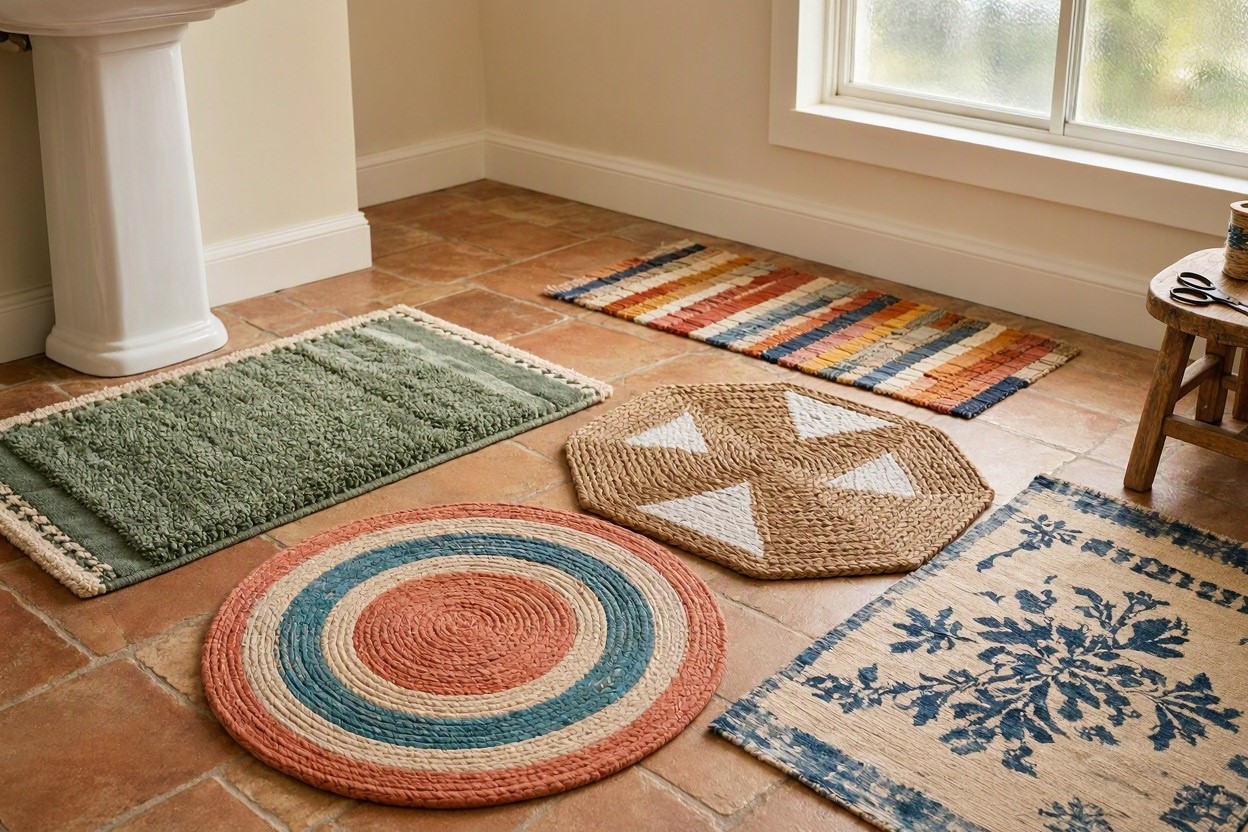
Creating a DIY bathroom rug offers several advantages beyond saving money. First, it gives you complete control over the design, allowing you to choose colors, dimensions, materials, and patterns that complement your bathroom decor.
It is also an excellent opportunity to recycle old towels, leftover fabrics, and unused craft supplies instead of throwing them away. This makes handmade rugs an appealing option for anyone interested in sustainable home decorating.
Another advantage is customization. You can create a small rug for a narrow bathroom, a large mat beside a bathtub, or an unusual decorative shape that is difficult to find in regular stores.
Most importantly, DIY projects allow you to create something unique that reflects your personal style.
10 Creative DIY Bathroom Rug Ideas
1. Braided Cotton Rope Bathroom Rug
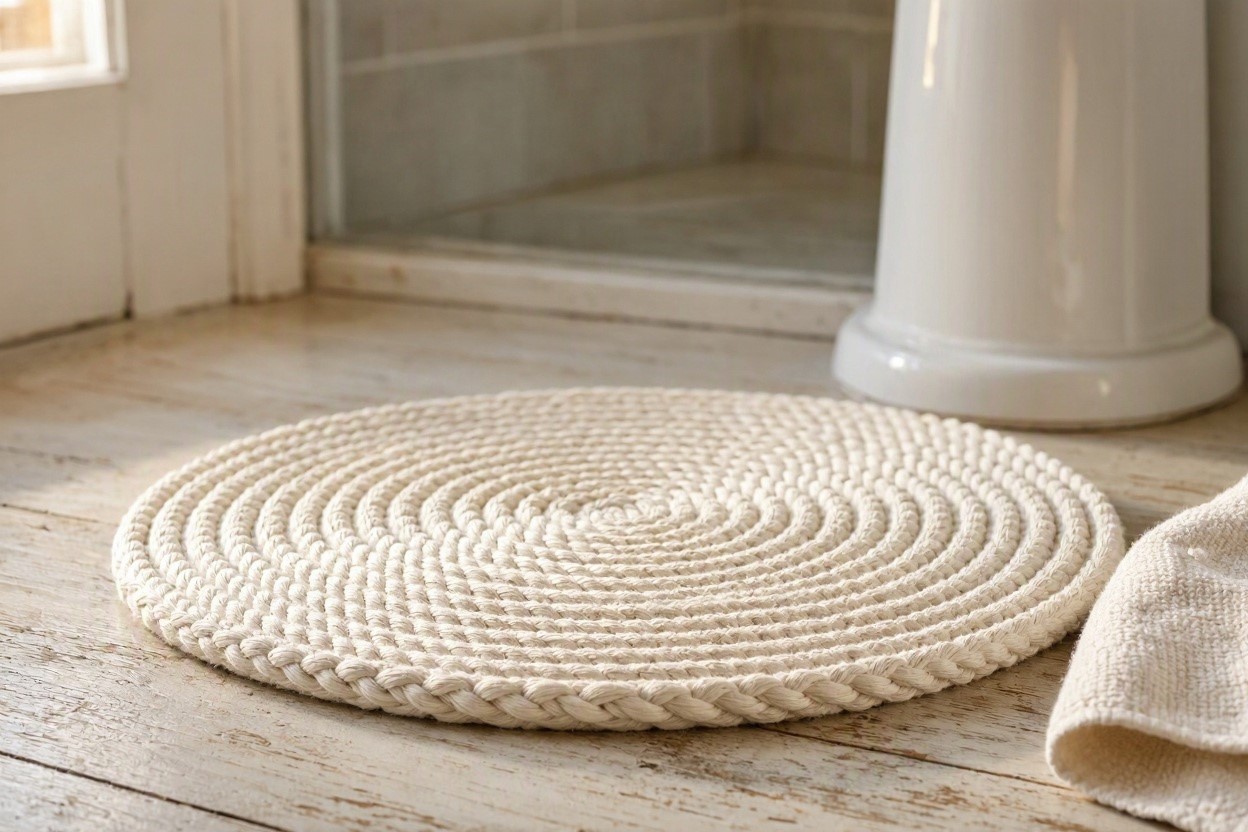
A braided cotton rope rug is a beautiful option for anyone who loves natural textures and timeless bathroom accessories. Its simple construction and soft appearance make it particularly suitable for farmhouse, Scandinavian, coastal, and minimalist interiors.
To make this rug, start with thick cotton rope and divide it into manageable sections. Braid the rope carefully, keeping the strands tight and consistent. Continue creating longer braided sections, then arrange them into a circular or oval shape. Sew the braids together securely to create a finished rug.
You can experiment with different colors by combining natural beige, cream, white, or soft gray cotton ropes. For a more decorative result, introduce occasional pastel sections or contrasting borders.
One of the biggest advantages of this design is its versatility. It works beautifully beside a bathtub, near a vanity, or in front of a bathroom sink.
Choose washable cotton rope and attach a suitable non-slip backing to help prevent movement on smooth bathroom floors.
2. Colorful Pom-Pom Bath Rug
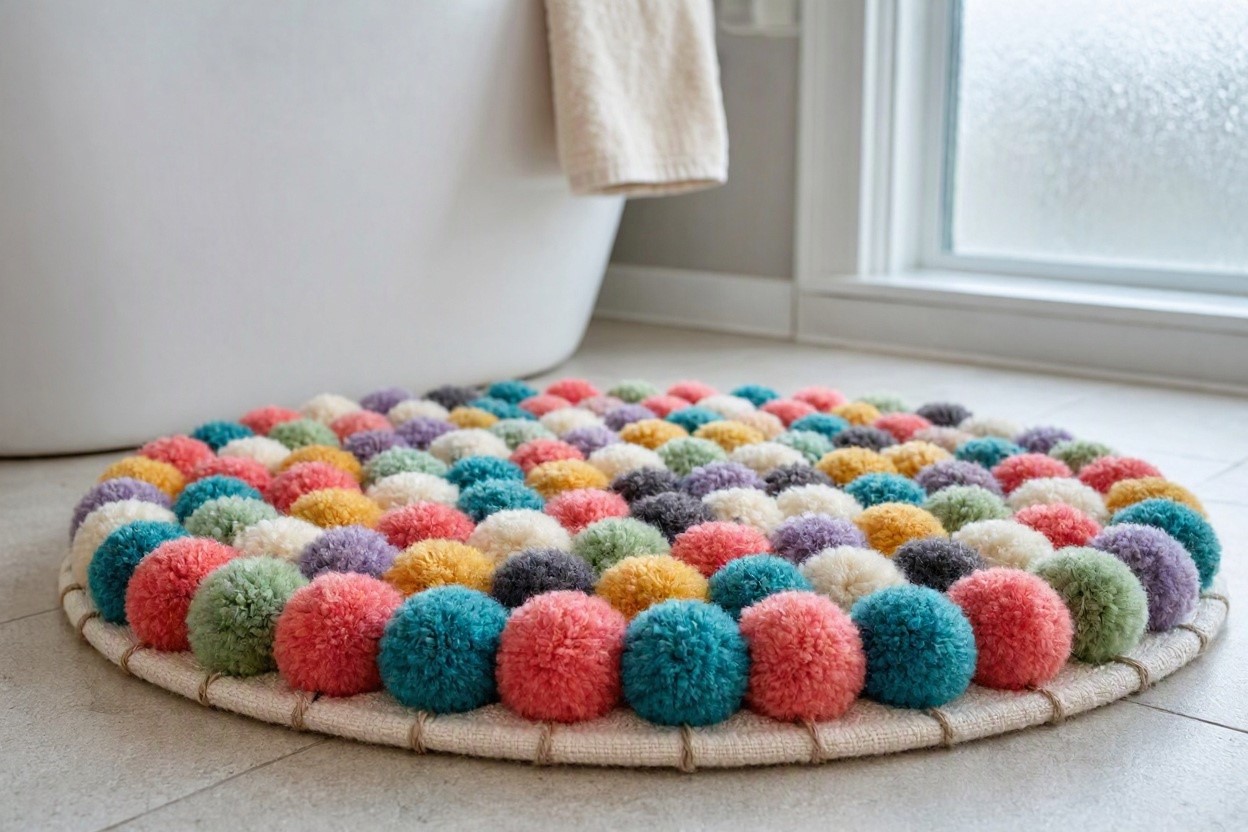
If you want something cheerful and playful, a colorful pom-pom bathroom rug is an excellent DIY project. Its fluffy texture and vibrant appearance can instantly brighten a neutral bathroom.
The project requires yarn in your favorite colors, a pom-pom maker or cardboard templates, scissors, and a sturdy rug backing.
Begin by making multiple pom-poms in different sizes. You can choose a coordinated palette, such as pink and cream, or combine brighter colors like turquoise, yellow, orange, and purple. Once you have enough pom-poms, attach them closely to the backing until the entire surface is covered.
For a more interesting design, arrange the pom-poms into stripes, rainbow patterns, flowers, or geometric shapes.
This rug is particularly attractive in family bathrooms and colorful interiors. However, because thick yarn can retain moisture, choose washable synthetic or quick-drying yarn and make sure the rug dries completely between uses.
3. Natural Pebble Stone Bathroom Mat
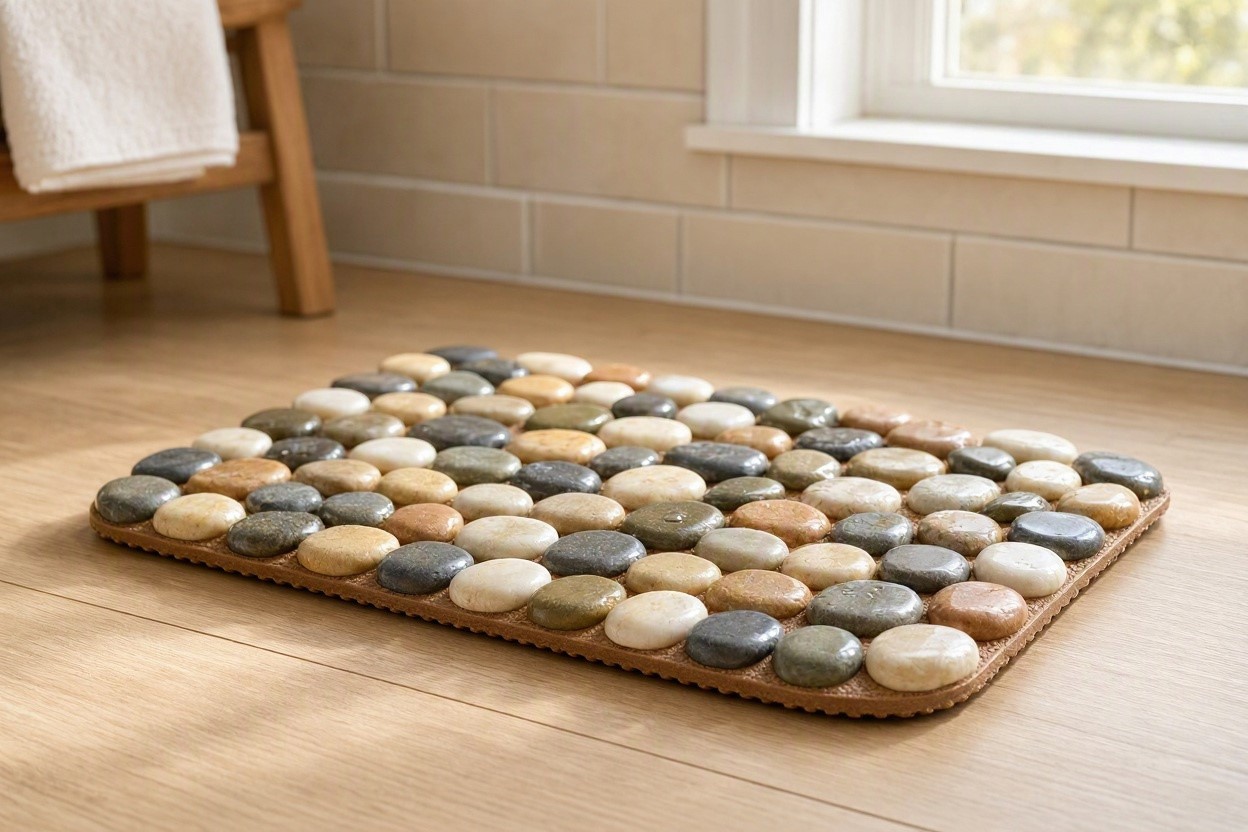
A natural pebble stone bathroom mat is perfect for creating a relaxing spa-inspired atmosphere at home. Inspired by river rocks and outdoor wellness spaces, this design introduces beautiful natural textures into an otherwise ordinary bathroom.
To make one, collect smooth, flat river pebbles in different sizes, a waterproof rubber mat, and a suitable waterproof adhesive.
Start by cleaning the stones thoroughly and allowing them to dry. Arrange them across the rubber backing before attaching them permanently. Try combining different pebble sizes while keeping the surface relatively even and comfortable.
Natural gray, white, brown, and charcoal stones create an elegant appearance, while mixed colors produce a more rustic look.
This design looks especially beautiful beside a walk-in shower or freestanding bathtub. It can also complement wooden bathroom accessories, neutral tiles, and natural stone finishes.
For safety, select smooth stones without sharp edges, secure every pebble firmly, and use a stable, non-slip backing. Avoid placing the mat where loose stones or trapped water could create a slipping hazard.
4. Upcycled Old Towel Bath Rug
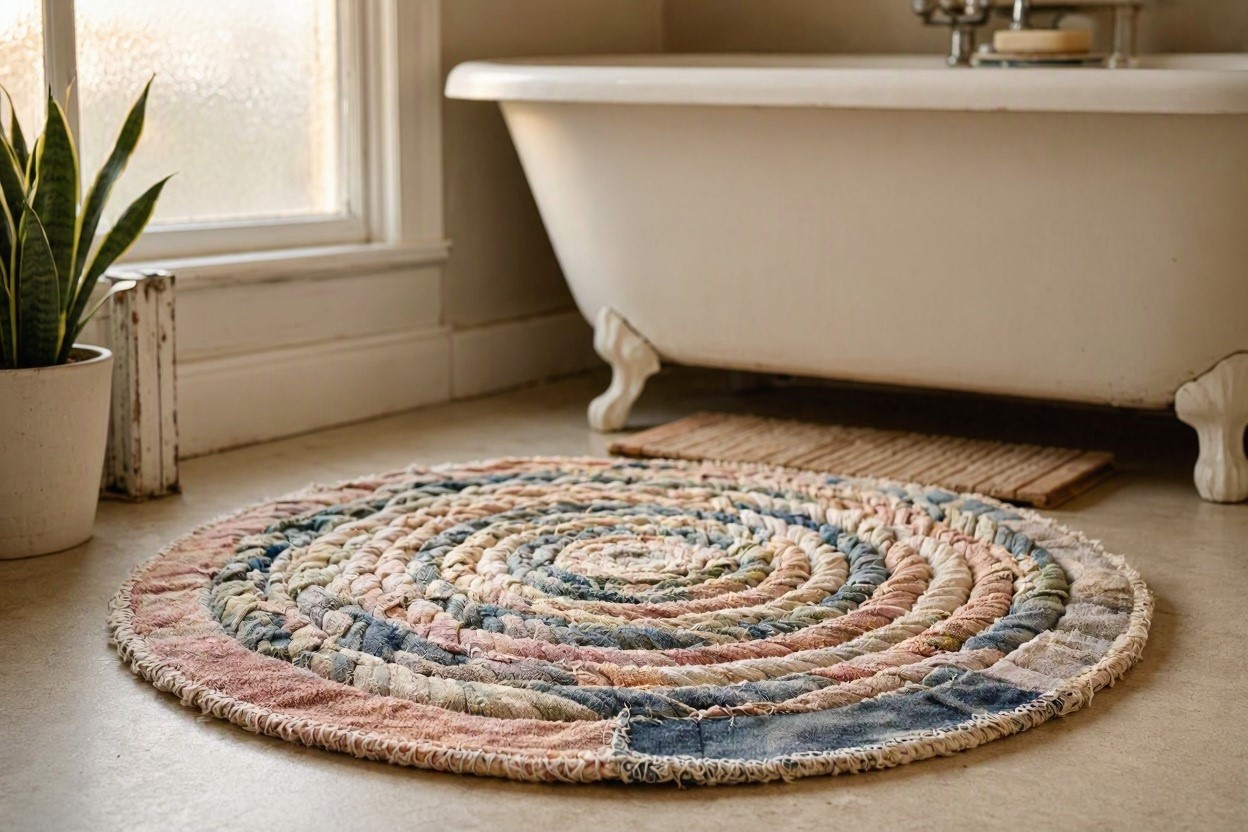
Transforming old towels into a handmade bathroom rug is one of the most practical and budget-friendly DIY ideas. Instead of discarding worn-out towels, you can turn them into a soft, absorbent accessory that gives them a useful second life.
You will need several clean towels, scissors, a sturdy non-slip rug base, and basic sewing or weaving supplies.
Cut the towels into long strips of similar width. You can then braid the strips together or knot them through a suitable rug backing to create a textured surface. Continue until the desired rug size is achieved.
For a more attractive result, combine towels in complementary colors. White, beige, pale blue, and soft gray create a relaxing appearance, while colorful combinations add personality.
You can also experiment with different patterns, including stripes, checkerboard arrangements, and multicolored sections.
This project is particularly useful because towels are naturally absorbent. However, the finished rug should be washed regularly and dried thoroughly to prevent unpleasant odors and mildew.
5. Boho Macramé Bathroom Rug
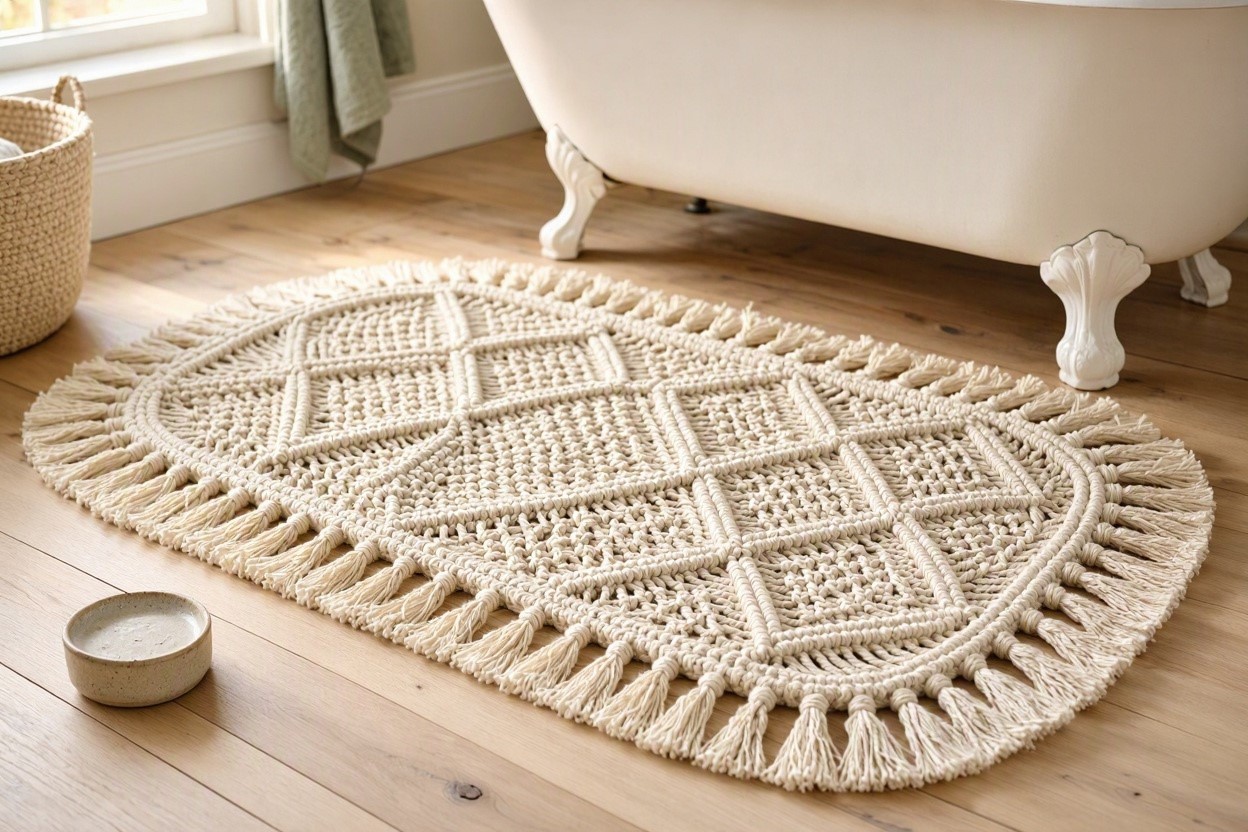
A boho macramé rug brings artistic character and handcrafted beauty into the bathroom. Its decorative knots, cotton textures, and optional fringe details make it an attractive choice for bohemian, rustic, and natural-inspired interiors.
To create this rug, prepare thick cotton macramé cord, scissors, a measuring tape, and a suitable non-slip backing.
Start by cutting several lengths of cord and arranging them evenly. Use basic macramé techniques, such as square knots and spiral knots, to develop a consistent pattern. Continue working across the rug until you achieve your preferred dimensions.
You can finish the edges with decorative fringes for a relaxed bohemian appearance or keep them simple for a cleaner design.
Natural cotton, ivory, sand, and warm beige are especially beautiful choices. For a more contemporary look, experiment with muted sage green or dusty pink.
A macramé bathroom rug works wonderfully beside a bathtub or vanity, particularly when paired with woven storage baskets, wooden shelves, and neutral towels.
Because decorative knots can trap water, choose washable materials and avoid overly thick constructions that take a long time to dry.
6. Chunky Crochet Bathroom Rug
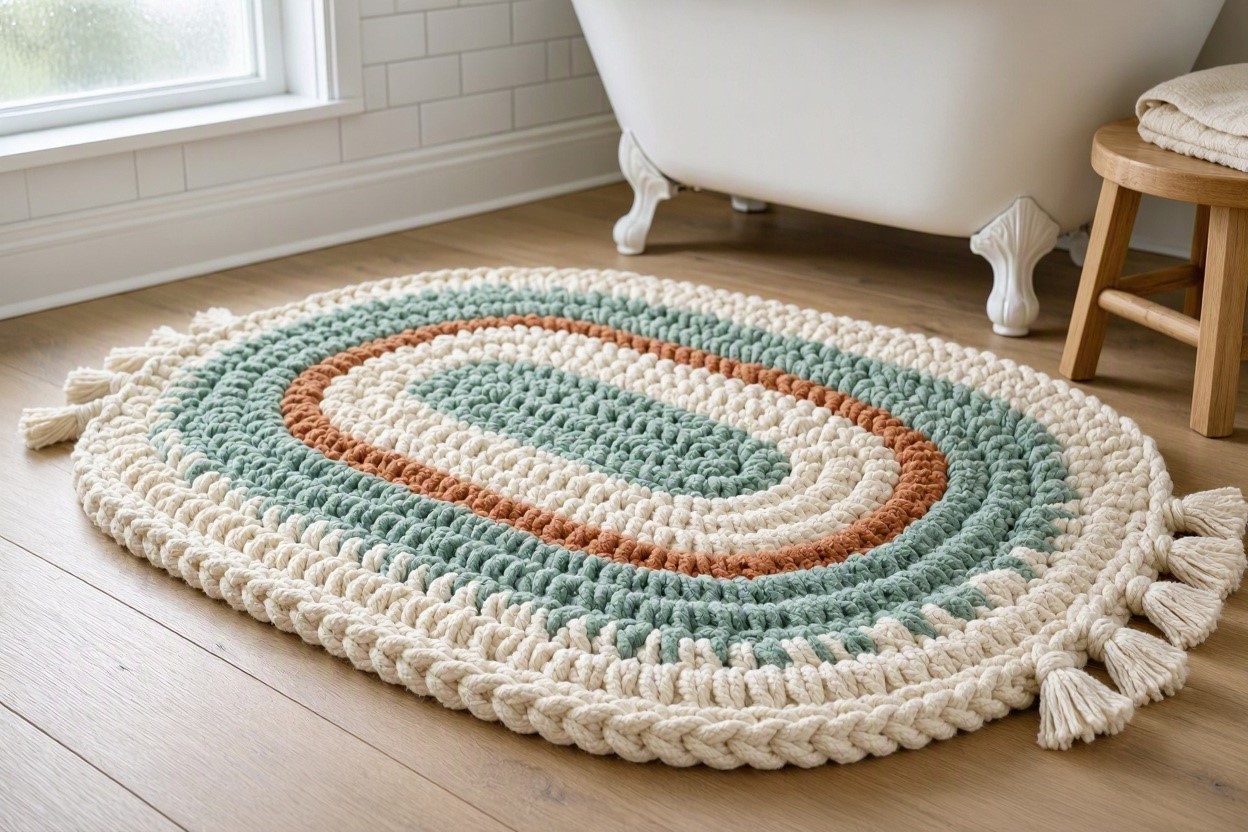
A chunky crochet bathroom rug is an excellent project for anyone who enjoys knitting and crochet crafts. Its thick stitches create a soft, comfortable texture while allowing you to experiment with different shapes and patterns.
For this project, choose washable cotton yarn or another suitable quick-drying material, along with a crochet hook that matches the yarn thickness.
Begin with a simple circular or rectangular pattern. Work with consistent stitches to create an even surface, increasing or decreasing stitches as necessary to maintain the desired shape.
You can also experiment with more decorative designs, including scalloped borders, flower patterns, and textured geometric stitches.
Neutral shades such as cream, taupe, and beige create a sophisticated appearance, while pastel pink, lavender, and mint green add a charming decorative touch.
A chunky crochet rug looks particularly attractive in bathrooms with simple tiles and understated accessories. It can become a beautiful focal point without requiring expensive decorations.
For everyday use, select machine-washable yarn and consider adding a non-slip backing to improve stability.
7. Colorful Fabric Scrap Rag Rug
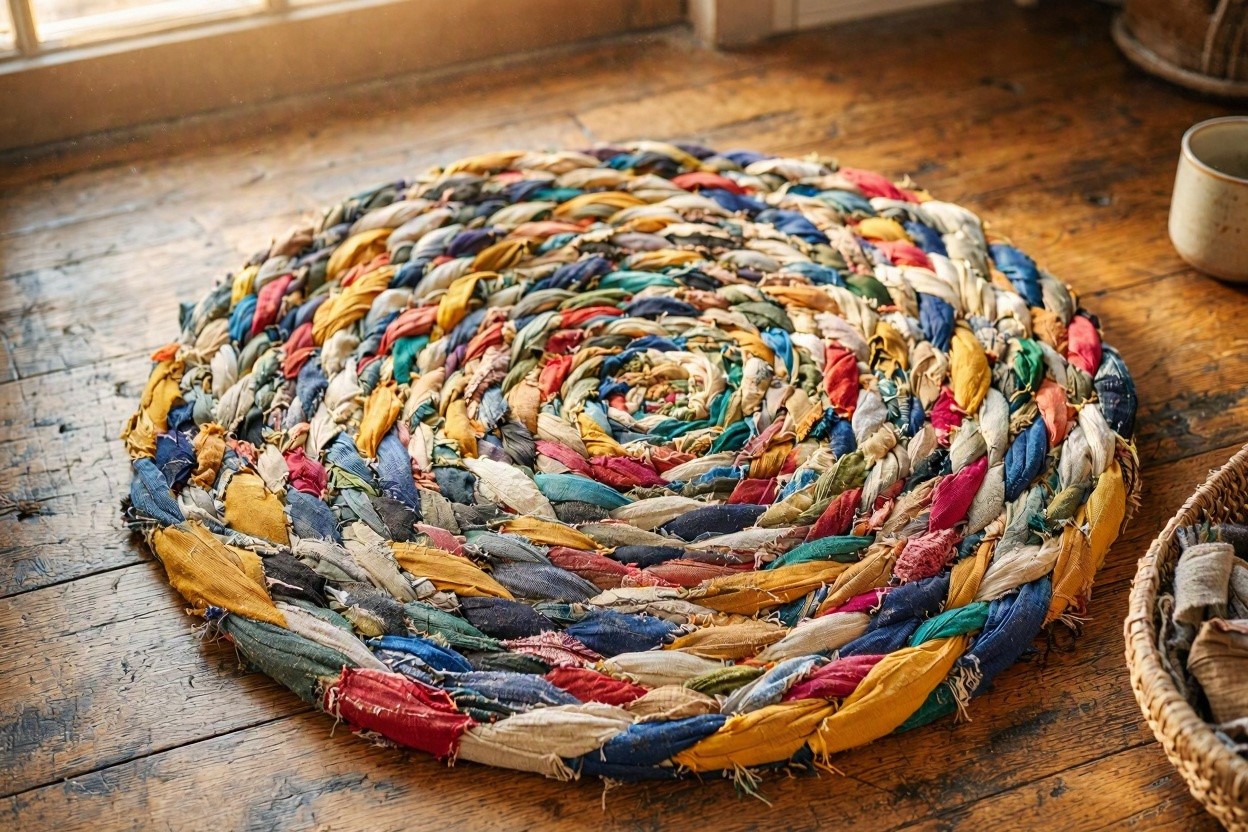
A fabric scrap rag rug is a creative way to reuse leftover textiles while making a colorful bathroom accessory. It is especially suitable for people who enjoy mixing patterns, textures, and different fabric colors.
You can use old cotton shirts, unused fabric pieces, worn-out bedsheets, or leftover sewing materials.
Start by cutting the fabric into strips of approximately equal width. Separate the strips into color groups, then weave, braid, or knot them together to create the rug’s surface.
One interesting approach is to combine floral fabrics with solid colors. You can also create stripes, alternating color blocks, or playful patchwork arrangements.
For a more sophisticated appearance, choose a limited palette of complementary shades, such as terracotta, cream, olive green, and warm brown.
The finished rug can be circular, rectangular, oval, or even irregularly shaped depending on your preferred style.
This project is an excellent way to reduce textile waste while creating a personalized bathroom accessory. Use washable fabrics and a stable backing, and make sure the rug dries completely after cleaning.
8. Minimalist Wooden Slat Bath Mat
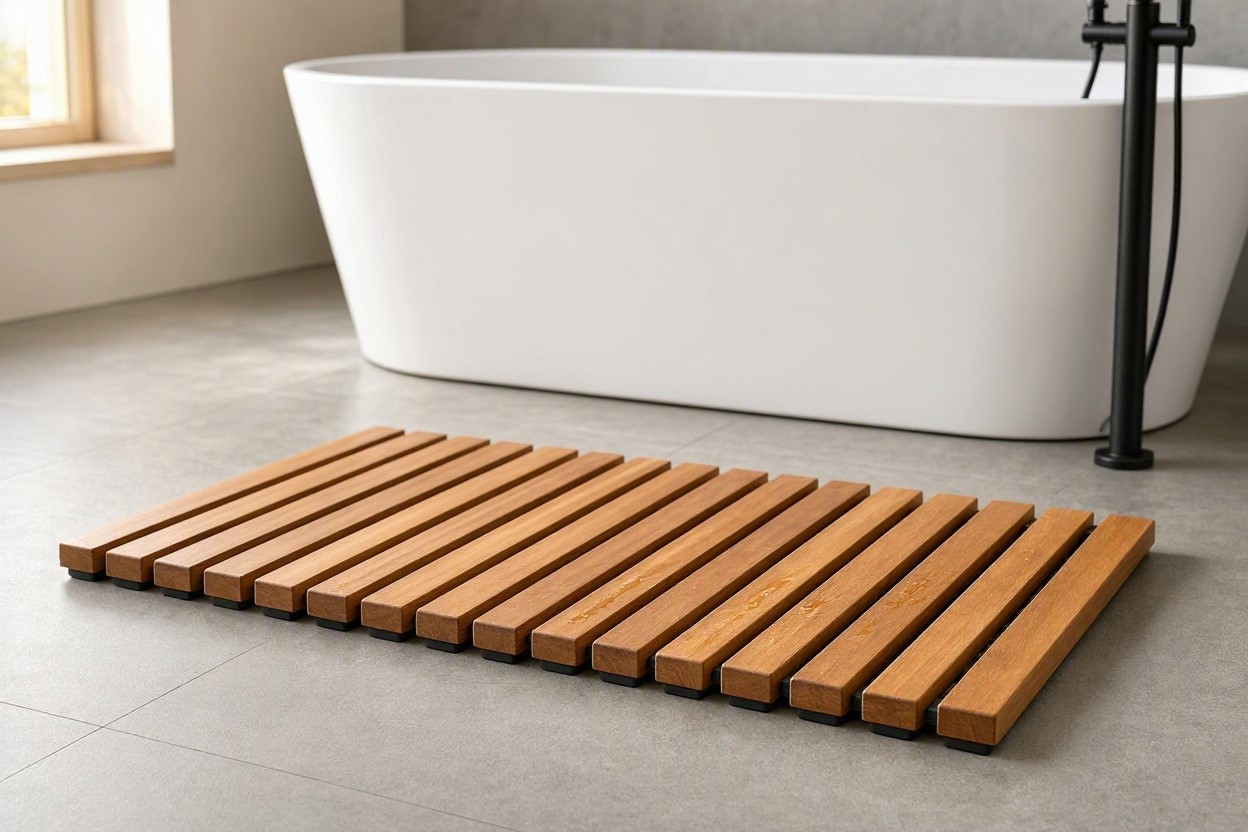
For a modern bathroom with a natural aesthetic, a minimalist wooden slat bath mat is a stylish alternative to traditional fabric rugs.
Its clean lines, warm wood tones, and simple construction make it particularly attractive in contemporary, Scandinavian, and spa-inspired bathrooms.
To create this design, use smooth, moisture-resistant wood slats, appropriate connecting supports, sandpaper, and a suitable protective wood finish.
Begin by cutting the wooden pieces to equal lengths and sanding the surfaces carefully to remove rough edges. Arrange the slats parallel to one another, leaving small, consistent gaps between them. Secure them using connecting supports underneath.
You can preserve the natural wood color or apply a suitable finish that complements your bathroom’s furniture and flooring.
Teak is a popular choice for bathroom accessories because of its natural moisture resistance. Other suitable wood options may also work when properly treated and maintained.
This design looks especially beautiful near a walk-in shower or bathtub. Make sure the finished mat sits securely on the floor, has smooth edges, and allows water to drain rather than collect underneath.
9. Artistic Tufted Bathroom Rug
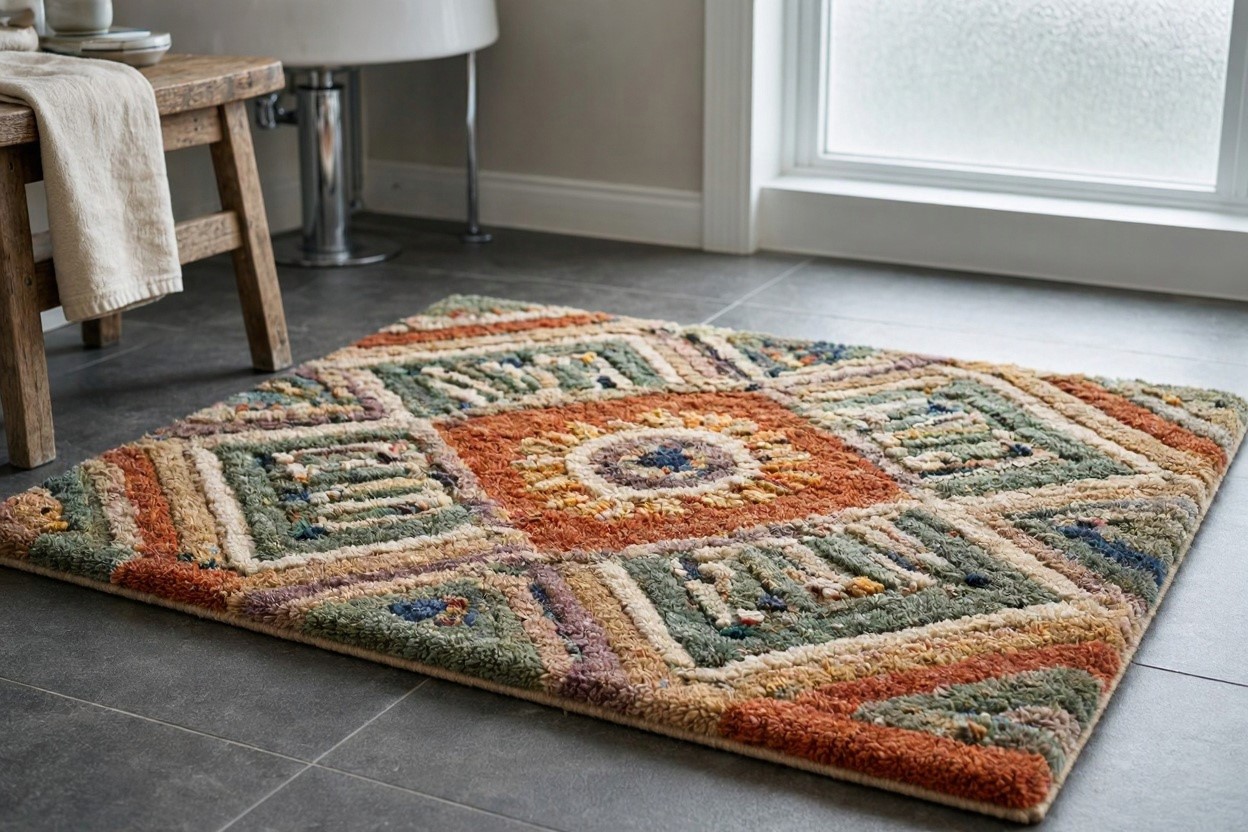
An artistic tufted bathroom rug is perfect for anyone who wants to introduce bold patterns and creative shapes into their bathroom.
Unlike traditional rugs, tufted designs allow you to create almost any pattern imaginable, including abstract shapes, colorful flowers, wavy lines, geometric patterns, and playful illustrations.
To make one, you will need tufting fabric, yarn, a tufting tool or suitable manual tufting supplies, scissors, and a secure backing material.
Start by drawing your preferred design onto the tufting fabric. Select a color palette that complements your bathroom, then fill each section carefully with yarn.
Once the design is complete, trim the yarn to create an even surface and secure the backing according to the materials’ instructions.
For a modern look, try abstract patterns featuring terracotta, cream, olive green, and charcoal. If you prefer something playful, choose colorful flowers or irregular geometric shapes.
A tufted rug can become the centerpiece of a bathroom, especially when the surrounding decor is relatively simple.
However, thick tufted rugs may retain water, so use washable materials, suitable backing, and a design that can dry thoroughly.
10. Flower-Shaped Fabric Bathroom Rug
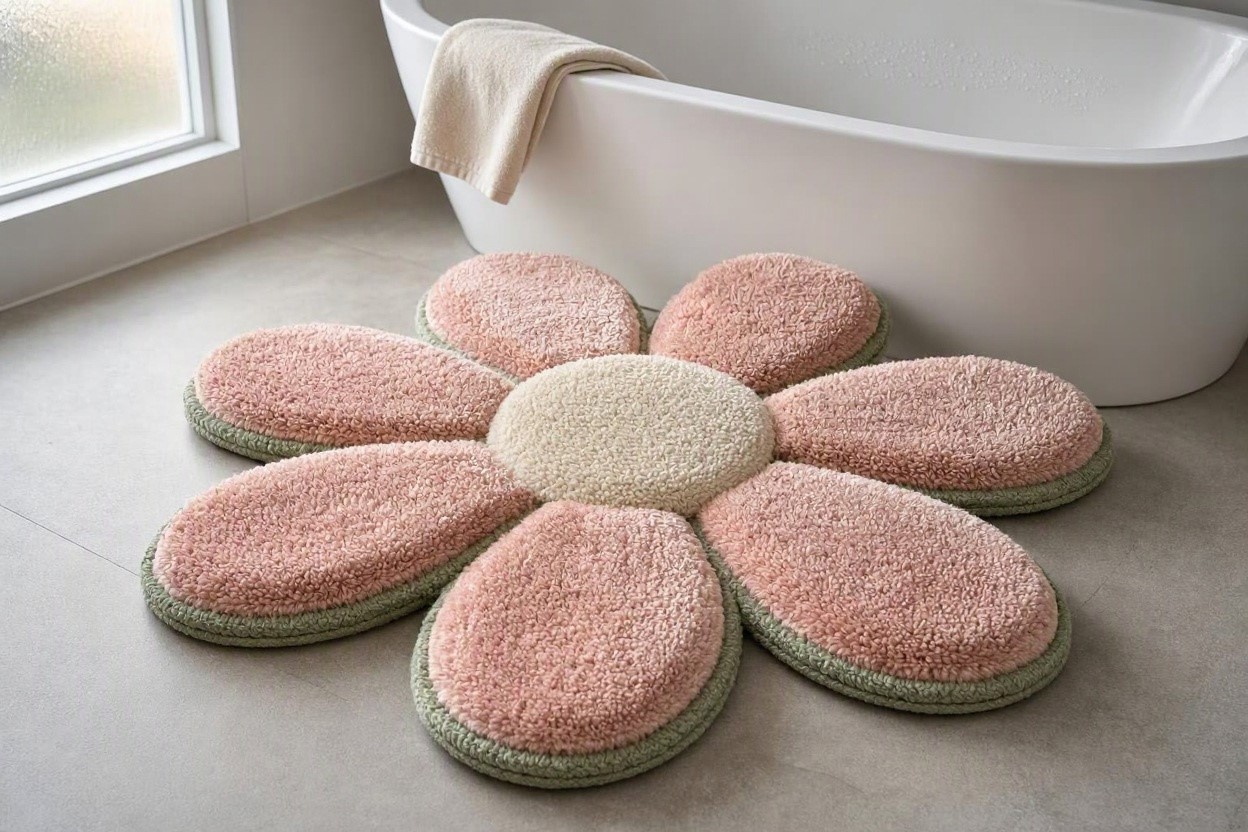
A flower-shaped fabric bathroom rug is a charming DIY project that adds softness and a decorative touch to your space. Its unusual silhouette makes it a lovely alternative to ordinary rectangular bath mats.
To create this design, gather washable fabric, scissors, a sewing machine or needle and thread, and a suitable non-slip backing.
Start by drawing a large flower outline on paper to use as your template. Transfer the shape onto your fabric and cut out two matching pieces. Sew them together, leaving a small opening to turn the fabric right-side out.
You can add light padding if desired, then close the opening and attach an appropriate non-slip backing.
For a more decorative design, use different fabric colors for the flower center and petals. Soft pink, lavender, yellow, and cream create a delicate appearance, while bold colors give the rug a more contemporary feel.
You can also experiment with daisy-inspired shapes, oversized floral patterns, or layered petals.
This rug looks especially attractive in feminine, cottage-style, and pastel bathrooms. Choose fabrics that are easy to wash and avoid excessive padding that could make drying difficult.
How to Choose the Right Materials for a DIY Bathroom Rug
Choosing the right materials is essential for creating a bathroom rug that looks beautiful and performs well in a humid environment.
Best Fabrics, Yarns, and Natural Materials
Cotton is one of the most popular choices because it is comfortable, absorbent, and generally easy to wash. It works particularly well for braided, crocheted, and recycled towel rugs.
Synthetic yarns can also be useful when you want a quick-drying and easy-care option. For natural designs, smooth river pebbles and properly treated moisture-resistant wood offer attractive alternatives.
Before starting your project, consider how frequently the rug will be used, how much moisture it will encounter, and whether the materials can withstand regular cleaning.
Choosing a Non-Slip and Water-Resistant Backing
Bathroom floors can become slippery when wet, making rug stability especially important.
Choose a backing specifically designed for bathroom use, with suitable non-slip properties and compatibility with your flooring. Avoid materials that can damage delicate floor finishes or become slippery when wet.
A good backing should keep the rug in place without preventing necessary airflow or trapping excessive moisture underneath.
Essential Tips for Making a Safe and Long-Lasting Bathroom Rug
Even the most beautiful handmade rug needs proper construction and maintenance to remain attractive and practical.
Make Sure Your Rug Dries Quickly
Bathrooms naturally experience humidity, so quick drying should be a priority when choosing materials and designing your rug.
Avoid excessively thick constructions that remain damp for long periods. After showering, hang the rug or place it somewhere with good airflow whenever possible.
Prevent Slipping and Mold Growth
Always use an appropriate non-slip backing, especially on smooth ceramic, porcelain, and stone floors.
Clean the floor beneath the rug regularly and allow both surfaces to dry completely. Never leave a wet rug sitting on the bathroom floor for extended periods, as trapped moisture can encourage mildew and unpleasant odors.
How to Clean and Maintain Handmade Bath Rugs
Cleaning requirements depend on the materials used. Cotton and suitable synthetic fabric rugs may be machine-washable, while pebble and wooden mats generally require different cleaning methods.
Follow the care instructions for your chosen materials, remove dirt regularly, and inspect the backing for signs of damage.
For rugs exposed to frequent splashes, establish a regular cleaning and drying routine to keep them fresh, hygienic, and attractive.
Final Thoughts on Creative DIY Bathroom Rugs
Creating your own bathroom rug is a wonderful way to combine creativity, practicality, and affordable home decorating. Whether you prefer a natural pebble mat, a colorful pom-pom design, a chunky crochet rug, or a beautiful flower-shaped creation, each project offers an opportunity to personalize your bathroom.
The key is to choose materials that suit your decorating style while considering moisture resistance, easy cleaning, and floor safety. With a little imagination and some basic crafting supplies, you can transform simple materials into a beautiful handmade accessory that makes your bathroom feel more comfortable and welcoming.